


- Регистрация
- 17 Февраль 2018
- Сообщения
- 40 827
- Лучшие ответы
- 0
- Реакции
- 0
- Баллы
- 8 093
Offline
It's the best. But that's not good enough right now.

Image: Adam Patrick Murray / Foundry
Summary created by Smart Answers AI
In summary:
This final week of January is a crowded one for CPU releases. Monday saw Intel’s latest mobile chip officially debut—and on Thursday, AMD will launch its newest desktop processor, the Ryzen 7 9850X3D, into the world.
But while laptop shoppers have all but a slam dunk option in Panther Lake-powered machines, DIY desktop PC builders may not universally benefit from Team Red’s expanded X3D lineup. It’s not a bad chip—not even a bit. In fact, the 9850X3D now takes the crown as best gaming chip, with both solid numbers and a side benefit securing that spot.
So why this muted recommendation? It boils down (as always) to price. But this time, perhaps not quite in the way you’d expect. Let’s dig into the five key pieces of info you should know about this new CPU.
Just $20 more for the best gaming chip
The AMD Ryzen 7 9850X3D is a lightly souped-up version of the existing 9800X3D—same core and thread counts, TDP, and base clock speed, but with a higher boost clock. Its MSRP also climbs slightly—$499, or $20 more than its predecessor’s launch price of $479.
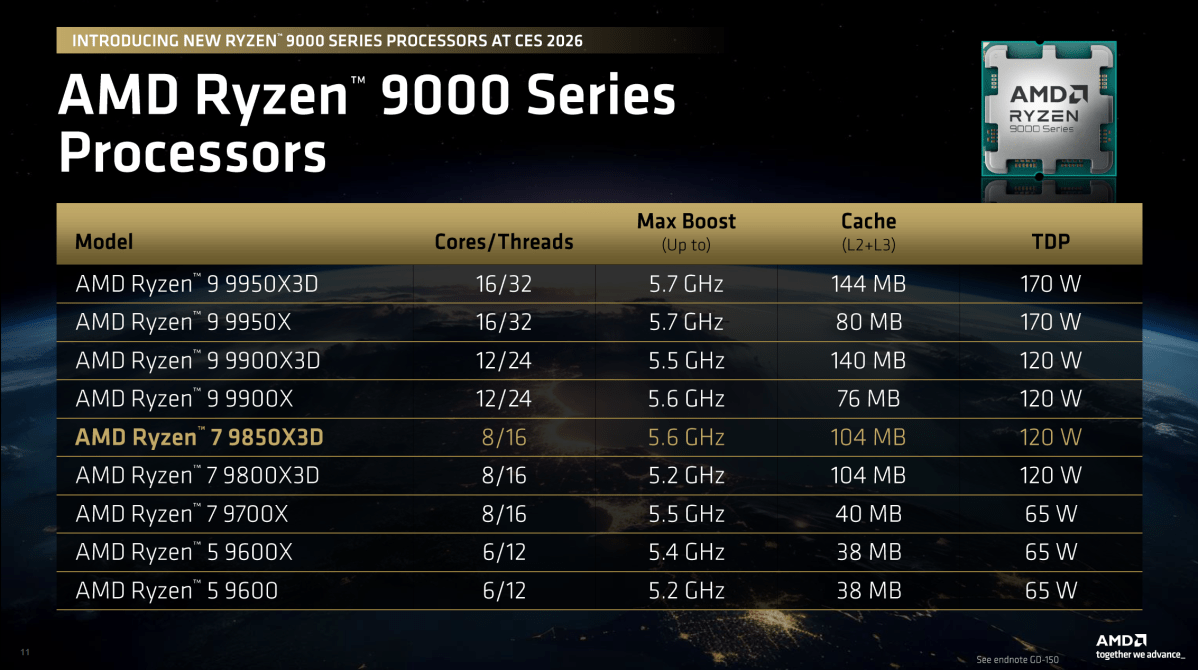
AMD
Here’s the thing: When the 9800X3D launched in late 2024, it dominated. In benchmark after benchmark, it topped its main rival, Intel’s Arrow Lake-based Core Ultra 9 285K. Sure, the 285K managed to keep an edge in productivity tasks, but for gaming, you wanted AMD’s X3D part. And even when AMD let loose with X3D versions of its beefy 9950X and 9900X parts, the 9800X3D still kept pace with those powerhouse siblings. It posted framerates similar to the 9950X3D and 9900X3D, sometimes still even coming out slightly ahead.
Accordingly, the 9800X3D was the best gaming chip…until the 9850X3D showed up. But while the latter consistently delivers better numbers in games, it doesn’t dramatically zip past its older sibling.
Don’t expect huge gains over the 9800X3D, though
Pragmatically speaking, the Ryzen 7 9850X3D is less a brand-new chip and more a better 9800X3D. (My colleague Adam Patrick Murray, who performed all of our testing, calls it “the best 9800X3D you can buy.”)
Chip enthusiasts won’t be surprised by this news, based on the specs—and the price. That $20 increase in cost gives you a similarly small performance boost, mostly a percent or two at 1080p in the games we tested. And realistically, if you’re already getting almost 580 frames per second in a game at 1080p on the 9800X3D, it won’t make a material difference to then rise to over 600 fps.
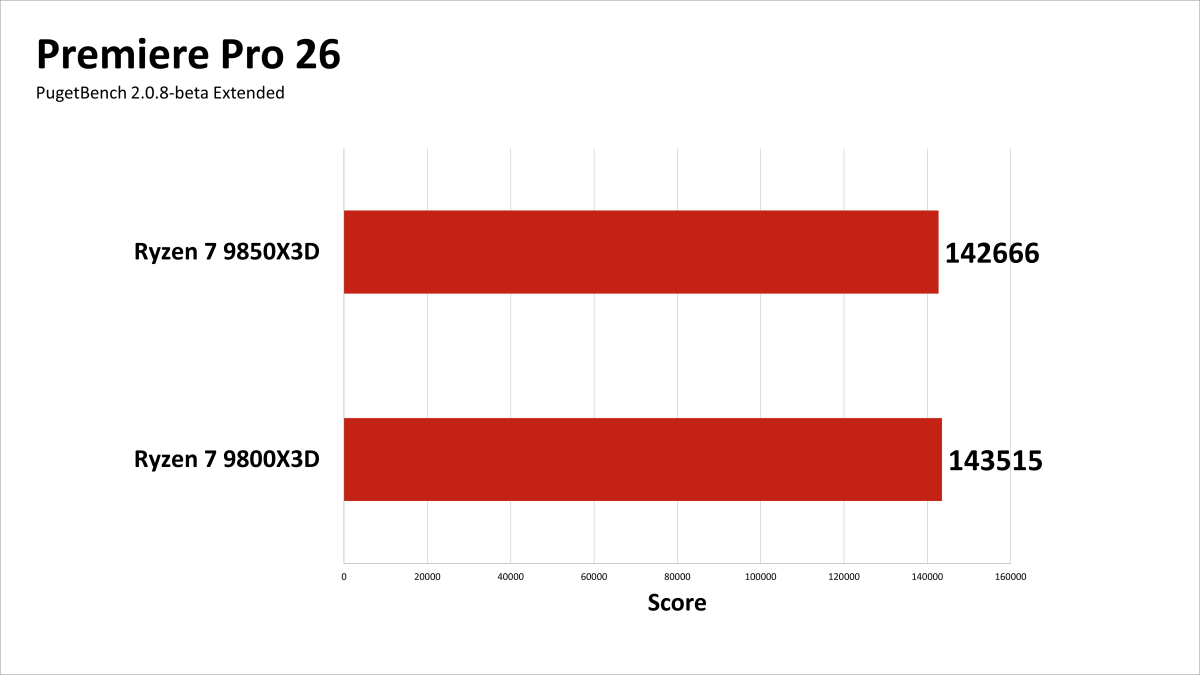
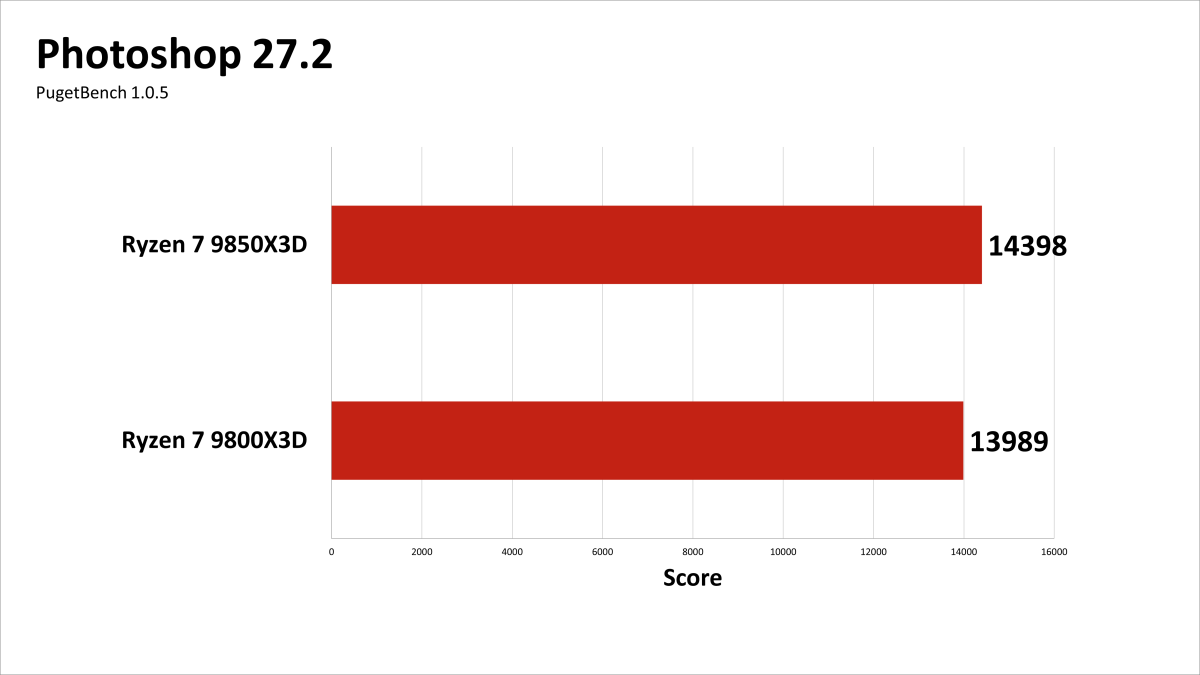
The bigger gain is in content-creation tasks like encoding, where we saw as much as a 6.6 percent increase in performance. Do these results make the 9850X3D a waste of sand, as the internet likes to say? No—because not all of the benefits come directly from measuring framerate.
A lesser-known perk of the Ryzen 7 9850X3D is one shared by its fellow X3D parts—strong performance on slower memory kits. Independent testing has shown this already for past X3D chips, with Tom’s Hardware noting that the 9800X3D could post similar framerates with either DDR5-5600 or DDR5-6000 kits.
AMD is talking up this point again for the 9850X3D, claiming that going down to DDR5-4800 RAM will only lose you 1 percent of performance compared to DDR5-5600. Given how similar the 9800X3D and 9850X3D perform, that likely means you won’t suffer a dramatic difference if choosing between DDR5-4800 and DDR5-6000 RAM for a build. You can save some cash.
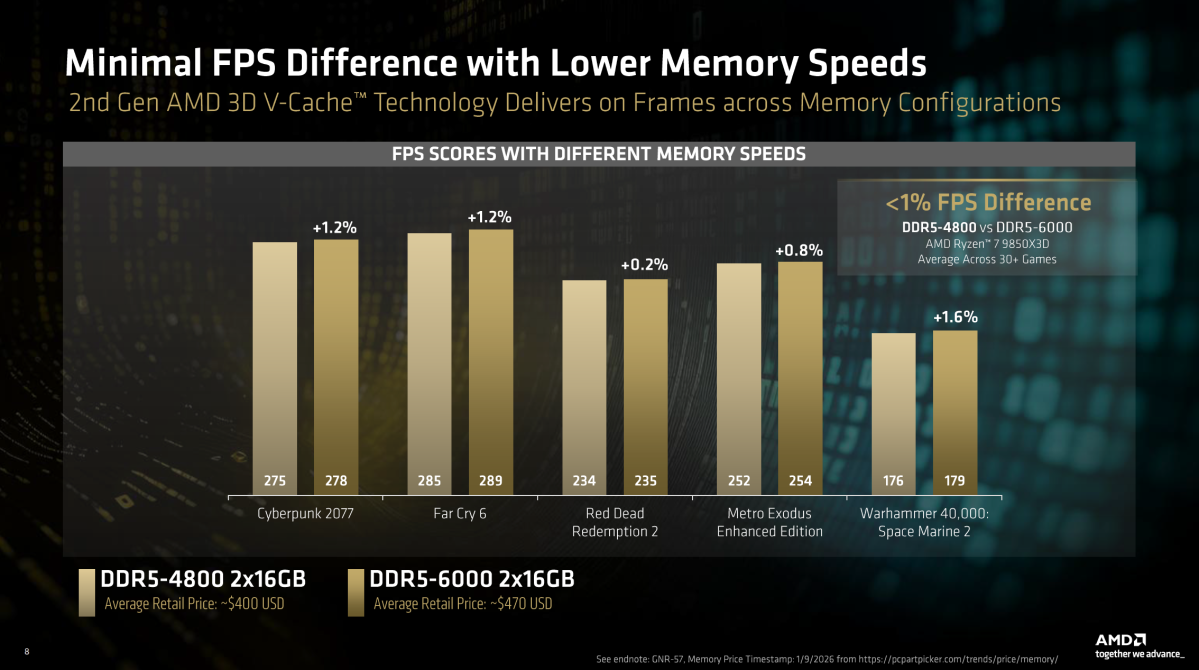
A chart from AMD showing its benchmark results when testing with DDR5-4800 vs DDR5-6000 memory.
AMD
Meanwhile, Team Red’s own internal benchmarks show the 9850X3D still beating Intel’s Core Ultra 9 285K on slower RAM. Its test configurations paired DDR5-6000 with the 9850X3D and 9800X3D, while the 285K relied on DDR5-8000. (These numbers were shared with reviewers prior to launch, as reference data.)
We’ll have to wait for independent testing to make the benefit here concrete—and at the moment, the cost savings aren’t gigantic between DDR5-4800 and DDR5-6000 kits (either 16GB or 32GB configs). But with the continual doom and gloom hovering over the state of memory availability and pricing, this option could become more valuable in the future.
Same power draw as the 9800X3D
As for power draw, looking at the 9850X3D’s energy consumption just provides further evidence of this new processor behaving like a better binned 9800X3D.
At idle, it is virtually identical to the 9800X3D. Then, when put to work in 3DMark’s Time Spy Extreme benchmark, the 9850X3D’s power draw only slightly increases—not unexpected, given its higher boost clock.
In broader context, these results allow AMD to still retain a lead over the Intel Core Ultra 9 285K. The original 9800X3D pulled slightly more juice at idle compared to the 285K, but then comparatively sipped electricity under load. The 9850X3D should be similar, with just a minor reduction in its efficiency compared to its Team Blue rival.
The cost of alternatives will determine what’s best for you
Despite its powerful appeal, outside forces will keep the 9850X3D from being an easy, go-to recommendation for all top-tier gaming builds. How accessible it will be depends largely on what happens with pricing for other chips vying for DIY builders’ dollars—including its near-twin, the 9800X3D.
If AMD greenlights discounts on the 9800X3D to differentiate it from its brand-new sibling—a distinct possibility, given AMD’s past history—then the 9800X3D could still be the better option.
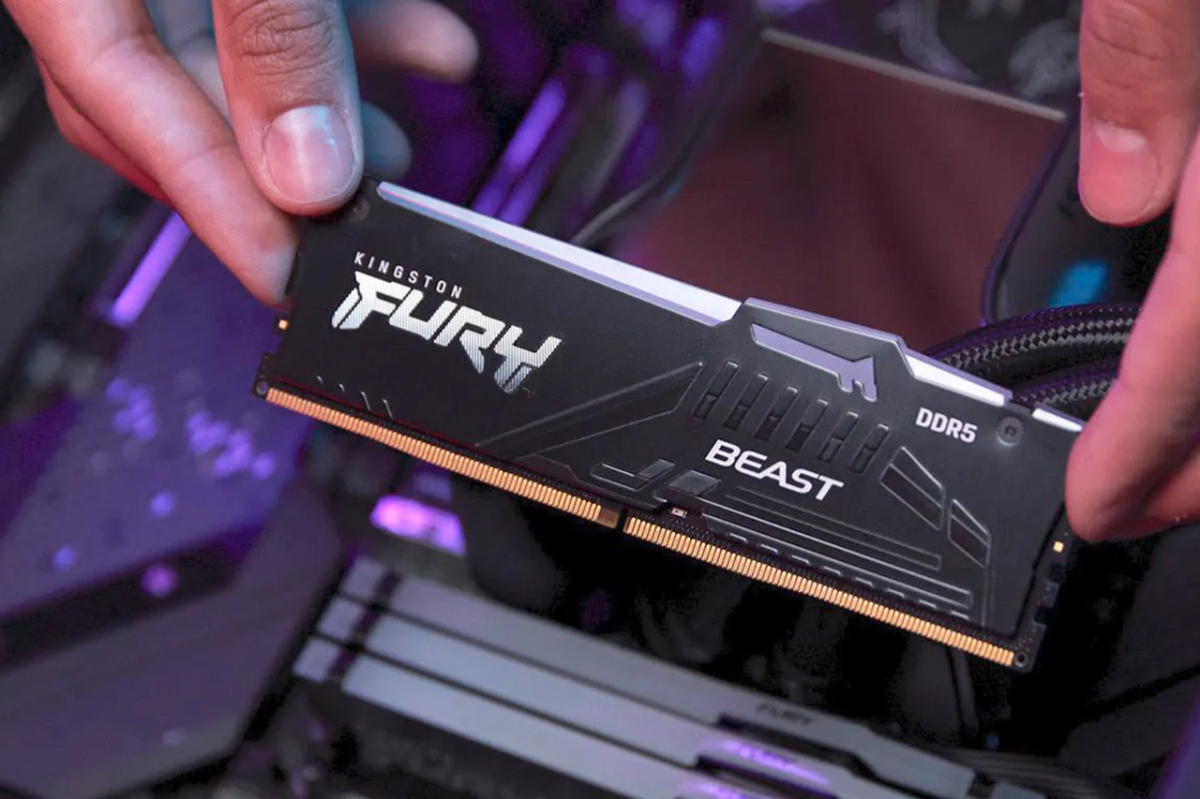
The cost of rival CPUs (including the 9800X3D) and future prices for DDR5 memory will influence how well the 9850X3D will fare on the streets, even despite its superb performance.
Foundry
Meanwhile, rumors of an Arrow Lake refresh have begun making the rounds, meaning that AMD’s best chips could have stronger competition than anticipated.
And then there’s the elephant in the room—the memory shortages. Realistically, those building DDR5 systems will seek the possible best deal to compensate for painful RAM pricing. The 9850X3D may best all other CPUs in tests, but if a builder can find a cheaper bundle deal with a different (yet still highly performant) processor and RAM, that may be the most viable decision. I have seen some surprisingly good RAM bundle deals from Newegg in the past week alone, for example.
Such is the challenge that AMD faces, despite its bragging rights—builders in love with this new top gaming chip could still settle for something else. Ultimately, market prices will end up deciding the 9850X3D’s fate on the streets.
Our testing of the Ryzen 7 9850X3D was performed by Adam Patrick Murray using the following configuration:

A 15-year veteran of technology and video games journalism, Alaina Yee covers a variety of topics for PCWorld. Since joining the team in 2016, she’s written about CPUs, Windows, PC building, Chrome, Raspberry Pi, and much more—while also serving as PCWorld’s resident bargain hunter (#slickdeals). Currently her focus is on security, helping people understand how best to protect themselves online. Her work has previously appeared in PC Gamer, IGN, Maximum PC, and Official Xbox Magazine.
Recent stories by Alaina Yee:
Image: Adam Patrick Murray / Foundry
Summary created by Smart Answers AI
In summary:
- PCWorld reviews AMD’s new Ryzen 7 9850X3D, a $499 processor that offers modest improvements over the 9800X3D with higher boost clocks.
- Gaming performance gains are minimal at 1-2% for 1080p, though content creation tasks see more substantial 6.6% improvements over its predecessor.
- The chip’s market success depends on competitor pricing and DDR5 memory costs, as it performs well with slower RAM configurations.
This final week of January is a crowded one for CPU releases. Monday saw Intel’s latest mobile chip officially debut—and on Thursday, AMD will launch its newest desktop processor, the Ryzen 7 9850X3D, into the world.
But while laptop shoppers have all but a slam dunk option in Panther Lake-powered machines, DIY desktop PC builders may not universally benefit from Team Red’s expanded X3D lineup. It’s not a bad chip—not even a bit. In fact, the 9850X3D now takes the crown as best gaming chip, with both solid numbers and a side benefit securing that spot.
So why this muted recommendation? It boils down (as always) to price. But this time, perhaps not quite in the way you’d expect. Let’s dig into the five key pieces of info you should know about this new CPU.
Just $20 more for the best gaming chip
The AMD Ryzen 7 9850X3D is a lightly souped-up version of the existing 9800X3D—same core and thread counts, TDP, and base clock speed, but with a higher boost clock. Its MSRP also climbs slightly—$499, or $20 more than its predecessor’s launch price of $479.
AMD
Here’s the thing: When the 9800X3D launched in late 2024, it dominated. In benchmark after benchmark, it topped its main rival, Intel’s Arrow Lake-based Core Ultra 9 285K. Sure, the 285K managed to keep an edge in productivity tasks, but for gaming, you wanted AMD’s X3D part. And even when AMD let loose with X3D versions of its beefy 9950X and 9900X parts, the 9800X3D still kept pace with those powerhouse siblings. It posted framerates similar to the 9950X3D and 9900X3D, sometimes still even coming out slightly ahead.
Accordingly, the 9800X3D was the best gaming chip…until the 9850X3D showed up. But while the latter consistently delivers better numbers in games, it doesn’t dramatically zip past its older sibling.
Don’t expect huge gains over the 9800X3D, though
Pragmatically speaking, the Ryzen 7 9850X3D is less a brand-new chip and more a better 9800X3D. (My colleague Adam Patrick Murray, who performed all of our testing, calls it “the best 9800X3D you can buy.”)
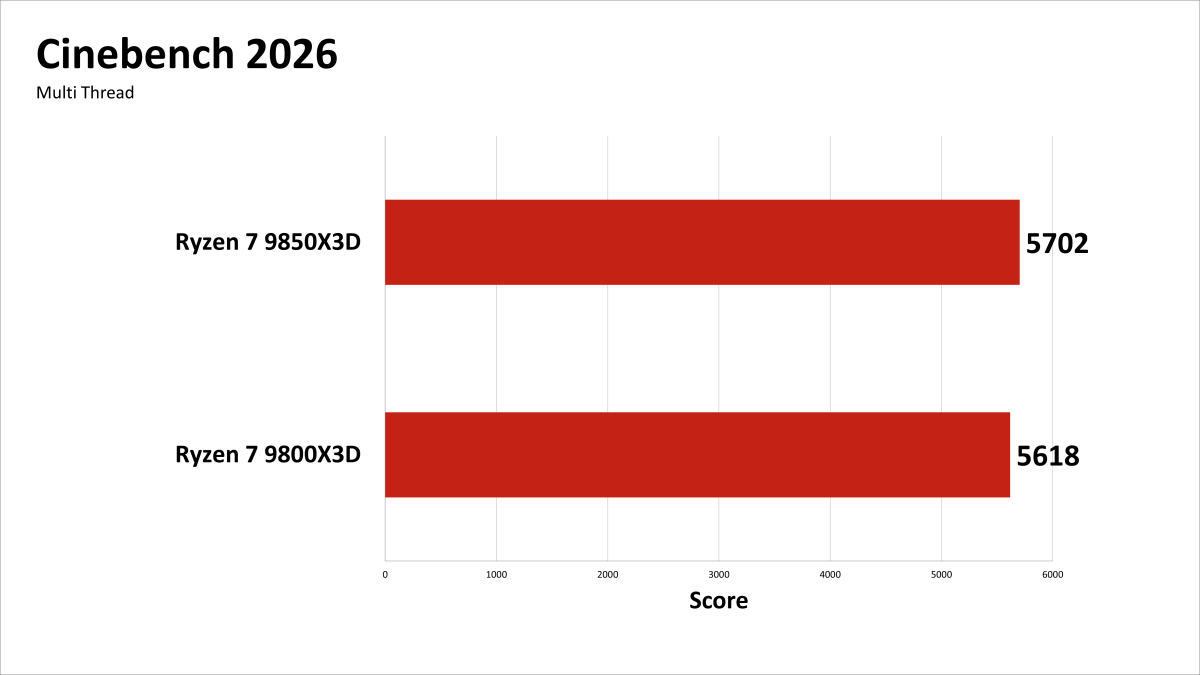
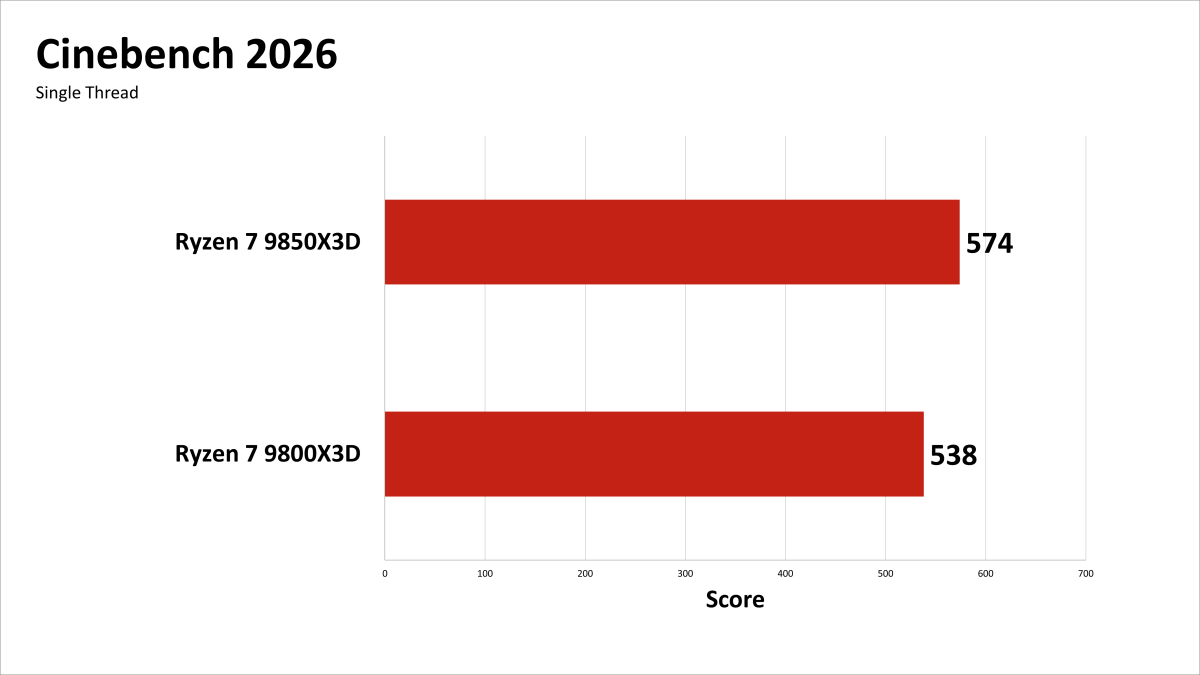
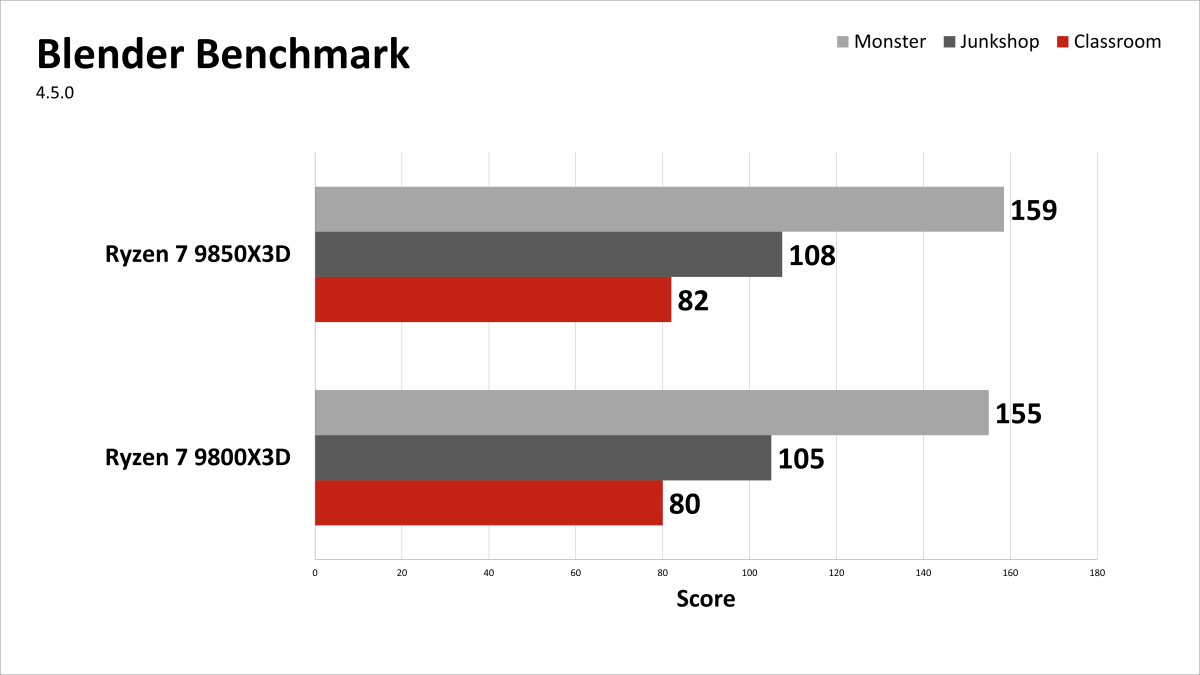
Chip enthusiasts won’t be surprised by this news, based on the specs—and the price. That $20 increase in cost gives you a similarly small performance boost, mostly a percent or two at 1080p in the games we tested. And realistically, if you’re already getting almost 580 frames per second in a game at 1080p on the 9800X3D, it won’t make a material difference to then rise to over 600 fps.
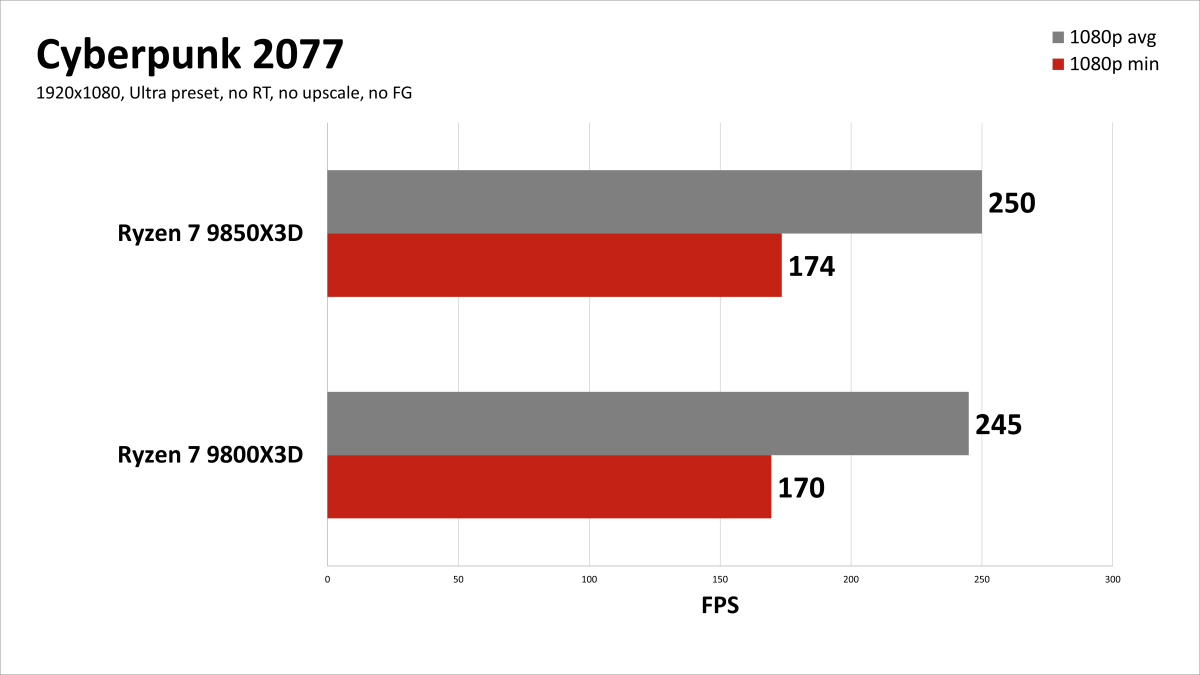

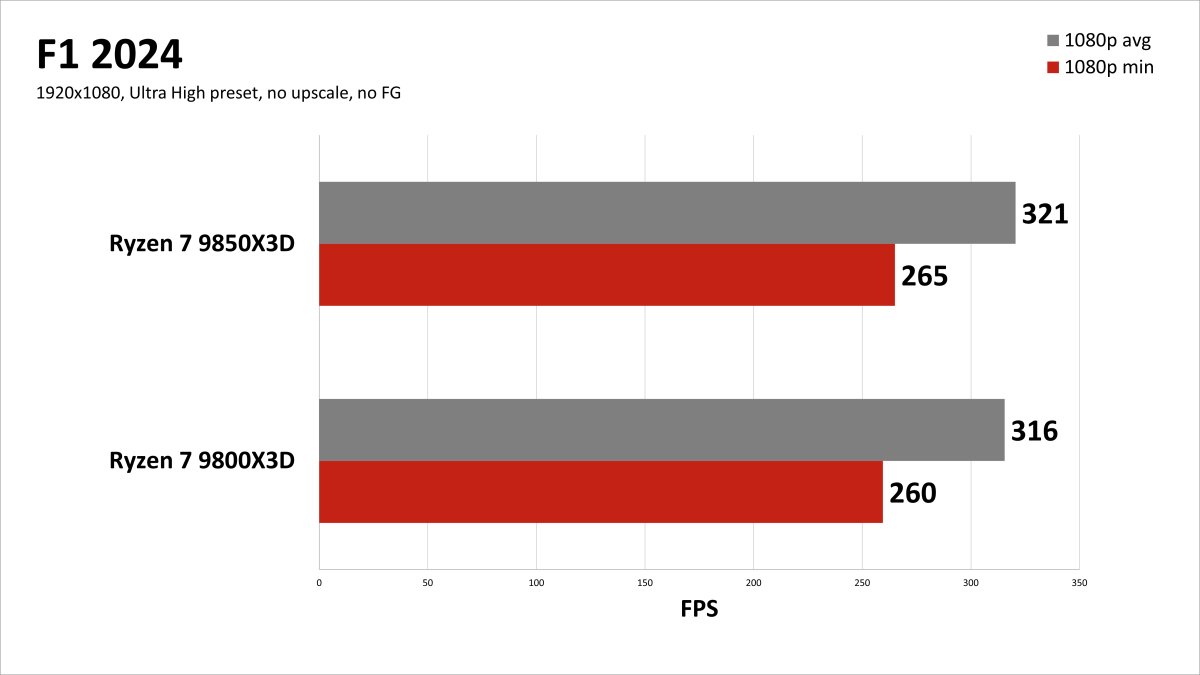
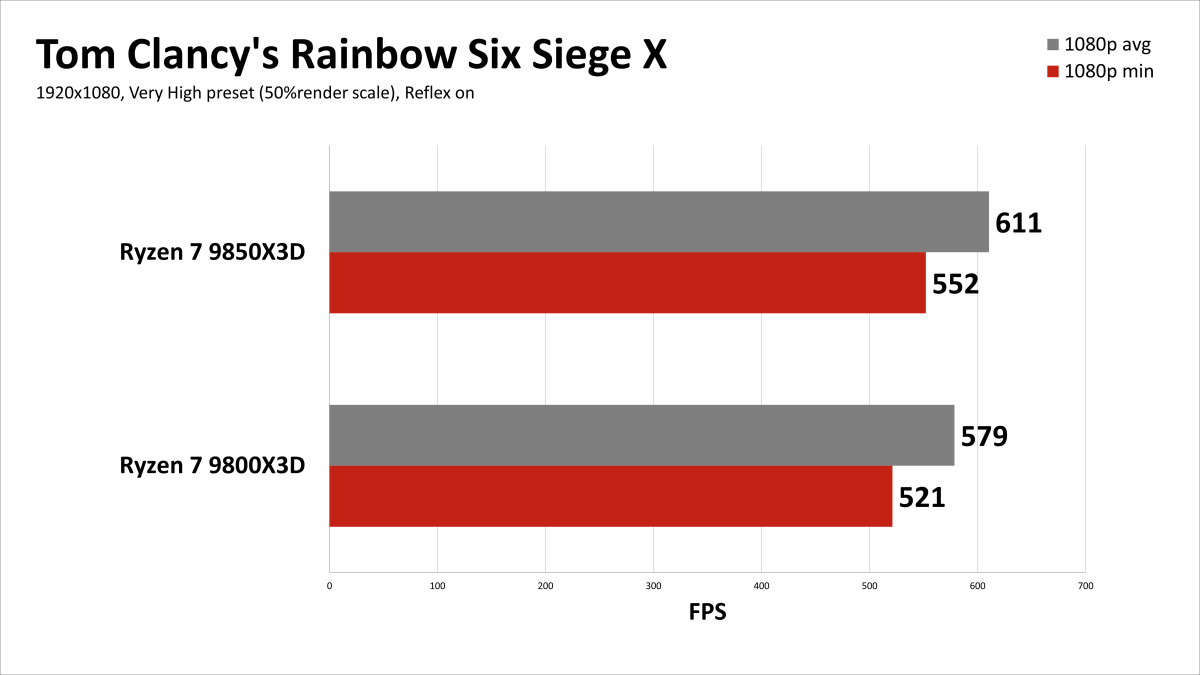
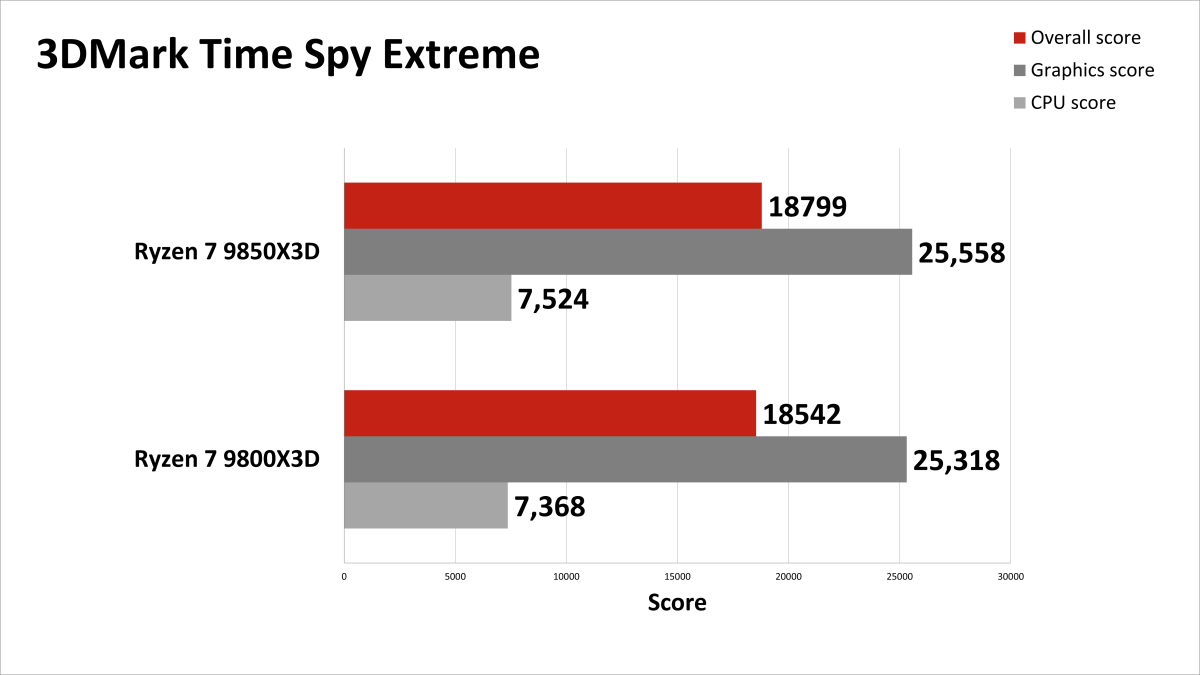
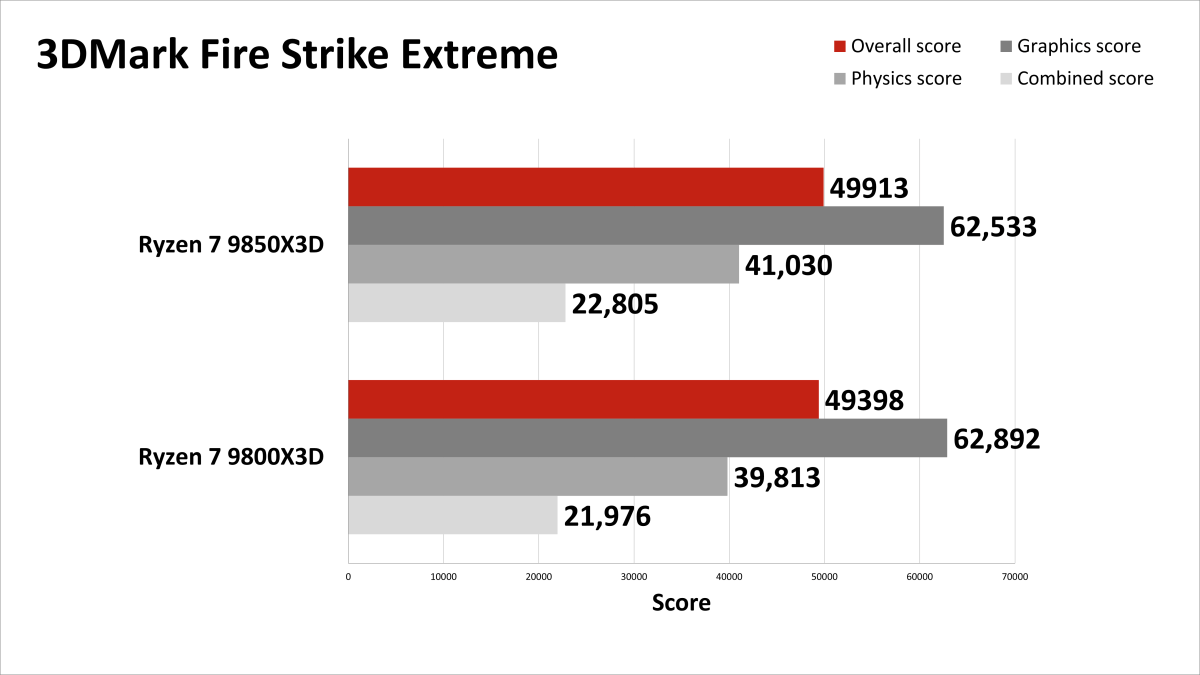
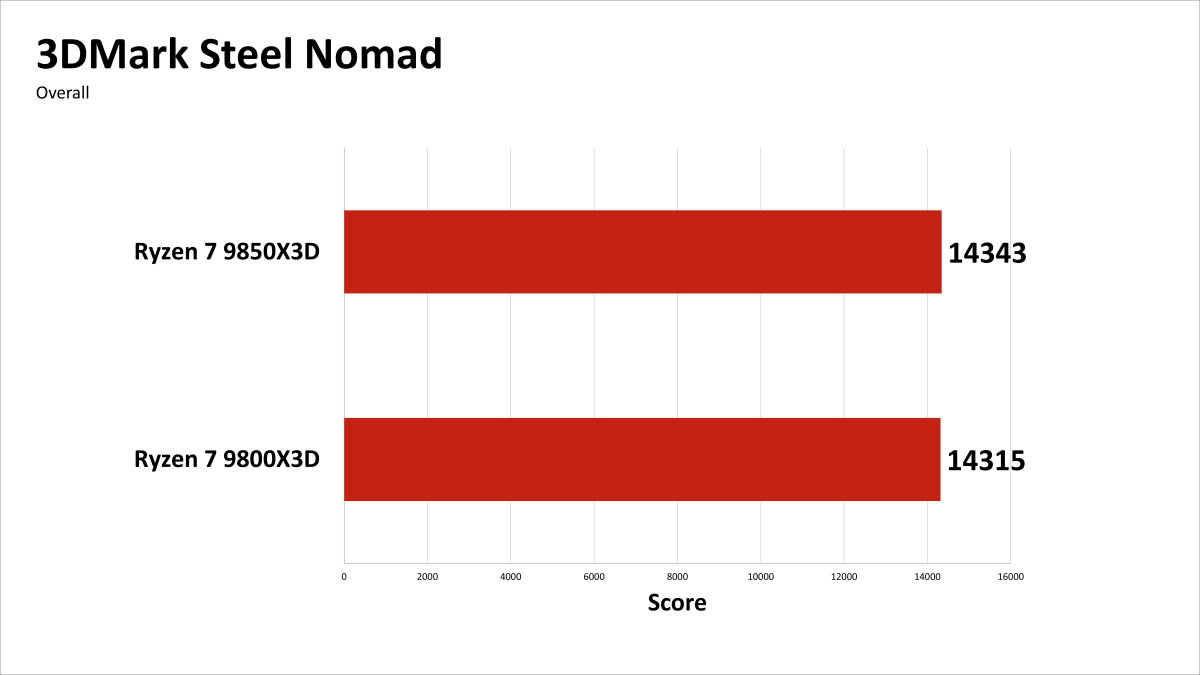
The bigger gain is in content-creation tasks like encoding, where we saw as much as a 6.6 percent increase in performance. Do these results make the 9850X3D a waste of sand, as the internet likes to say? No—because not all of the benefits come directly from measuring framerate.
A lesser-known perk of the Ryzen 7 9850X3D is one shared by its fellow X3D parts—strong performance on slower memory kits. Independent testing has shown this already for past X3D chips, with Tom’s Hardware noting that the 9800X3D could post similar framerates with either DDR5-5600 or DDR5-6000 kits.
AMD is talking up this point again for the 9850X3D, claiming that going down to DDR5-4800 RAM will only lose you 1 percent of performance compared to DDR5-5600. Given how similar the 9800X3D and 9850X3D perform, that likely means you won’t suffer a dramatic difference if choosing between DDR5-4800 and DDR5-6000 RAM for a build. You can save some cash.
A chart from AMD showing its benchmark results when testing with DDR5-4800 vs DDR5-6000 memory.
AMD
Meanwhile, Team Red’s own internal benchmarks show the 9850X3D still beating Intel’s Core Ultra 9 285K on slower RAM. Its test configurations paired DDR5-6000 with the 9850X3D and 9800X3D, while the 285K relied on DDR5-8000. (These numbers were shared with reviewers prior to launch, as reference data.)
We’ll have to wait for independent testing to make the benefit here concrete—and at the moment, the cost savings aren’t gigantic between DDR5-4800 and DDR5-6000 kits (either 16GB or 32GB configs). But with the continual doom and gloom hovering over the state of memory availability and pricing, this option could become more valuable in the future.
Same power draw as the 9800X3D
As for power draw, looking at the 9850X3D’s energy consumption just provides further evidence of this new processor behaving like a better binned 9800X3D.
At idle, it is virtually identical to the 9800X3D. Then, when put to work in 3DMark’s Time Spy Extreme benchmark, the 9850X3D’s power draw only slightly increases—not unexpected, given its higher boost clock.
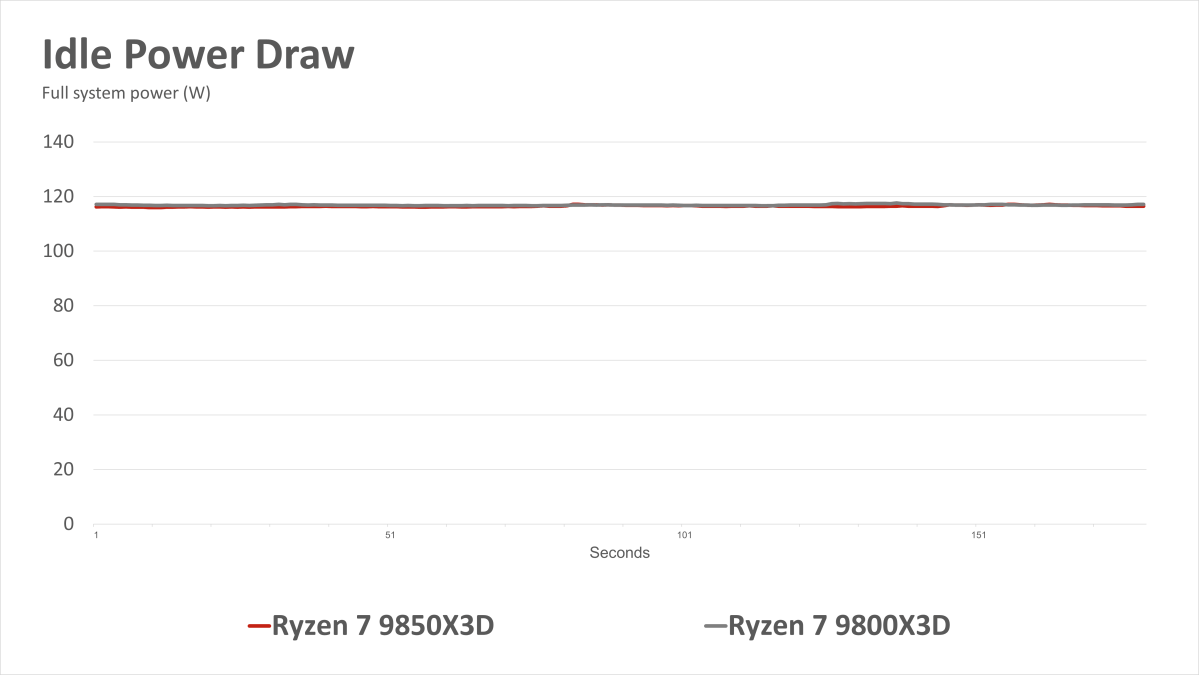
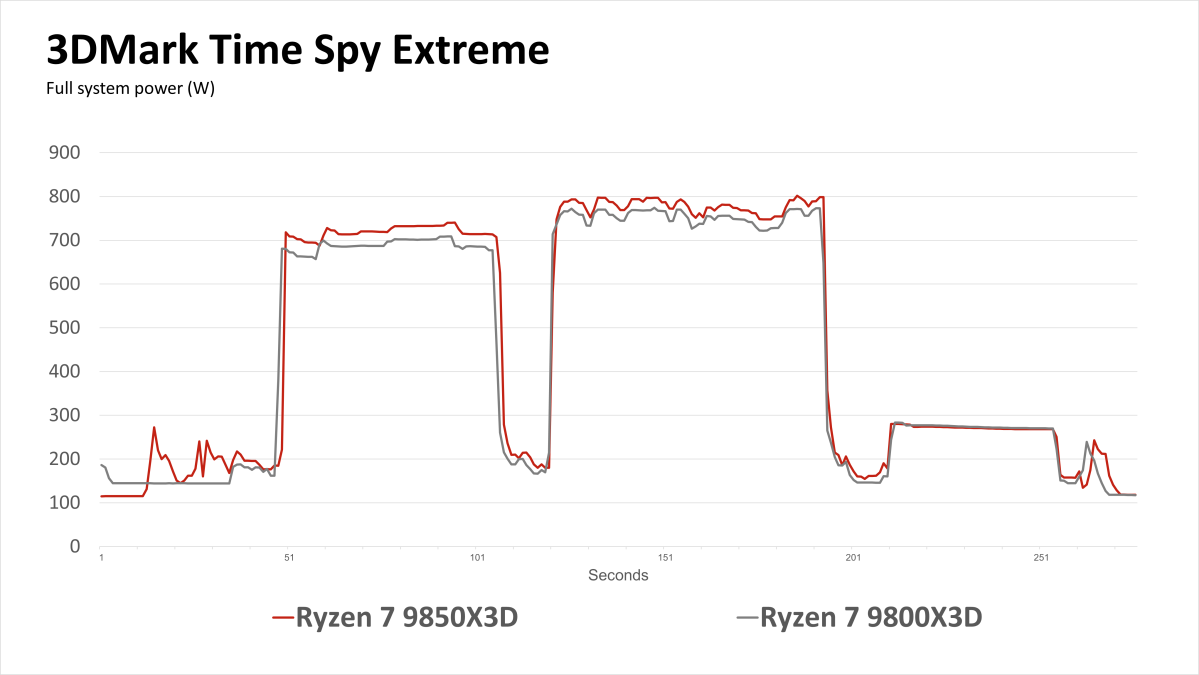
In broader context, these results allow AMD to still retain a lead over the Intel Core Ultra 9 285K. The original 9800X3D pulled slightly more juice at idle compared to the 285K, but then comparatively sipped electricity under load. The 9850X3D should be similar, with just a minor reduction in its efficiency compared to its Team Blue rival.
The cost of alternatives will determine what’s best for you
Despite its powerful appeal, outside forces will keep the 9850X3D from being an easy, go-to recommendation for all top-tier gaming builds. How accessible it will be depends largely on what happens with pricing for other chips vying for DIY builders’ dollars—including its near-twin, the 9800X3D.
If AMD greenlights discounts on the 9800X3D to differentiate it from its brand-new sibling—a distinct possibility, given AMD’s past history—then the 9800X3D could still be the better option.
The cost of rival CPUs (including the 9800X3D) and future prices for DDR5 memory will influence how well the 9850X3D will fare on the streets, even despite its superb performance.
Foundry
Meanwhile, rumors of an Arrow Lake refresh have begun making the rounds, meaning that AMD’s best chips could have stronger competition than anticipated.
And then there’s the elephant in the room—the memory shortages. Realistically, those building DDR5 systems will seek the possible best deal to compensate for painful RAM pricing. The 9850X3D may best all other CPUs in tests, but if a builder can find a cheaper bundle deal with a different (yet still highly performant) processor and RAM, that may be the most viable decision. I have seen some surprisingly good RAM bundle deals from Newegg in the past week alone, for example.
Such is the challenge that AMD faces, despite its bragging rights—builders in love with this new top gaming chip could still settle for something else. Ultimately, market prices will end up deciding the 9850X3D’s fate on the streets.
Our testing of the Ryzen 7 9850X3D was performed by Adam Patrick Murray using the following configuration:
- Motherboard: Asus ROG Crosshair X870E Hero
- GPU: RTX 5090 Founders Edition
- RAM: G.Skill Trident Z5 Neo DDR5-6000
- iGPU: Enabled
- VBS: On
- ReBAR: On
- Windows power profile: Balanced
A 15-year veteran of technology and video games journalism, Alaina Yee covers a variety of topics for PCWorld. Since joining the team in 2016, she’s written about CPUs, Windows, PC building, Chrome, Raspberry Pi, and much more—while also serving as PCWorld’s resident bargain hunter (#slickdeals). Currently her focus is on security, helping people understand how best to protect themselves online. Her work has previously appeared in PC Gamer, IGN, Maximum PC, and Official Xbox Magazine.
Recent stories by Alaina Yee:
