


- Регистрация
- 17 Февраль 2018
- Сообщения
- 40 832
- Лучшие ответы
- 0
- Реакции
- 0
- Баллы
- 8 093
Offline
The launch laid “an important foundation for subsequent launches and reliable recovery.”
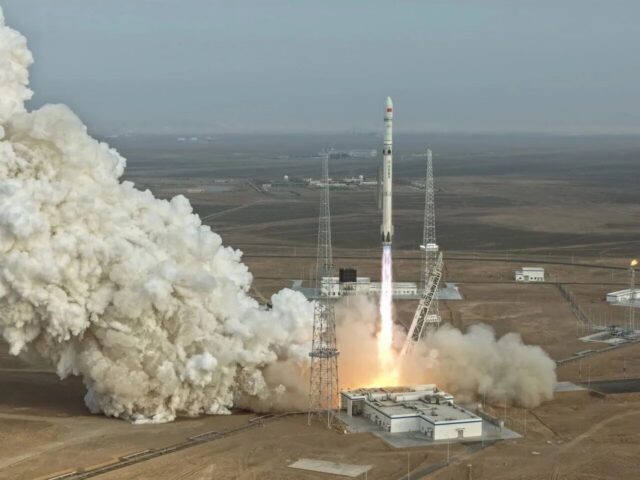
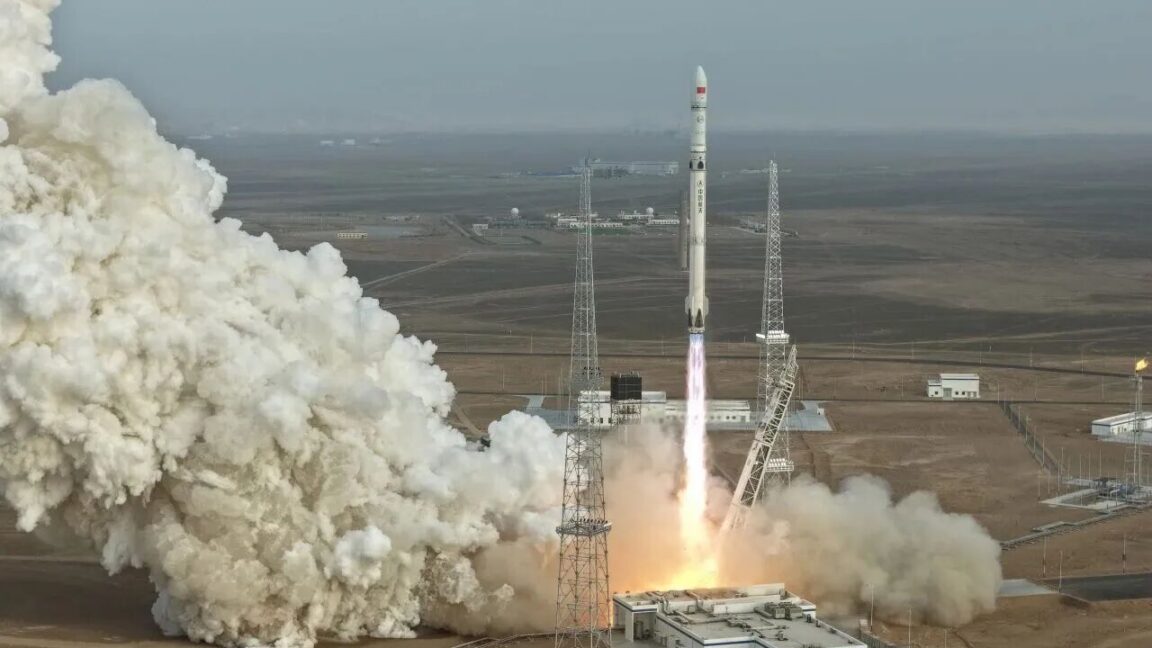
China's first Long March 12A rocket lifts off from a commercial launch pad at the Jiuquan Satellite Launch Center. Credit: CASC
For the second time this month, a Chinese rocket designed for reuse successfully soared into low-Earth orbit on its first flight Monday, defying the questionable odds that burden the debuts of new launch vehicles.
The first Long March 12A rocket, roughly the same height and diameter of SpaceX’s workhorse Falcon 9, lifted off from the Jiuquan Satellite Launch Center at 9:00 pm EST Monday (02:00 UTC Tuesday).
Less than 10 minutes later, rocket’s methane-fueled first stage booster hurtled through the atmosphere at supersonic speed, impacting in a remote region about 200 miles downrange from the Jiuquan spaceport in northwestern China. The booster failed to complete a braking burn to slow down for landing at a prepared location near the edge of the Gobi Desert.
The Long March 12A’s upper stage performed as intended, successfully reaching the mission’s “predetermined orbit,” said the China Aerospace Science and Technology Corporation (CASC), the state-owned enterprise that leads the country’s space industry.
“The first stage failed to be successfully recovered,” the corporation said in a statement. “The specific reasons are currently under further analysis and investigation.”
A stable of reusable rockets
This outcome resembles the results from the first flight of another medium-class Chinese rocket, the Zhuque-3, on December 2. The Zhuque-3 rocket was developed by a privately-funded startup named LandSpace. Similar in size and performance to the Long March 12A, the Zhuque-3 also reached orbit on its first launch, and its recoverable booster stage crashed during a downrange landing attempt. The Zhuque-3’s first stage came down next to its landing zone, while the Long March 12A appears to have missed by at least a couple of miles.
“Although this mission did not achieve the planned recovery of the rocket’s first stage, it obtained critical engineering data under the rocket’s actual flight conditions, laying an important foundation for subsequent launches and reliable recovery of the stages,” CASC said. “The research and development team will promptly conduct a comprehensive review and technical analysis of this test process, fully investigate the cause of the failure, continuously optimize the recovery plan, and continue to advance reusable technology verification.”
One key difference between the Zhuque-3 and the Long March 12A is the latter rocket was developed by one of China’s state-owned contractors—the Shanghai Academy of Spaceflight Technology. The academy is a subsidiary of CASC, and also builds China’s Long March 4 and Long March 6 rockets.
The Zhuque-3 and Long March 12A are China’s first orbital-class rockets with recoverable boosters. Both use the same propulsive landing architecture pioneered by SpaceX. Instead of landing on barges in the ocean, the Zhuque-3 and Long March 12A boosters target landing sites in the desert, far downrange from their inland launch pads.
Chinese rockets have logged 89 orbital launch attempts this year, less than half the number of flights by US launch vehicles. But China’s launch cadence dwarfs that of the rest of the world’s nations, and the US and Chinese numbers combine account for nearly 90 percent of all orbital launches in 2025.
China has achieved this launch cadence with a fleet of expendable rockets, ranging from small micro-launchers to the heavy-lift Long March 5. With reusable rockets, China could launch more often and at lower cost, revolutionizing the country’s access to space in ways similar to how SpaceX’s Falcon 9 ushered in a new era of lower-cost launch services in the United States.
Several other small-to-medium-class reusable rockets are on the horizon in China. They include commercial rockets from a group of startups, including Space Pioneer’s Tianlong-3 and CAS Space’s Kinetica-3, that could be ready to debut in the early months of next year. Both rockets have recoverable boosters, and their builders say they have delivered them to their launch sites.
Galactic Energy’s Pallas-1 rocket, i-Space’s Hyperbola-3, and Deep Blue Aerospace’s Nebula-1 are also designed for reusability, and could fly some time in 2026.
The China Academy of Launch Vehicle Technology, China’s largest rocket developer, is working on a pair of super-heavy rockets. The first will be the Long March 10, designed to fly with reusable boosters while launching China’s next-generation crew spacecraft on missions to the Moon. Later, perhaps in the 2030s, China could debut the fully reusable Long March 9 rocket similar in scale to SpaceX’s Starship.
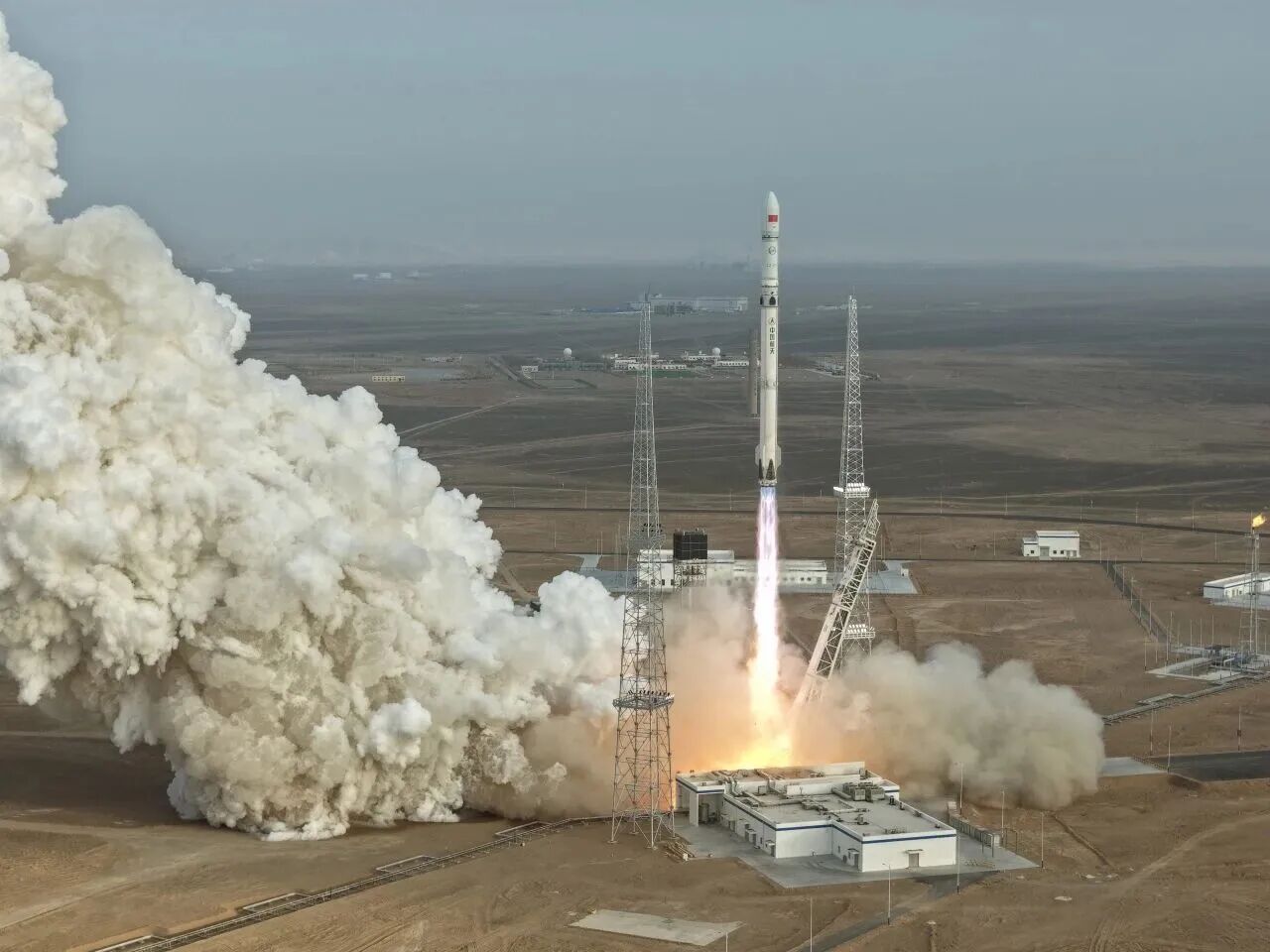
China's first Long March 12A rocket lifts off from a commercial launch pad at the Jiuquan Satellite Launch Center. Credit: CASC
For the second time this month, a Chinese rocket designed for reuse successfully soared into low-Earth orbit on its first flight Monday, defying the questionable odds that burden the debuts of new launch vehicles.
The first Long March 12A rocket, roughly the same height and diameter of SpaceX’s workhorse Falcon 9, lifted off from the Jiuquan Satellite Launch Center at 9:00 pm EST Monday (02:00 UTC Tuesday).
Less than 10 minutes later, rocket’s methane-fueled first stage booster hurtled through the atmosphere at supersonic speed, impacting in a remote region about 200 miles downrange from the Jiuquan spaceport in northwestern China. The booster failed to complete a braking burn to slow down for landing at a prepared location near the edge of the Gobi Desert.
The Long March 12A’s upper stage performed as intended, successfully reaching the mission’s “predetermined orbit,” said the China Aerospace Science and Technology Corporation (CASC), the state-owned enterprise that leads the country’s space industry.
“The first stage failed to be successfully recovered,” the corporation said in a statement. “The specific reasons are currently under further analysis and investigation.”
A stable of reusable rockets
This outcome resembles the results from the first flight of another medium-class Chinese rocket, the Zhuque-3, on December 2. The Zhuque-3 rocket was developed by a privately-funded startup named LandSpace. Similar in size and performance to the Long March 12A, the Zhuque-3 also reached orbit on its first launch, and its recoverable booster stage crashed during a downrange landing attempt. The Zhuque-3’s first stage came down next to its landing zone, while the Long March 12A appears to have missed by at least a couple of miles.
“Although this mission did not achieve the planned recovery of the rocket’s first stage, it obtained critical engineering data under the rocket’s actual flight conditions, laying an important foundation for subsequent launches and reliable recovery of the stages,” CASC said. “The research and development team will promptly conduct a comprehensive review and technical analysis of this test process, fully investigate the cause of the failure, continuously optimize the recovery plan, and continue to advance reusable technology verification.”
One key difference between the Zhuque-3 and the Long March 12A is the latter rocket was developed by one of China’s state-owned contractors—the Shanghai Academy of Spaceflight Technology. The academy is a subsidiary of CASC, and also builds China’s Long March 4 and Long March 6 rockets.
The Zhuque-3 and Long March 12A are China’s first orbital-class rockets with recoverable boosters. Both use the same propulsive landing architecture pioneered by SpaceX. Instead of landing on barges in the ocean, the Zhuque-3 and Long March 12A boosters target landing sites in the desert, far downrange from their inland launch pads.
Chinese rockets have logged 89 orbital launch attempts this year, less than half the number of flights by US launch vehicles. But China’s launch cadence dwarfs that of the rest of the world’s nations, and the US and Chinese numbers combine account for nearly 90 percent of all orbital launches in 2025.
China has achieved this launch cadence with a fleet of expendable rockets, ranging from small micro-launchers to the heavy-lift Long March 5. With reusable rockets, China could launch more often and at lower cost, revolutionizing the country’s access to space in ways similar to how SpaceX’s Falcon 9 ushered in a new era of lower-cost launch services in the United States.
Several other small-to-medium-class reusable rockets are on the horizon in China. They include commercial rockets from a group of startups, including Space Pioneer’s Tianlong-3 and CAS Space’s Kinetica-3, that could be ready to debut in the early months of next year. Both rockets have recoverable boosters, and their builders say they have delivered them to their launch sites.
Galactic Energy’s Pallas-1 rocket, i-Space’s Hyperbola-3, and Deep Blue Aerospace’s Nebula-1 are also designed for reusability, and could fly some time in 2026.
The China Academy of Launch Vehicle Technology, China’s largest rocket developer, is working on a pair of super-heavy rockets. The first will be the Long March 10, designed to fly with reusable boosters while launching China’s next-generation crew spacecraft on missions to the Moon. Later, perhaps in the 2030s, China could debut the fully reusable Long March 9 rocket similar in scale to SpaceX’s Starship.
