

- Регистрация
- 17 Фев 2018
- Сообщения
- 42,345
- Реакции
- 0
- Баллы
- 36
Ofline
FCC defines consumer routers expansively, updates FAQ to include Wi-Fi hotspots.
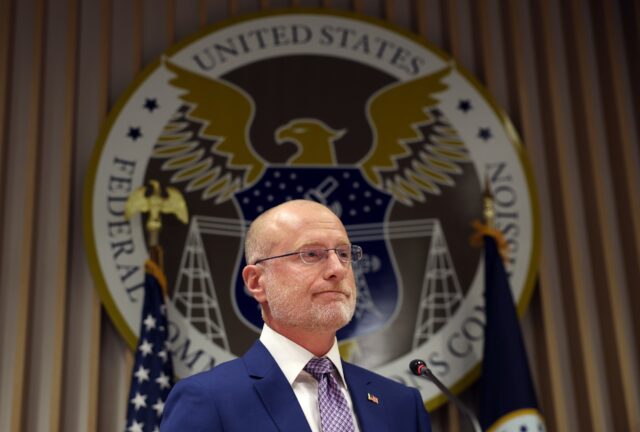

FCC Chairman Brendan Carr speaks at a news conference following an FCC meeting on February 18, 2026 in Washington, DC. Credit: Getty Images | Kevin Dietsch
The Federal Communications Commission clarified this week that its sweeping ban on foreign-made consumer routers also affects portable hotspot devices.
The FCC added a new section to an FAQ titled, “Is my device a consumer-grade router under the National Security Determination?” The new FAQ section says this category includes “consumer-grade portable or mobile MiFi Wi-Fi or hotspot devices for residential use.” The ban does not cover “mobile phones with hotspot features,” the FAQ says.
This means that companies making consumer hotspots need an exemption from the government to import and sell any future hotspots that haven’t previously been approved by the FCC. As with routers, devices previously approved for sale in the US can continue to be imported and sold without obtaining a special exemption.
The FCC defines routers broadly, giving the agency plenty of flexibility to include various types of consumer networking devices in the ban. When the FCC announced the ban last month, it defined routers as “consumer-grade networking devices that are primarily intended for residential use and can be installed by the customer,” and which “forward data packets, most commonly Internet Protocol (IP) packets, between networked systems.”
But while an earlier version of the FAQ stated that cellphones with mobile hotspot features were exempt, it did not specifically say that portable hotspot devices were covered by the ban. In addition to hotspot devices, the new FAQ section says the router ban applies to “consumer or small and medium-sized business routers sold or rented through retail and self-installable by end users”; “LTE/5G CPE [customer premises equipment] devices for residential use”; “residential routers installed by a professional or ISP”; and “residential gateways that combine modem and router functions.”
The device ban is only for consumer-grade equipment, even though network gear used by large businesses presents a natural target for foreign hackers. The new FAQ section notes that “industrial, enterprise, or military equipment” is not included.
The FCC adds that other devices not covered by the ban include analog telephone adapters with Ethernet LAN and WAN ports, femtocells, and optical network terminals. The new FAQ section was pointed out yesterday in a PCMag article.
The FCC router ban stems from a President Trump directive on reducing the use of foreign technology for national security reasons. The FCC said it will not approve new device models made at least partly outside the US unless the Department of Defense or Department of Homeland Security determines that the router does not pose national security risks.
Whether headquartered in the US or abroad, virtually every router maker will have to obtain an exemption for future devices. The various components inside routers are made in countries such as Taiwan, South Korea, Japan, and China, noted a report by the Global Electronics Association trade group.
Netgear became the first major vendor of consumer routers to obtain an exemption last week. The Amazon-owned Eero was granted an exemption this week.

FCC Chairman Brendan Carr speaks at a news conference following an FCC meeting on February 18, 2026 in Washington, DC. Credit: Getty Images | Kevin Dietsch
The Federal Communications Commission clarified this week that its sweeping ban on foreign-made consumer routers also affects portable hotspot devices.
The FCC added a new section to an FAQ titled, “Is my device a consumer-grade router under the National Security Determination?” The new FAQ section says this category includes “consumer-grade portable or mobile MiFi Wi-Fi or hotspot devices for residential use.” The ban does not cover “mobile phones with hotspot features,” the FAQ says.
This means that companies making consumer hotspots need an exemption from the government to import and sell any future hotspots that haven’t previously been approved by the FCC. As with routers, devices previously approved for sale in the US can continue to be imported and sold without obtaining a special exemption.
The FCC defines routers broadly, giving the agency plenty of flexibility to include various types of consumer networking devices in the ban. When the FCC announced the ban last month, it defined routers as “consumer-grade networking devices that are primarily intended for residential use and can be installed by the customer,” and which “forward data packets, most commonly Internet Protocol (IP) packets, between networked systems.”
But while an earlier version of the FAQ stated that cellphones with mobile hotspot features were exempt, it did not specifically say that portable hotspot devices were covered by the ban. In addition to hotspot devices, the new FAQ section says the router ban applies to “consumer or small and medium-sized business routers sold or rented through retail and self-installable by end users”; “LTE/5G CPE [customer premises equipment] devices for residential use”; “residential routers installed by a professional or ISP”; and “residential gateways that combine modem and router functions.”
Netgear and Eero get exemptions
The device ban is only for consumer-grade equipment, even though network gear used by large businesses presents a natural target for foreign hackers. The new FAQ section notes that “industrial, enterprise, or military equipment” is not included.
The FCC adds that other devices not covered by the ban include analog telephone adapters with Ethernet LAN and WAN ports, femtocells, and optical network terminals. The new FAQ section was pointed out yesterday in a PCMag article.
The FCC router ban stems from a President Trump directive on reducing the use of foreign technology for national security reasons. The FCC said it will not approve new device models made at least partly outside the US unless the Department of Defense or Department of Homeland Security determines that the router does not pose national security risks.
Whether headquartered in the US or abroad, virtually every router maker will have to obtain an exemption for future devices. The various components inside routers are made in countries such as Taiwan, South Korea, Japan, and China, noted a report by the Global Electronics Association trade group.
Netgear became the first major vendor of consumer routers to obtain an exemption last week. The Amazon-owned Eero was granted an exemption this week.