


- Регистрация
- 17 Февраль 2018
- Сообщения
- 40 832
- Лучшие ответы
- 0
- Реакции
- 0
- Баллы
- 8 093
Offline
Pharma execs had avoided conflict with Trump admin, but now join doctors in rebukes.

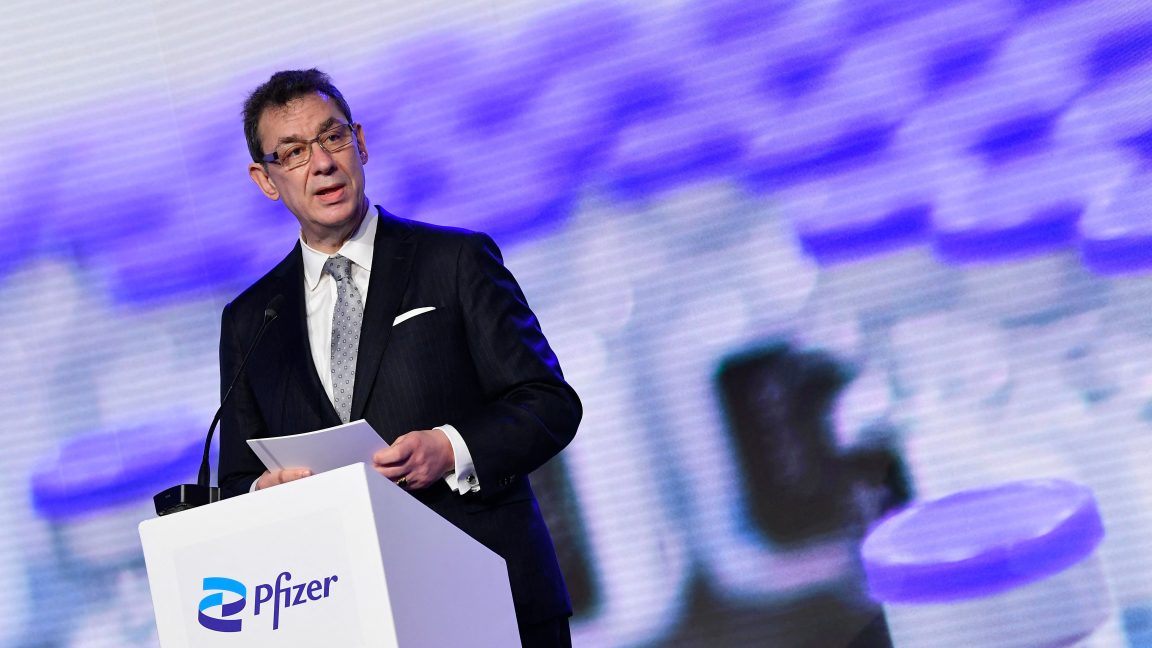
Pfizer CEO Albert Bourla talks during a press conference. Credit: Getty | John Thys
Pharmaceutical executives are finally saying how they really feel about the extreme anti-vaccine agenda Health Secretary Robert F. Kennedy Jr. has been ruthlessly implementing—and it’s not pretty.
According to reporting from Bloomberg at the J.P. Morgan Healthcare Conference that ended today in San Francisco, pharmaceutical executives who had previously been careful to avoid criticizing the Trump administration appear to have reached a breaking point, with Pfizer CEO Albert Bourla offering some of the most candid comments.
“I am very annoyed. I’m very disappointed. I’m seriously frustrated,” Bourla said. “What is happening has zero scientific merit and is just serving an agenda which is political, and then antivax.”
Last week, Kennedy and other health officials abruptly announced a mass overhaul of the childhood vaccine schedule, dropping the number of routine recommended vaccinations from 17 to 11. The drastic and unprecedented change bypassed all the scientific review and transparent decision-making processes that would normally underpin such changes, which would likely have taken months if not years.
Kennedy claimed that the move puts the US more in line with peer nations, but as an analysis by Stat News pointed out, the US is now an outlier, recommending significantly fewer vaccines than many other countries. Of 20 so-called peer countries that Stat compared, only one other country has a similarly low number of recommendations: Denmark.
Leading medical groups, including the American Academy of Pediatrics, are preparing a legal challenge to block the changes.
Waiting for the midterms
But pharmaceutical executives don’t appear comforted by the pushback. “Today it may be childhood vaccines or mRNA, but tomorrow it’s everything,” Noubar Afeyan, co-founder and chairman of Moderna, maker of mRNA vaccines, said. “We have to say not just ‘why is this happening?,’ but ‘Where will it stop?’”
As a bad flu season is underway, Dean Li, president of Merck Research Laboratories, noted that the anti-vaccine rhetoric is hitting seasonal flu shots. “With the pressure on vaccination, I cannot foresee flu vaccination increasing in this country over the next three years,” he said in a presentation.
Sanofi Chief Executive Paul Hudson had a similarly pessimistic outlook. “It’s clear this administration has a particular sensitivity around vaccination, and indeed pediatric vaccination,” Hudson said. “I’m asked all the time ‘what are you going to do to fix this?,’ and the truth is we just need to stay extremely objective and continue presenting the evidence. There’s really very little else we can do,” except wait for the midterm elections, he said.
“We will have to maintain a steely focus on the long-term future of vaccines and deal with any uncertainty around vaccine coverage rates in the short-term based on misinformation, Facebook posts, and statements from the top,” he said.
Bourla also worried about the conditions Kennedy is creating to attack drug makers. Kennedy, who is an environmental lawyer with no scientific or medical background, has profited from lawsuits against vaccine makers, as have many of his allies and advisors. “There is also a lot of plaintiffs’ playbook there,” Bourla said. “Everybody will start litigating.”
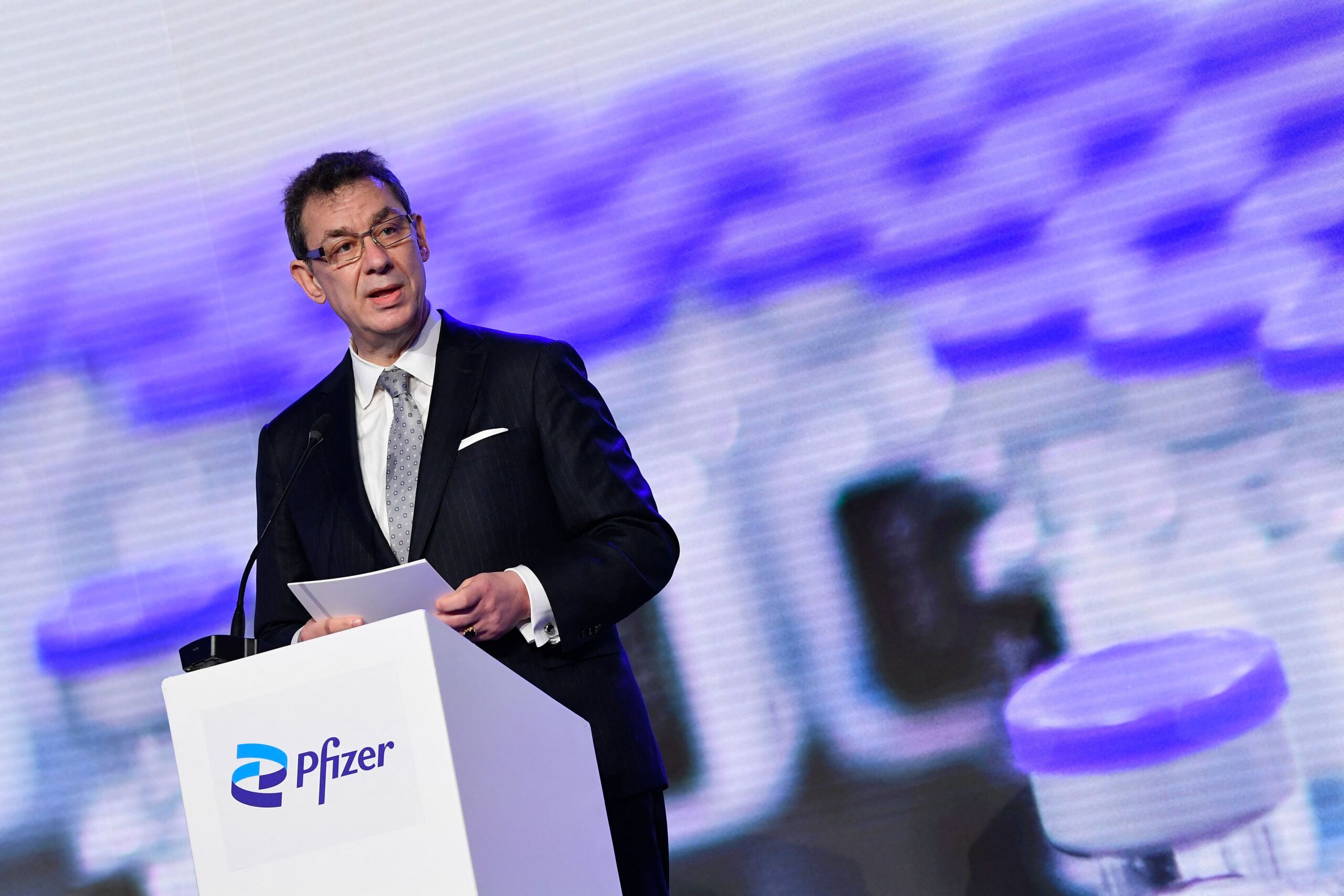
Pfizer CEO Albert Bourla talks during a press conference. Credit: Getty | John Thys
Pharmaceutical executives are finally saying how they really feel about the extreme anti-vaccine agenda Health Secretary Robert F. Kennedy Jr. has been ruthlessly implementing—and it’s not pretty.
According to reporting from Bloomberg at the J.P. Morgan Healthcare Conference that ended today in San Francisco, pharmaceutical executives who had previously been careful to avoid criticizing the Trump administration appear to have reached a breaking point, with Pfizer CEO Albert Bourla offering some of the most candid comments.
“I am very annoyed. I’m very disappointed. I’m seriously frustrated,” Bourla said. “What is happening has zero scientific merit and is just serving an agenda which is political, and then antivax.”
Last week, Kennedy and other health officials abruptly announced a mass overhaul of the childhood vaccine schedule, dropping the number of routine recommended vaccinations from 17 to 11. The drastic and unprecedented change bypassed all the scientific review and transparent decision-making processes that would normally underpin such changes, which would likely have taken months if not years.
Kennedy claimed that the move puts the US more in line with peer nations, but as an analysis by Stat News pointed out, the US is now an outlier, recommending significantly fewer vaccines than many other countries. Of 20 so-called peer countries that Stat compared, only one other country has a similarly low number of recommendations: Denmark.
Leading medical groups, including the American Academy of Pediatrics, are preparing a legal challenge to block the changes.
Waiting for the midterms
But pharmaceutical executives don’t appear comforted by the pushback. “Today it may be childhood vaccines or mRNA, but tomorrow it’s everything,” Noubar Afeyan, co-founder and chairman of Moderna, maker of mRNA vaccines, said. “We have to say not just ‘why is this happening?,’ but ‘Where will it stop?’”
As a bad flu season is underway, Dean Li, president of Merck Research Laboratories, noted that the anti-vaccine rhetoric is hitting seasonal flu shots. “With the pressure on vaccination, I cannot foresee flu vaccination increasing in this country over the next three years,” he said in a presentation.
Sanofi Chief Executive Paul Hudson had a similarly pessimistic outlook. “It’s clear this administration has a particular sensitivity around vaccination, and indeed pediatric vaccination,” Hudson said. “I’m asked all the time ‘what are you going to do to fix this?,’ and the truth is we just need to stay extremely objective and continue presenting the evidence. There’s really very little else we can do,” except wait for the midterm elections, he said.
“We will have to maintain a steely focus on the long-term future of vaccines and deal with any uncertainty around vaccine coverage rates in the short-term based on misinformation, Facebook posts, and statements from the top,” he said.
Bourla also worried about the conditions Kennedy is creating to attack drug makers. Kennedy, who is an environmental lawyer with no scientific or medical background, has profited from lawsuits against vaccine makers, as have many of his allies and advisors. “There is also a lot of plaintiffs’ playbook there,” Bourla said. “Everybody will start litigating.”
