


- Регистрация
- 17 Февраль 2018
- Сообщения
- 40 832
- Лучшие ответы
- 0
- Реакции
- 0
- Баллы
- 8 093
Offline
Most things Privateer did have been done better, but it’s still a classic.
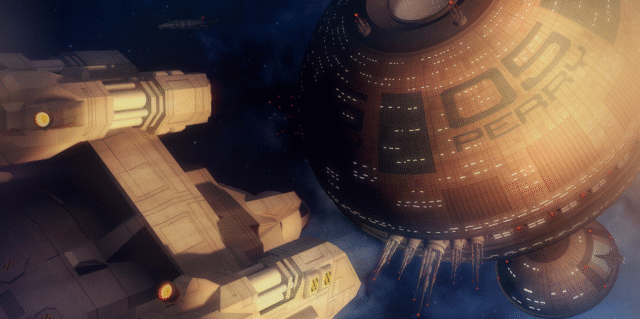
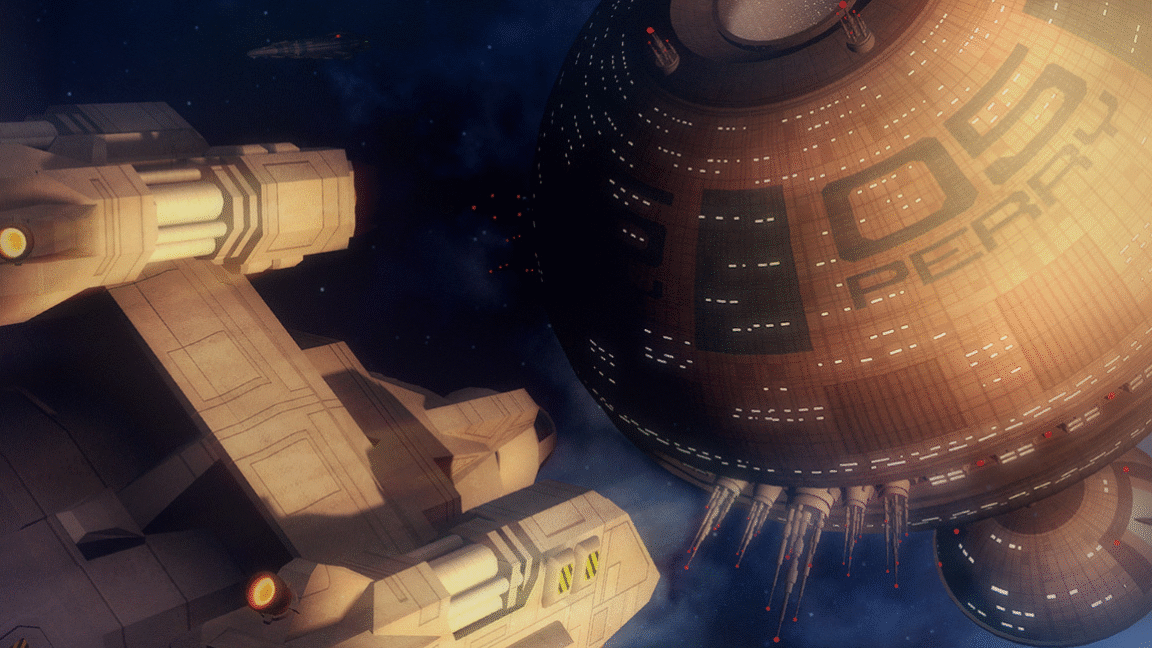
This splash image is the original box art for the game, and what appealing box art it was. Credit: GOG
C:\ArsGames
We love games here at the Ars Orbiting HQ, from modern to ancient and all points in between. With that in mind, we’ve partnered with the folks at GOG.com to create a store page featuring a curated list of some of our favorites from GOG’s catalog. At the end of every month, we’ll rotate a couple of titles off the list and add a few new ones; altogether, we have about 50 games to set in front of you.
Twice a month, we’ll publish a personal retrospective like this one, where we’ll feature one of the games from the list—perhaps a retro game you’ve heard of, perhaps a modern title you missed. Regardless, GOG will have a DRM-free version of the game ready to go. Be sure to check out the earlier pieces in the series!
Today’s entry is the only one in C:\ArsGames for December, but we’ll be back to our normal schedule in January. Happy holidays!
Ever since 1993, I think I’ve unconsciously judged almost every game by how well it can capture how Wing Commander: Privateer made me feel.
Steam and PlayStation (the two platforms I use the most) have been doing a year-in-review summary akin to the wildly popular Spotify Wrapped for the past few years. Based on these, I can report that my most-played games in 2025 were, from most hours down:
With the exceptions of Civilization VII and Unreal Tournament, every one of those games is some kind of open-world experience that’s all about immersing you in a far-flung land (or galaxy).
I like what I like, and my knowing that’s what I like began in the early 1990s with Wing Commander: Privateer.
Privateer taught me that I love games that are spaces for living out whatever fictional life I create for myself much more than I love games that are guiding me through an authored story and a series of carefully designed challenges.
 , it has a story and story missions, but they’re hardly the point, partly because they’re not really that good. What’s exciting about this game is exploring new systems, seeing the beautiful CG artwork for their settlements, learning about your ships’ capabilities and upgrading them slowly over time, and attaining mastery of the pseudo-simulated economy.
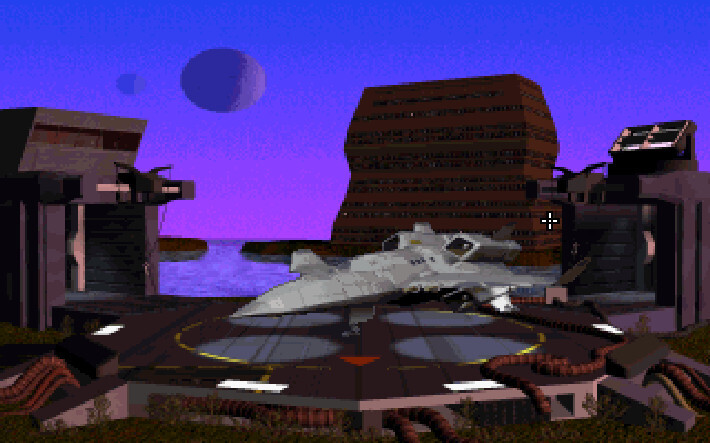
These CG-rendered planet backgrounds captured my imagination in the 1990s, and they still do, though nostalgia probably plays a part. Credit: GOG
The story that matters in Privateer is the story I am telling myself in my head. To this day, the games I most love offer at least a taste of that experience.
Privateer‘s far-reaching (and drama-laden) legacy
To say this game was influential on later titles would be an understatement, but we, of course, have to acknowledge that this formula was originally popularized by 1984’s Elite. Privateer just married that formula with Wing Commander‘s universe and flight mechanics, with a far more hand-crafted setting. That setting is key, though. I like the original Elite, and this certainly wasn’t the case back in the mid-’80s, but today, it plays like a tech demo for what’s to come.
Privateer was the full package. Later, we got the X series, EVE Online, Elite Dangerous, Starfield, and even No Man’s Sky, a game I love so much I’m literally writing the book on it.
None of those games was made by Privateer lead Chris Roberts, of course. He would go on to work on Freelancer, probably the most accessible space trading/pirating game ever made, and an underappreciated gem, even if it didn’t live up to the hype that surrounded it. (Roberts left the project mid-way, and it was finished by others who dropped many of his impossibly ambitious ideas for it.)
Now we have Star Citizen. We here at Ars have covered that game as much as anybody, and it’s fair to say a lot of the coverage has not been positive. I won’t retread all that drama here; if you know, you know, and if you don’t, it’s easy to dig up.
But all that is to say that there are few space games today that aren’t directly inspired by Wing Commander: Privateer, and Privateer inspired me too: it inspired me to love sandbox and open-world games.
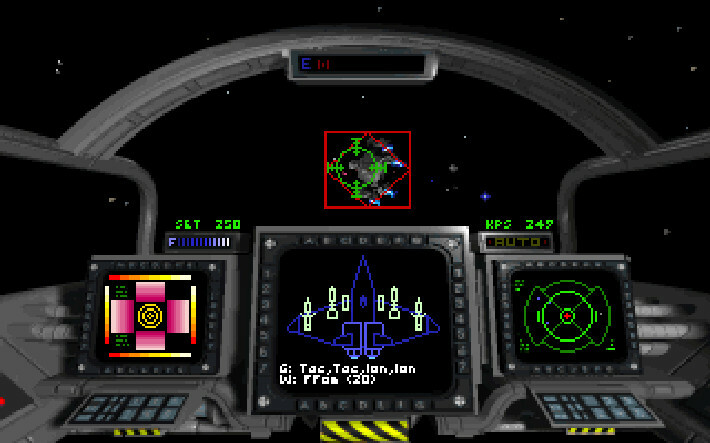
When you’re in space, it closely resembles the mainline Wing Commander games. Credit: GOG
It’s odd that a game that was so heavily inspired by a title almost a decade its senior (Elite) still managed to be ahead of its time, and maybe that says as much for Elite as it does for Privateer
Privateer was re-released with Windows support via GOG in 2011, but it took me until recently to revisit it for the first time since the 1990s., it has ancient graphics now, but they’re endemic to a particular era of PC game graphics that I find extremely nostalgic, so they work for me.
In terms of mechanics and systems, everything Privateer does is done far better and to greater depths by at least one later space game. And to boot, it has more friction and frustrations, and while the game is ultimately pretty easy once you get the hang of it, it’s hard to learn.
But like Freelancer after it, it hits a sweet spot balancing all these aspects that makes it still stand out. Elite Dangerous is the best at the simulation and economy aspects, Star Citizen has more impressively realized ships and settlements, and No Man’s Sky is more accessible while still delivering on the fantasy (and it offers a much wider range of activities).
I don’t know if it’s just nostalgia for that aforementioned 1990s DOS game aesthetic speaking, though, but I’m of the opinion that none of Privateer‘s spiritual successors have matched the character and draw of its setting. Seeing this side of the Wing Commander universe is a treat, and I feel that not even modern games that were entirely about having that same sense of culture and place (like Starfield, for example) don’t quite get there.
I’d be curious how it reads to people who never played it back in the day, though. Like I said, this is a pantheon game for me. If someone who plays Elite Dangerous, Starfield, Star Citizen, or No Man’s Sky today goes back and tries Wing Commander: Privateer out, does it hold up for them, too?
If that describes you and you give it a shot, let me know.
Ars Technica may earn compensation for sales from links on this post through affiliate programs.

This splash image is the original box art for the game, and what appealing box art it was. Credit: GOG
C:\ArsGames
We love games here at the Ars Orbiting HQ, from modern to ancient and all points in between. With that in mind, we’ve partnered with the folks at GOG.com to create a store page featuring a curated list of some of our favorites from GOG’s catalog. At the end of every month, we’ll rotate a couple of titles off the list and add a few new ones; altogether, we have about 50 games to set in front of you.
Twice a month, we’ll publish a personal retrospective like this one, where we’ll feature one of the games from the list—perhaps a retro game you’ve heard of, perhaps a modern title you missed. Regardless, GOG will have a DRM-free version of the game ready to go. Be sure to check out the earlier pieces in the series!
Today’s entry is the only one in C:\ArsGames for December, but we’ll be back to our normal schedule in January. Happy holidays!
Ever since 1993, I think I’ve unconsciously judged almost every game by how well it can capture how Wing Commander: Privateer made me feel.
Steam and PlayStation (the two platforms I use the most) have been doing a year-in-review summary akin to the wildly popular Spotify Wrapped for the past few years. Based on these, I can report that my most-played games in 2025 were, from most hours down:
- No Man’s Sky
- Civilization VII
- Assassin’s Creed Shadows
- The Elder Scrolls IV Oblivion Remastered
- The Lord of the Rings: Return to Moria
- The Elder Scrolls III Morrowind
- World of Warcraft
- Meridian 59
- Tainted Grail: Fall of Avalon
- Unreal Tournament
With the exceptions of Civilization VII and Unreal Tournament, every one of those games is some kind of open-world experience that’s all about immersing you in a far-flung land (or galaxy).
I like what I like, and my knowing that’s what I like began in the early 1990s with Wing Commander: Privateer.
Privateer taught me that I love games that are spaces for living out whatever fictional life I create for myself much more than I love games that are guiding me through an authored story and a series of carefully designed challenges.
, it has a story and story missions, but they’re hardly the point, partly because they’re not really that good. What’s exciting about this game is exploring new systems, seeing the beautiful CG artwork for their settlements, learning about your ships’ capabilities and upgrading them slowly over time, and attaining mastery of the pseudo-simulated economy.
These CG-rendered planet backgrounds captured my imagination in the 1990s, and they still do, though nostalgia probably plays a part. Credit: GOG
The story that matters in Privateer is the story I am telling myself in my head. To this day, the games I most love offer at least a taste of that experience.
Privateer‘s far-reaching (and drama-laden) legacy
To say this game was influential on later titles would be an understatement, but we, of course, have to acknowledge that this formula was originally popularized by 1984’s Elite. Privateer just married that formula with Wing Commander‘s universe and flight mechanics, with a far more hand-crafted setting. That setting is key, though. I like the original Elite, and this certainly wasn’t the case back in the mid-’80s, but today, it plays like a tech demo for what’s to come.
Privateer was the full package. Later, we got the X series, EVE Online, Elite Dangerous, Starfield, and even No Man’s Sky, a game I love so much I’m literally writing the book on it.
None of those games was made by Privateer lead Chris Roberts, of course. He would go on to work on Freelancer, probably the most accessible space trading/pirating game ever made, and an underappreciated gem, even if it didn’t live up to the hype that surrounded it. (Roberts left the project mid-way, and it was finished by others who dropped many of his impossibly ambitious ideas for it.)
Now we have Star Citizen. We here at Ars have covered that game as much as anybody, and it’s fair to say a lot of the coverage has not been positive. I won’t retread all that drama here; if you know, you know, and if you don’t, it’s easy to dig up.
But all that is to say that there are few space games today that aren’t directly inspired by Wing Commander: Privateer, and Privateer inspired me too: it inspired me to love sandbox and open-world games.
When you’re in space, it closely resembles the mainline Wing Commander games. Credit: GOG
It’s odd that a game that was so heavily inspired by a title almost a decade its senior (Elite) still managed to be ahead of its time, and maybe that says as much for Elite as it does for Privateer
Privateer was re-released with Windows support via GOG in 2011, but it took me until recently to revisit it for the first time since the 1990s.
, it has ancient graphics now, but they’re endemic to a particular era of PC game graphics that I find extremely nostalgic, so they work for me.In terms of mechanics and systems, everything Privateer does is done far better and to greater depths by at least one later space game. And to boot, it has more friction and frustrations, and while the game is ultimately pretty easy once you get the hang of it, it’s hard to learn.
But like Freelancer after it, it hits a sweet spot balancing all these aspects that makes it still stand out. Elite Dangerous is the best at the simulation and economy aspects, Star Citizen has more impressively realized ships and settlements, and No Man’s Sky is more accessible while still delivering on the fantasy (and it offers a much wider range of activities).
I don’t know if it’s just nostalgia for that aforementioned 1990s DOS game aesthetic speaking, though, but I’m of the opinion that none of Privateer‘s spiritual successors have matched the character and draw of its setting. Seeing this side of the Wing Commander universe is a treat, and I feel that not even modern games that were entirely about having that same sense of culture and place (like Starfield, for example) don’t quite get there.
I’d be curious how it reads to people who never played it back in the day, though. Like I said, this is a pantheon game for me. If someone who plays Elite Dangerous, Starfield, Star Citizen, or No Man’s Sky today goes back and tries Wing Commander: Privateer out, does it hold up for them, too?
If that describes you and you give it a shot, let me know.
Ars Technica may earn compensation for sales from links on this post through affiliate programs.
