


- Регистрация
- 17 Февраль 2018
- Сообщения
- 40 832
- Лучшие ответы
- 0
- Реакции
- 0
- Баллы
- 8 093
Offline
AI weapons systems may annihilate their creators.
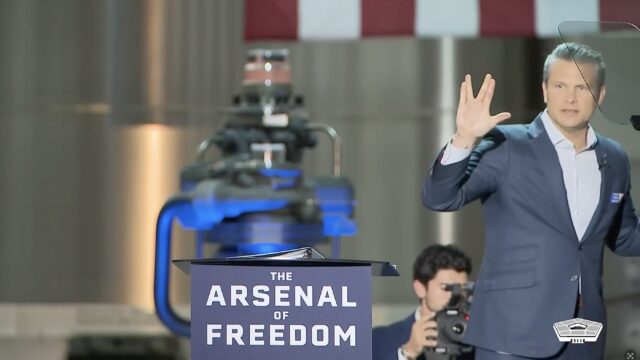
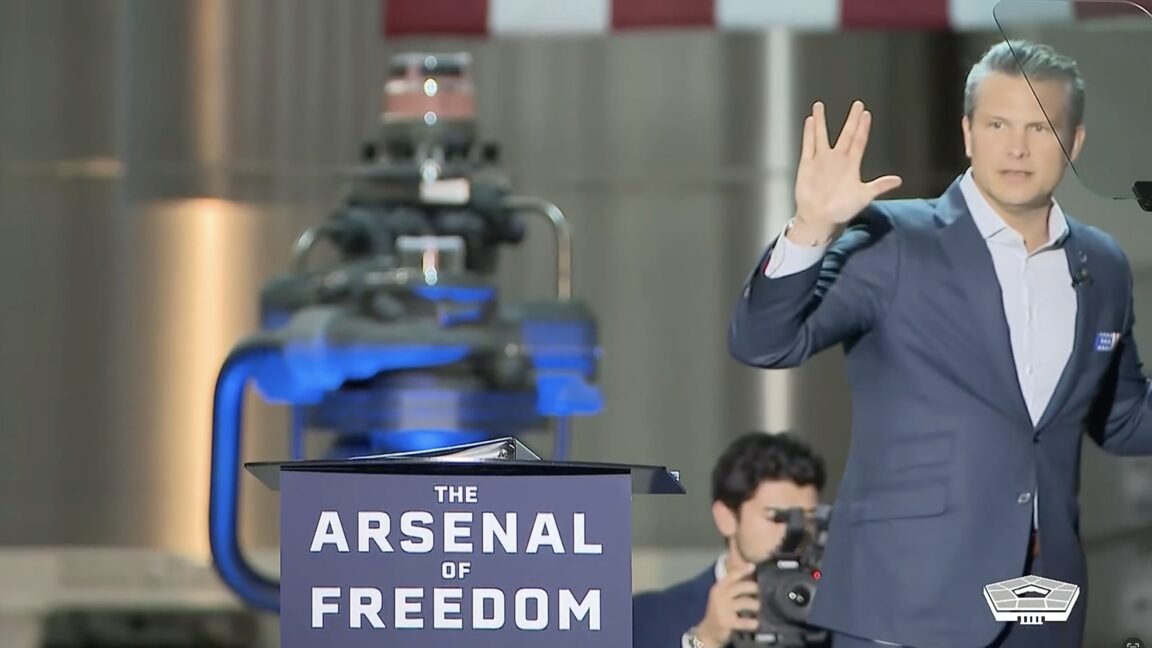
No, nothing remotely cringey about any of this. Why do you ask?
This week, SpaceX CEO Elon Musk and Secretary of Defense Pete Hegseth touted their desire to “make Star Trek real”—while unconsciously reminding us of what the utopian science fiction franchise is fundamentally about.
Their Tuesday event was the latest in Hegseth’s ongoing “Arsenal of Freedom” tour, which was held at SpaceX headquarters in Starbase, Texas. (Itself a newly created town that takes its name from a term popularized by Star Trek.)
Neither Musk nor Hegseth seemed to recall that the “Arsenal of Freedom” phrase—at least in the context of Star Trek—is also the title of a 1988 episode of Star Trek: The Next Generation. That episode depicts an AI-powered weapons system, and its automated salesman, which destroys an entire civilization and eventually threatens the crew of the USS Enterprise. (Some Trekkies made the connection, however.)
In his opening remarks this week, Musk touted his grandiose vision for SpaceX, saying that he wanted to “make Starfleet Academy real.” (Starfleet Academy is the fictional educational institution at the center of an upcoming new Star Trek TV series that debuts on January 15.)
When Musk introduced Hegseth, the two men shook hands. Then Hegseth flashed the Vulcan salute to the crowd and echoed Musk by saying, “Star Trek real!”
Hegseth honed in on the importance of innovation and artificial intelligence to the US military.
“Very soon, we will have the world’s leading AI models on every unclassified and classified network throughout our department. Long overdue,” Hegseth said.
“To further that, today at my direction, we’re executing an AI acceleration strategy that will extend our lead in military AI established during President Trump’s first term. This strategy will unleash experimentation, eliminate bureaucratic barriers, focus on investments and demonstrate the execution approach needed to ensure we lead in military AI and that it grows more dominant into the future.”
Unchecked military AI dominance is precisely the problem that the “Arsenal” episode warns of—a lesson either unknown to Musk and Hegseth or one that they chose to ignore.
In the episode, an AI-driven salesman continuously tries to sell Captain Jean-Luc Picard on the virtues of the “Echo Papa 607,” a sophisticated weapons system that is threatening his crew.
As the salesman tells Picard in the climax of the episode, the 607 “represents the state of the art in dynamic, adaptive design. It learns from each encounter and improves itself.”
PICARD: So what went wrong? Where are its creators? Where are the people of Minos?
SALESMAN: Once unleashed, the unit is invincible. The perfect killing system.
PICARD: Too perfect. You poor fools, your own creation destroyed you. What was that noise?
SALESMAN: The unit has analysed its last attack and constructed a new, stronger, deadlier weapon. In a moment, it will launch that weapon against the targets on the surface.
PICARD: Abort it!
SALESMAN: Why would I want to do that? It can’t demonstrate its abilities unless we let it leave the nest.
Neither Musk nor SpaceX responded to Ars’ request for comment.
When Ars asked the Pentagon if Hegseth or anyone on his staff had seen or was familiar with this Star Trek episode, a duty officer at Pentagon Press Operations declined to comment.
“We don’t have anything to offer you on this,” they wrote.
No, nothing remotely cringey about any of this. Why do you ask?
This week, SpaceX CEO Elon Musk and Secretary of Defense Pete Hegseth touted their desire to “make Star Trek real”—while unconsciously reminding us of what the utopian science fiction franchise is fundamentally about.
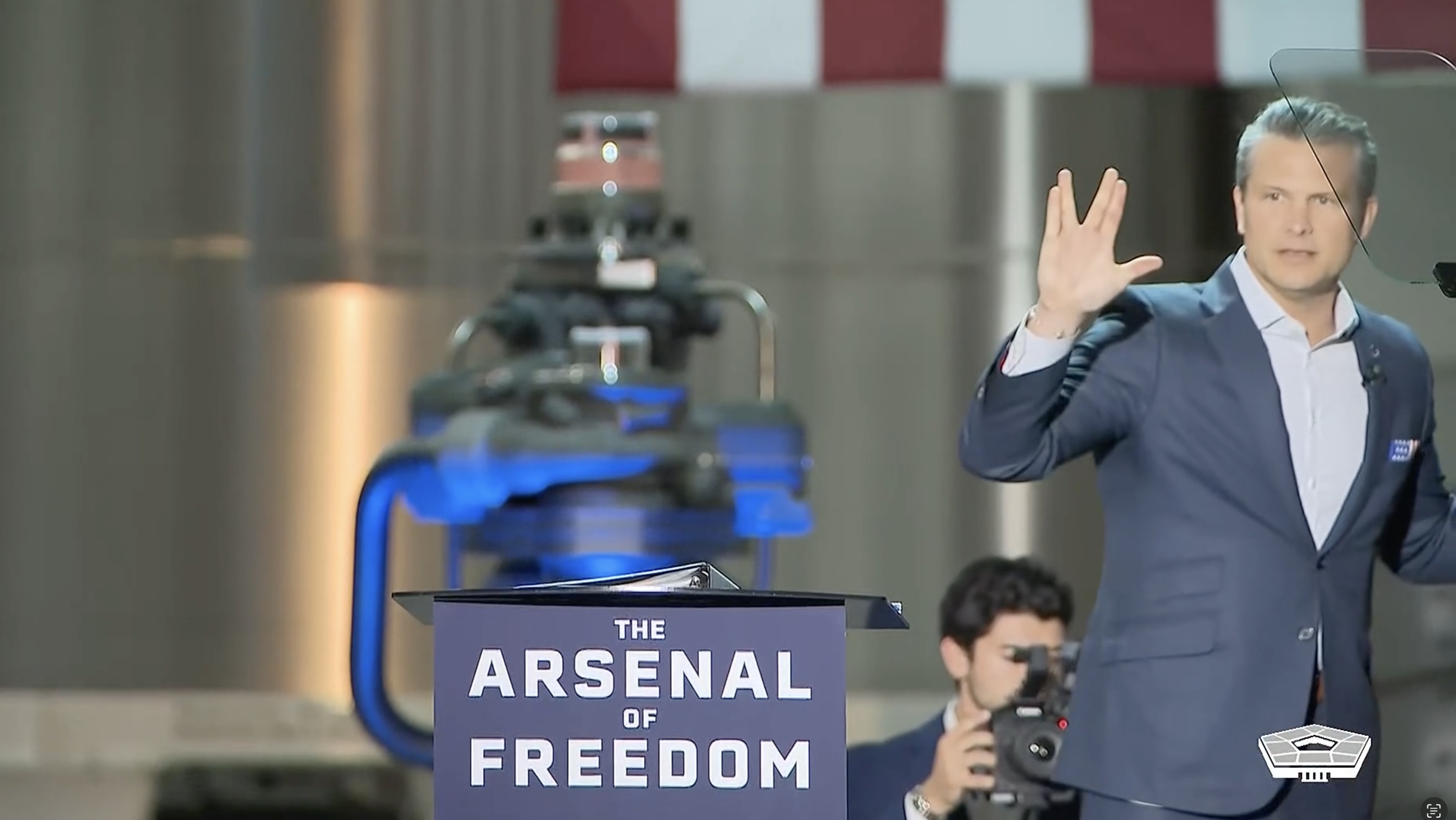
Their Tuesday event was the latest in Hegseth’s ongoing “Arsenal of Freedom” tour, which was held at SpaceX headquarters in Starbase, Texas. (Itself a newly created town that takes its name from a term popularized by Star Trek.)
Neither Musk nor Hegseth seemed to recall that the “Arsenal of Freedom” phrase—at least in the context of Star Trek—is also the title of a 1988 episode of Star Trek: The Next Generation. That episode depicts an AI-powered weapons system, and its automated salesman, which destroys an entire civilization and eventually threatens the crew of the USS Enterprise. (Some Trekkies made the connection, however.)
In his opening remarks this week, Musk touted his grandiose vision for SpaceX, saying that he wanted to “make Starfleet Academy real.” (Starfleet Academy is the fictional educational institution at the center of an upcoming new Star Trek TV series that debuts on January 15.)
When Musk introduced Hegseth, the two men shook hands. Then Hegseth flashed the Vulcan salute to the crowd and echoed Musk by saying, “Star Trek real!”
Hegseth honed in on the importance of innovation and artificial intelligence to the US military.
“Very soon, we will have the world’s leading AI models on every unclassified and classified network throughout our department. Long overdue,” Hegseth said.
“To further that, today at my direction, we’re executing an AI acceleration strategy that will extend our lead in military AI established during President Trump’s first term. This strategy will unleash experimentation, eliminate bureaucratic barriers, focus on investments and demonstrate the execution approach needed to ensure we lead in military AI and that it grows more dominant into the future.”
Unchecked military AI dominance is precisely the problem that the “Arsenal” episode warns of—a lesson either unknown to Musk and Hegseth or one that they chose to ignore.
In the episode, an AI-driven salesman continuously tries to sell Captain Jean-Luc Picard on the virtues of the “Echo Papa 607,” a sophisticated weapons system that is threatening his crew.
As the salesman tells Picard in the climax of the episode, the 607 “represents the state of the art in dynamic, adaptive design. It learns from each encounter and improves itself.”
PICARD: So what went wrong? Where are its creators? Where are the people of Minos?
SALESMAN: Once unleashed, the unit is invincible. The perfect killing system.
PICARD: Too perfect. You poor fools, your own creation destroyed you. What was that noise?
SALESMAN: The unit has analysed its last attack and constructed a new, stronger, deadlier weapon. In a moment, it will launch that weapon against the targets on the surface.
PICARD: Abort it!
SALESMAN: Why would I want to do that? It can’t demonstrate its abilities unless we let it leave the nest.
Neither Musk nor SpaceX responded to Ars’ request for comment.
When Ars asked the Pentagon if Hegseth or anyone on his staff had seen or was familiar with this Star Trek episode, a duty officer at Pentagon Press Operations declined to comment.
“We don’t have anything to offer you on this,” they wrote.
