


- Регистрация
- 17 Февраль 2018
- Сообщения
- 40 832
- Лучшие ответы
- 0
- Реакции
- 0
- Баллы
- 8 093
Offline
A long and winding road to reach NASA’s headquarters in Washington, DC.

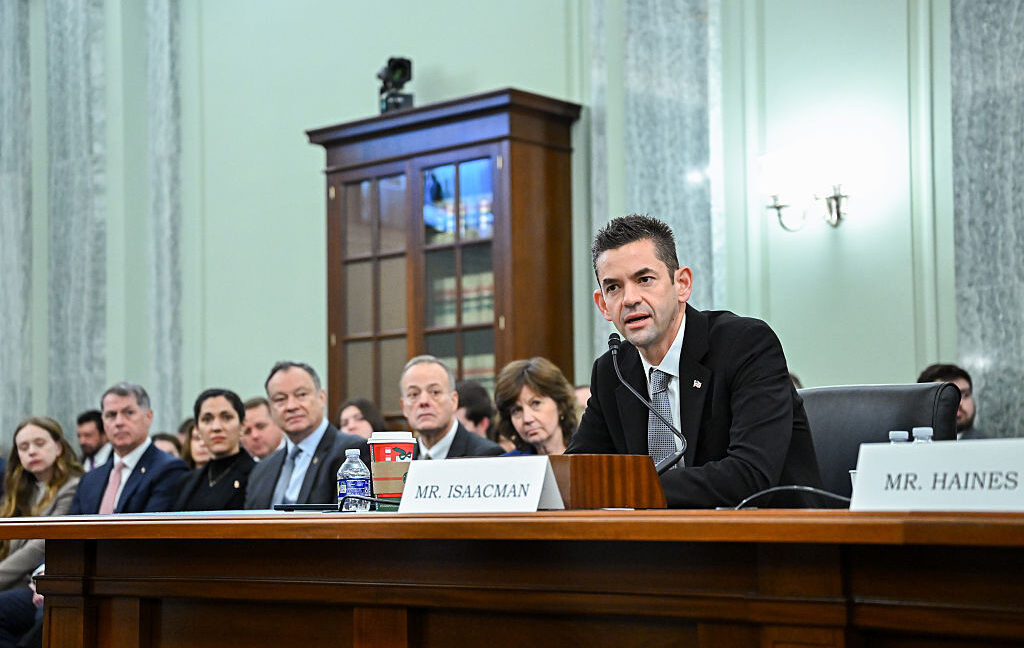
Jared Isaacman, administrator of the National Aeronautics and Space Administration nominee for US President Donald Trump, during a Senate Commerce, Science, and Transportation Committee confirmation hearing in Washington, DC, on December 3, 2025. Credit: Graeme Sloan/Bloomberg via Getty Images
Jared Isaacman, a pilot and financial tech billionaire, has commanded two groundbreaking spaceflights, including leading the first private spacewalk.
But his most remarkable flying has occurred over the last year. And on Wednesday, he stuck the landing by earning formal Senate approval to become NASA’s 15th administrator.
With a final tally of 67 to 30, Wednesday’s Senate confirmation came 377 days after President Trump first nominated Isaacman to serve as NASA administrator. Since that time, Isaacman had to navigate the following issues:
One of the biggest questions about Isaacman after his nomination in late 2024 was whether he had the political gamesmanship to run NASA. Few questioned his interest in space, knowledge of the industry, or flight experience. But he had no political experience. Could he handle the rigors of managing a tempestuous White House and fractured Congress?
The answer after he navigated the last year appears to be, quite clearly, yes.
A builder, not a leveler
The 42-year-old private astronaut becomes the youngest person to lead NASA. He has waited more than a year to take on the job, subjecting himself to scrutiny of his financial dealings, divesting himself of conflicts of interest, and answering question after question from lawmakers.
Now, finally, he will get a chance to act, rather than react to everyone else.
As the Project Athena plan clearly demonstrates, Isaacman has a good handle on the problems besetting NASA, an aging and increasingly bureaucratic agency. NASA can still do great things, but it has become almost infinitely harder since the heady days of Apollo six decades ago.
Isaacman has ideas to shake things up, but not to the extent of wanton change for the sake of change. It is clear from the interviews he has given to others, and in talking to him myself, that Isaacman is also a good listener. He wants to understand problems to he can work with others to apply thoughtful solutions.
Perhaps most importantly for NASA, unlike some other Trump administration nominees, he appears to be a builder, not a leveler.
His toughest mission yet
Isaacman is coming into a beleaguered and bruised agency that has faced an extraordinarily difficult year. Thanks in part to Musk’s Department of Government Efficiency, about 20 percent of the agency’s 17,500 employees took buyouts or early retirements. There have been significant layoffs at NASA’s Jet Propulsion Laboratory, and there are concerns about the future of Goddard Space Flight Center in Maryland. Moreover, the agency is locked into a high-stakes race with China to return humans to the Moon, which, over the last 12 months, has swung in China’s favor.
NASA’s administrator is responsible for carrying out the administration’s policies and working with Congress to secure funding to do so. In this, Isaacman finds himself between a Trump administration that sought to cut NASA’s budget by 24 percent, and a House and Senate that rejected the vast majority of those cuts in budget bills.
These are big hills to climb.
Looking over the last year, it would be easy to say NASA and Isaacman have lost more than half a year because of the withdrawal of Isaacman’s nomination in late May, when he was within days of bipartisan Senate approval. However, in the intervening months, Isaacman has made strong contacts within the US Senate and the White House. As part of the campaign to build support for his renomination, Isaacman emerges with considerably more political experience, a much closer relationship with Trump, and a deeper roster of contacts in his phone.
All of which is good, because for all of the fancy flying Isaacman has done to reach this point, his most difficult sorties lie ahead of him.
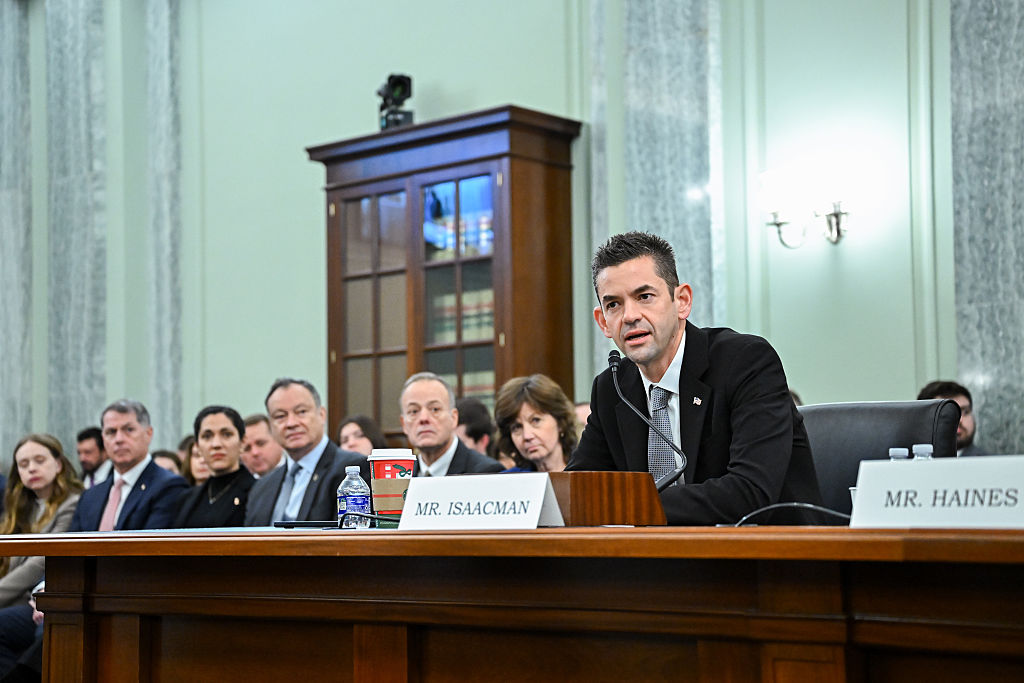
Jared Isaacman, administrator of the National Aeronautics and Space Administration nominee for US President Donald Trump, during a Senate Commerce, Science, and Transportation Committee confirmation hearing in Washington, DC, on December 3, 2025. Credit: Graeme Sloan/Bloomberg via Getty Images
Jared Isaacman, a pilot and financial tech billionaire, has commanded two groundbreaking spaceflights, including leading the first private spacewalk.
But his most remarkable flying has occurred over the last year. And on Wednesday, he stuck the landing by earning formal Senate approval to become NASA’s 15th administrator.
With a final tally of 67 to 30, Wednesday’s Senate confirmation came 377 days after President Trump first nominated Isaacman to serve as NASA administrator. Since that time, Isaacman had to navigate the following issues:
- Concerns about ties to SpaceX founder Elon Musk, as Isaacman purchased both Dragon flights from the company
- Pressure from Congress about Isaacman’s willingness to stick to a lunar exploration program, in favor of Mars
- Past records showing check fraud when Isaacman was in his 20s
- Questions about whether Isaacman backed the Trump administration’s plans to slash NASA science funding
- A decision by Trump, in late May, to rescind Isaacman’s nomination due to donations to Democratic candidates
- After key White House voices built a case for the re-nomination of Isaacman, NASA’s acting chief, Sean Duffy, sought to torpedo this
- Among Duffy’s actions was leaking Isaacman’s detailed plan to reform NASA, called Project Athena
- Duffy’s team also encouraged traditional space contractors to kill Isaacman’s re-nomination by branding him as a SpaceX plant
- After his re-nomination, Isaacman had to defend the 62-page Athena plan to a Congress intent on protecting the status quo
- At the 11th hour, some Senate Commerce Committee staff members sought to delay Isaacman’s confirmation into 2026.
One of the biggest questions about Isaacman after his nomination in late 2024 was whether he had the political gamesmanship to run NASA. Few questioned his interest in space, knowledge of the industry, or flight experience. But he had no political experience. Could he handle the rigors of managing a tempestuous White House and fractured Congress?
The answer after he navigated the last year appears to be, quite clearly, yes.
A builder, not a leveler
The 42-year-old private astronaut becomes the youngest person to lead NASA. He has waited more than a year to take on the job, subjecting himself to scrutiny of his financial dealings, divesting himself of conflicts of interest, and answering question after question from lawmakers.
Now, finally, he will get a chance to act, rather than react to everyone else.
As the Project Athena plan clearly demonstrates, Isaacman has a good handle on the problems besetting NASA, an aging and increasingly bureaucratic agency. NASA can still do great things, but it has become almost infinitely harder since the heady days of Apollo six decades ago.
Isaacman has ideas to shake things up, but not to the extent of wanton change for the sake of change. It is clear from the interviews he has given to others, and in talking to him myself, that Isaacman is also a good listener. He wants to understand problems to he can work with others to apply thoughtful solutions.
Perhaps most importantly for NASA, unlike some other Trump administration nominees, he appears to be a builder, not a leveler.
His toughest mission yet
Isaacman is coming into a beleaguered and bruised agency that has faced an extraordinarily difficult year. Thanks in part to Musk’s Department of Government Efficiency, about 20 percent of the agency’s 17,500 employees took buyouts or early retirements. There have been significant layoffs at NASA’s Jet Propulsion Laboratory, and there are concerns about the future of Goddard Space Flight Center in Maryland. Moreover, the agency is locked into a high-stakes race with China to return humans to the Moon, which, over the last 12 months, has swung in China’s favor.
NASA’s administrator is responsible for carrying out the administration’s policies and working with Congress to secure funding to do so. In this, Isaacman finds himself between a Trump administration that sought to cut NASA’s budget by 24 percent, and a House and Senate that rejected the vast majority of those cuts in budget bills.
These are big hills to climb.
Looking over the last year, it would be easy to say NASA and Isaacman have lost more than half a year because of the withdrawal of Isaacman’s nomination in late May, when he was within days of bipartisan Senate approval. However, in the intervening months, Isaacman has made strong contacts within the US Senate and the White House. As part of the campaign to build support for his renomination, Isaacman emerges with considerably more political experience, a much closer relationship with Trump, and a deeper roster of contacts in his phone.
All of which is good, because for all of the fancy flying Isaacman has done to reach this point, his most difficult sorties lie ahead of him.
