


- Регистрация
- 17 Февраль 2018
- Сообщения
- 40 832
- Лучшие ответы
- 0
- Реакции
- 0
- Баллы
- 8 093
Offline
This is the first time NASA has called an early end to a space mission for medical reasons.
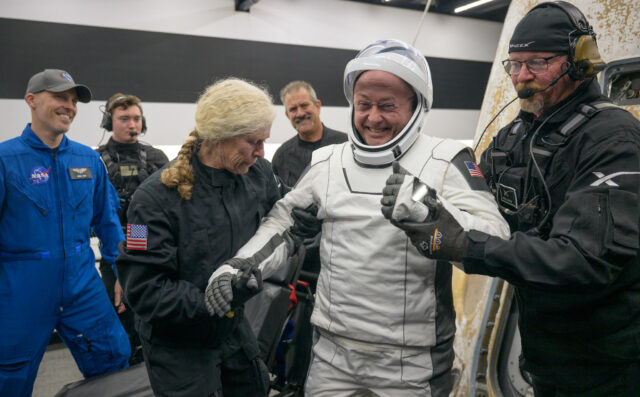

Crew-11 pilot and outgoing ISS commander Mike Fincke after splashdown in the Pacific Ocean early Thursday. Credit: NASA/Bill Ingalls
Two Americans, a Japanese astronaut, and a Russian cosmonaut returned to Earth early Thursday after 167 days in orbit, cutting short their stay on the International Space Station by more than a month after one of the crew members encountered an unspecified medical issue last week.
The early homecoming culminated in an on-target splashdown in the Pacific Ocean off the coast of San Diego at 12:41 am PST (08:41 UTC) inside a SpaceX Crew Dragon spacecraft. The splashdown occurred minutes after the Dragon capsule streaked through the atmosphere along the California coastline, with sightings of Dragon’s fiery trail reported from San Francisco to Los Angeles.
Four parachutes opened to slow the capsule for the final descent. Zena Cardman, NASA’s commander of the Crew-11 mission, radioed SpaceX mission control moments after splashdown: “It feels good to be home, with deep gratitude to the teams who got us there and back.”
Cardman and her crewmates departed the space station about 10 hours earlier. NASA astronaut Mike Fincke, Japanese mission specialist Kimiya Yui, and Russian cosmonaut Oleg Platonov round out the crew. NASA reported a medical concern with one of the crew members last week, and agency officials decided to bring the Crew-11 mission home earlier than planned to provide the person access to more comprehensive treatment on the ground.
Good spirits
Officials have not identified whose health was in question or what is afflicting the ailing crew member. Whatever the case, the medical issue did not appear to affect the crew’s return to Earth. The astronauts exited the Dragon spacecraft appearing in good health and good spirits after SpaceX raised the capsule from the water and onto a recovery vessel.
Joel Montalbano, NASA’s deputy associate administrator for space operations, said the astronauts would head to a medical facility in San Diego before returning to their home base at Johnson Space Center in Houston.
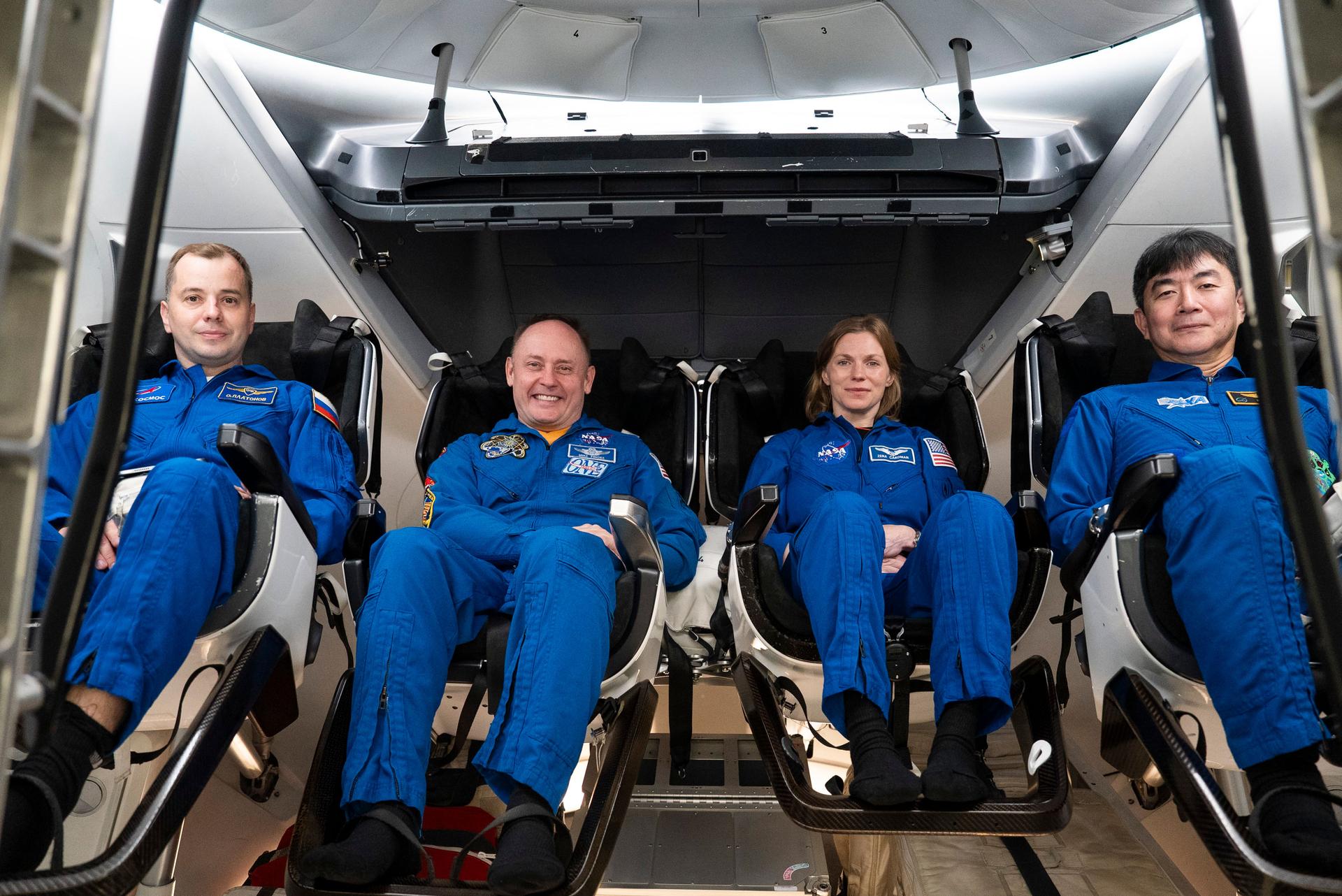
From left to right: Crew-11 mission specialist Oleg Platonov, pilot Mike Fincke, commander Zena Cardman, and mission specialist Kimiya Yui. This photo was taken during training at SpaceX’s facility in Hawthorne, California. Credit: SpaceX
NASA officials were careful to say the medical issue was not an emergency. NASA said the crew member was stable on the ISS, and the situation did not require the astronauts to immediately leave the ISS for the first available return opportunity, a capability NASA and SpaceX can execute in the event of a dire event like a traumatic injury or if the complex was hit by a piece of space junk.
“Because the astronaut is absolutely stable, this is not an emergent evacuation,” said James “JD” Polk, NASA’s chief medical officer, in a press conference last week. “We’re not immediately disembarking and getting the astronaut down.”
Amit Kshatriya, the agency’s associate administrator, called the situation a “controlled medical evacuation” in a briefing with reporters.
But without a confirmed diagnosis of the astronaut’s medical issue, there was some “lingering risk” for the astronaut’s health if they remained in orbit, Polk said. That’s why NASA Administrator Jared Isaacman and his deputies agreed to call an early end to the Crew-11 mission.
A first for NASA
The Crew-11 mission launched on August 1 and was supposed to stay on the space station until around February 20, a few days after the scheduled arrival of SpaceX’s Crew-12 mission with a team of replacement astronauts. But the early departure means the space station will operate with a crew of three until the launch of Crew-12 next month.
NASA astronaut Chris Williams will be the sole astronaut responsible for maintaining the US segment of the station. Russian cosmonauts Sergey Kud-Sverchkov and Sergey Mikayev launched with Williams in November on a Russian Soyuz vehicle. The Crew Dragon was the lifeboat for all four Crew-11 astronauts, so standard procedure called for the entire crew to return with the astronaut suffering the undisclosed medical issue.
The space station regularly operated with just three crew members for the first decade of its existence. The complex has been permanently staffed since 2000, sometimes with as few as two astronauts or cosmonauts. The standard crew size was raised to six in 2009, then to seven in 2020.
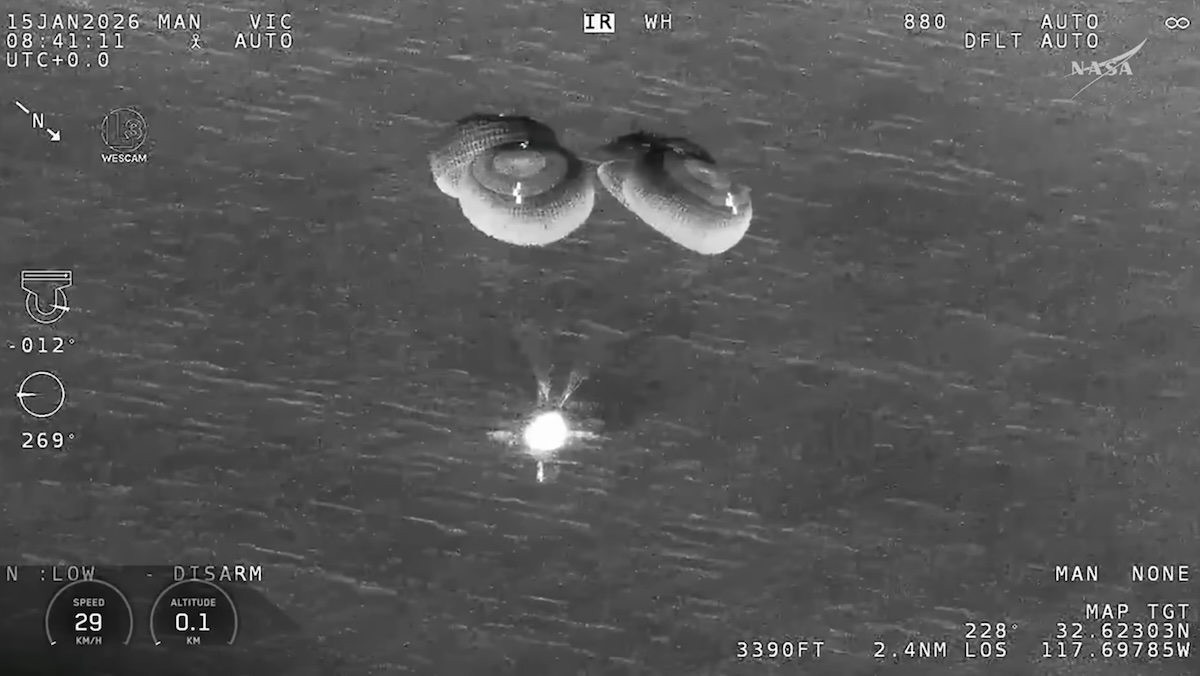
SpaceX’s Crew Dragon Endeavour spacecraft descends toward the Pacific Ocean under four main parachutes. Credit: NASA
Williams will have his hands full until reinforcements arrive. The scaled-down crew will not be able to undertake any spacewalks, and some of the lab’s science programs may have to be deferred to ensure the crew can keep up with maintenance tasks.
This is the first time NASA has called an early end to a space mission for medical reasons, but the Soviet Union faced similar circumstances several times during the Cold War. Russian officials cut short an expedition to the Salyut 7 space station in 1985 after the mission’s commander fell ill in orbit. A similar situation occurred in 1976 with the Soyuz 21 mission to the Salyut 5 space station.

Crew-11 pilot and outgoing ISS commander Mike Fincke after splashdown in the Pacific Ocean early Thursday. Credit: NASA/Bill Ingalls
Two Americans, a Japanese astronaut, and a Russian cosmonaut returned to Earth early Thursday after 167 days in orbit, cutting short their stay on the International Space Station by more than a month after one of the crew members encountered an unspecified medical issue last week.
The early homecoming culminated in an on-target splashdown in the Pacific Ocean off the coast of San Diego at 12:41 am PST (08:41 UTC) inside a SpaceX Crew Dragon spacecraft. The splashdown occurred minutes after the Dragon capsule streaked through the atmosphere along the California coastline, with sightings of Dragon’s fiery trail reported from San Francisco to Los Angeles.
Four parachutes opened to slow the capsule for the final descent. Zena Cardman, NASA’s commander of the Crew-11 mission, radioed SpaceX mission control moments after splashdown: “It feels good to be home, with deep gratitude to the teams who got us there and back.”
Cardman and her crewmates departed the space station about 10 hours earlier. NASA astronaut Mike Fincke, Japanese mission specialist Kimiya Yui, and Russian cosmonaut Oleg Platonov round out the crew. NASA reported a medical concern with one of the crew members last week, and agency officials decided to bring the Crew-11 mission home earlier than planned to provide the person access to more comprehensive treatment on the ground.
Good spirits
Officials have not identified whose health was in question or what is afflicting the ailing crew member. Whatever the case, the medical issue did not appear to affect the crew’s return to Earth. The astronauts exited the Dragon spacecraft appearing in good health and good spirits after SpaceX raised the capsule from the water and onto a recovery vessel.
Joel Montalbano, NASA’s deputy associate administrator for space operations, said the astronauts would head to a medical facility in San Diego before returning to their home base at Johnson Space Center in Houston.
From left to right: Crew-11 mission specialist Oleg Platonov, pilot Mike Fincke, commander Zena Cardman, and mission specialist Kimiya Yui. This photo was taken during training at SpaceX’s facility in Hawthorne, California. Credit: SpaceX
NASA officials were careful to say the medical issue was not an emergency. NASA said the crew member was stable on the ISS, and the situation did not require the astronauts to immediately leave the ISS for the first available return opportunity, a capability NASA and SpaceX can execute in the event of a dire event like a traumatic injury or if the complex was hit by a piece of space junk.
“Because the astronaut is absolutely stable, this is not an emergent evacuation,” said James “JD” Polk, NASA’s chief medical officer, in a press conference last week. “We’re not immediately disembarking and getting the astronaut down.”
Amit Kshatriya, the agency’s associate administrator, called the situation a “controlled medical evacuation” in a briefing with reporters.
But without a confirmed diagnosis of the astronaut’s medical issue, there was some “lingering risk” for the astronaut’s health if they remained in orbit, Polk said. That’s why NASA Administrator Jared Isaacman and his deputies agreed to call an early end to the Crew-11 mission.
A first for NASA
The Crew-11 mission launched on August 1 and was supposed to stay on the space station until around February 20, a few days after the scheduled arrival of SpaceX’s Crew-12 mission with a team of replacement astronauts. But the early departure means the space station will operate with a crew of three until the launch of Crew-12 next month.
NASA astronaut Chris Williams will be the sole astronaut responsible for maintaining the US segment of the station. Russian cosmonauts Sergey Kud-Sverchkov and Sergey Mikayev launched with Williams in November on a Russian Soyuz vehicle. The Crew Dragon was the lifeboat for all four Crew-11 astronauts, so standard procedure called for the entire crew to return with the astronaut suffering the undisclosed medical issue.
The space station regularly operated with just three crew members for the first decade of its existence. The complex has been permanently staffed since 2000, sometimes with as few as two astronauts or cosmonauts. The standard crew size was raised to six in 2009, then to seven in 2020.
SpaceX’s Crew Dragon Endeavour spacecraft descends toward the Pacific Ocean under four main parachutes. Credit: NASA
Williams will have his hands full until reinforcements arrive. The scaled-down crew will not be able to undertake any spacewalks, and some of the lab’s science programs may have to be deferred to ensure the crew can keep up with maintenance tasks.
This is the first time NASA has called an early end to a space mission for medical reasons, but the Soviet Union faced similar circumstances several times during the Cold War. Russian officials cut short an expedition to the Salyut 7 space station in 1985 after the mission’s commander fell ill in orbit. A similar situation occurred in 1976 with the Soyuz 21 mission to the Salyut 5 space station.
