


- Регистрация
- 17 Февраль 2018
- Сообщения
- 40 832
- Лучшие ответы
- 0
- Реакции
- 0
- Баллы
- 8 093
Offline
New method uses no freezing technology or refrigeration equipment—just water and a vacuum.
Credit: University of Amsterdam
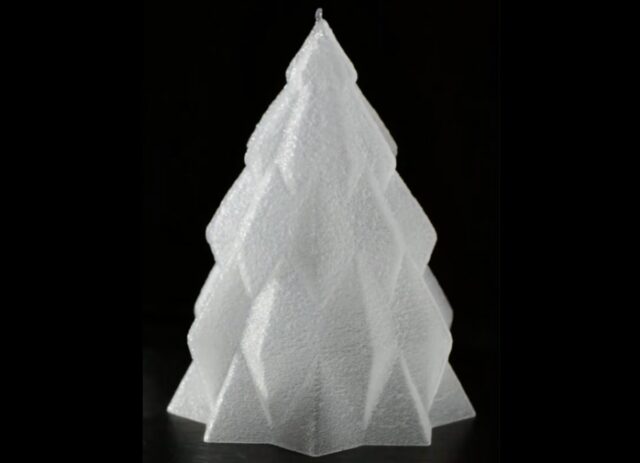
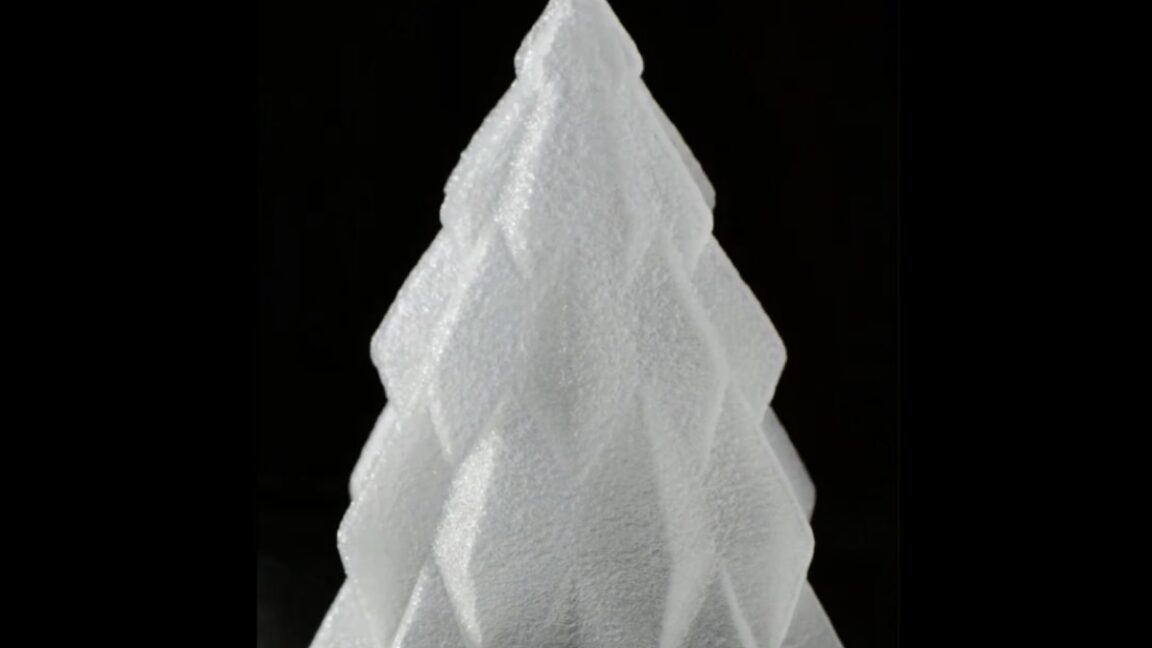
Physicists at the University of Amsterdam came up with a really cool bit of Christmas decor: a miniature 3D-printed Christmas tree, a mere 8 centimeters tall, made of ice, without any refrigeration equipment or other freezing technology, and at minimal cost. The secret is evaporative cooling, according to a preprint posted to the physics arXiv.
Evaporative cooling is a well-known phenomenon; mammals use it to regulate body temperature. You can see it in your morning cup of hot coffee: the hotter atoms rise to the top of the magnetic trap and “jump out” as steam. It also plays a role (along with shock wave dynamics and various other factors) in the formation of “wine tears.” It’s a key step in creating Bose-Einstein condensates.
And evaporative cooling is also the main culprit behind the infamous “stall” that so frequently plagues aspiring BBQ pit masters eager to make a successful pork butt. The meat sweats as it cooks, releasing the moisture within, and that moisture evaporates and cools the meat, effectively canceling out the heat from the BBQ. That’s why a growing number of competitive pit masters wrap their meat in tinfoil after the first few hours (usually when the internal temperature hits 170° F).
Ice-printing methods usually rely on cryogenics or on cooled substrates. Per the authors, this is the first time evaporative cooling principles have been applied to 3D printing. The trick was to house the 3D printing inside a vacuum chamber using a jet nozzle as the printing head—something they discovered serendipitously when they were trying to get rid of air drag by spraying water in a vacuum chamber. “The printer’s motion control guides the water jet layer-by-layer, building geometry on demand,” the authors wrote in a blog post for Nature, adding:
At very low pressure, water molecules at the liquid surface escape continuously as vapor. Each departing molecule carries the latent heat of vaporization, thus cooling the water jet. The very fine jet we use for printing has a very high surface-to-volume ratio, making heat extraction very efficient: the bulk liquid cools rapidly, dropping tens of Kelvin over a fraction of a second. When the jet reaches the substrate or a previously deposited ice layer, it freezes just after its impact.
And when the holidays are over, just turn off the vacuum pump and watch your tree melt back into its watery state, “no residue, no post-processing waste.”
The applications aren’t limited to Christmas trees. The purity of the ice makes it ideal for biological applications such as scaffolding for tissue: any branching ice form can be cast in resin or polymer and when it melts, it will leave behind hollow channels. It can also be used to create custom fluid networks for microfluidics applications. And if you have plans to camp out on Mars with its cold temperatures and thin atmosphere, the method could enable 3D printed structures out of water ice, with no need for heavy and expensive cryogenic equipment.
arXiv, 2025. DOI: 10.48550/arXiv.2512.14580 (About DOIs).
Credit: University of Amsterdam
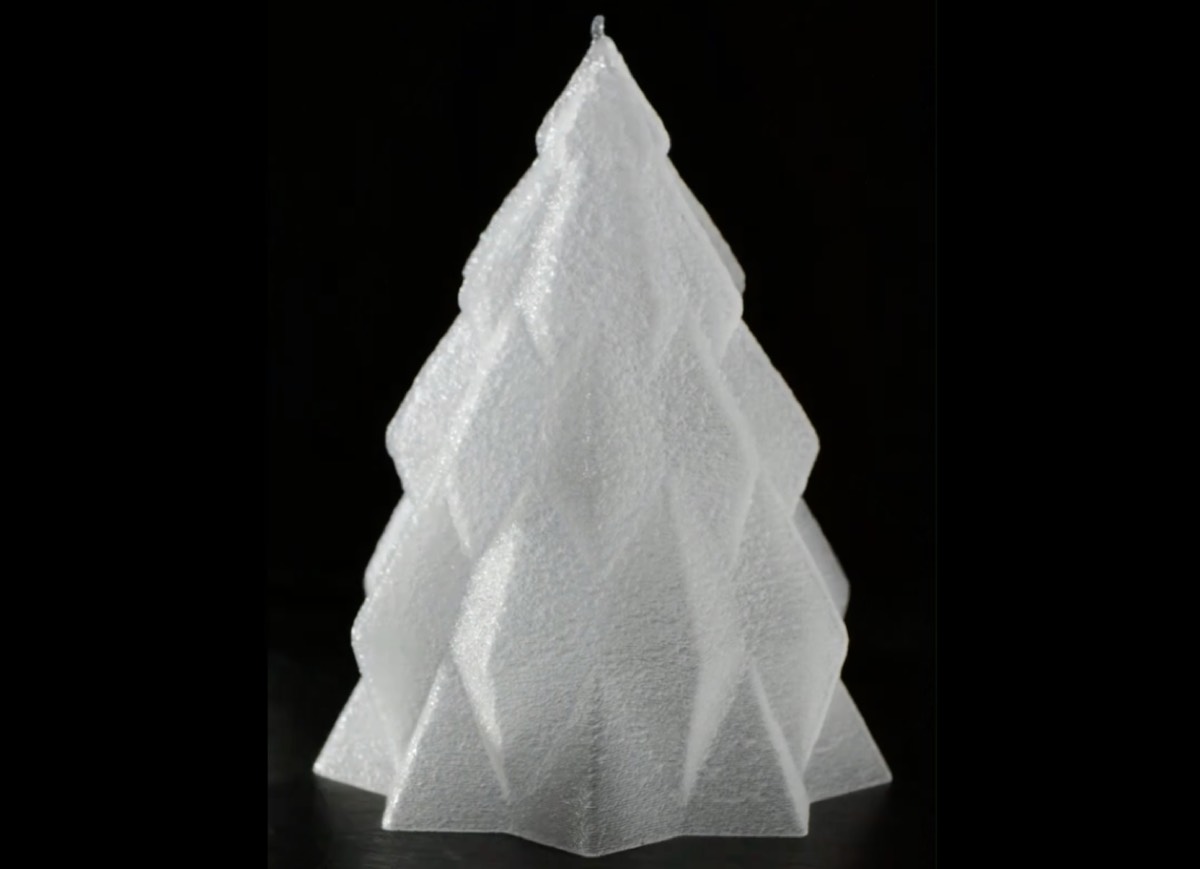
Physicists at the University of Amsterdam came up with a really cool bit of Christmas decor: a miniature 3D-printed Christmas tree, a mere 8 centimeters tall, made of ice, without any refrigeration equipment or other freezing technology, and at minimal cost. The secret is evaporative cooling, according to a preprint posted to the physics arXiv.
Evaporative cooling is a well-known phenomenon; mammals use it to regulate body temperature. You can see it in your morning cup of hot coffee: the hotter atoms rise to the top of the magnetic trap and “jump out” as steam. It also plays a role (along with shock wave dynamics and various other factors) in the formation of “wine tears.” It’s a key step in creating Bose-Einstein condensates.
And evaporative cooling is also the main culprit behind the infamous “stall” that so frequently plagues aspiring BBQ pit masters eager to make a successful pork butt. The meat sweats as it cooks, releasing the moisture within, and that moisture evaporates and cools the meat, effectively canceling out the heat from the BBQ. That’s why a growing number of competitive pit masters wrap their meat in tinfoil after the first few hours (usually when the internal temperature hits 170° F).
Ice-printing methods usually rely on cryogenics or on cooled substrates. Per the authors, this is the first time evaporative cooling principles have been applied to 3D printing. The trick was to house the 3D printing inside a vacuum chamber using a jet nozzle as the printing head—something they discovered serendipitously when they were trying to get rid of air drag by spraying water in a vacuum chamber. “The printer’s motion control guides the water jet layer-by-layer, building geometry on demand,” the authors wrote in a blog post for Nature, adding:
At very low pressure, water molecules at the liquid surface escape continuously as vapor. Each departing molecule carries the latent heat of vaporization, thus cooling the water jet. The very fine jet we use for printing has a very high surface-to-volume ratio, making heat extraction very efficient: the bulk liquid cools rapidly, dropping tens of Kelvin over a fraction of a second. When the jet reaches the substrate or a previously deposited ice layer, it freezes just after its impact.
And when the holidays are over, just turn off the vacuum pump and watch your tree melt back into its watery state, “no residue, no post-processing waste.”
The applications aren’t limited to Christmas trees. The purity of the ice makes it ideal for biological applications such as scaffolding for tissue: any branching ice form can be cast in resin or polymer and when it melts, it will leave behind hollow channels. It can also be used to create custom fluid networks for microfluidics applications. And if you have plans to camp out on Mars with its cold temperatures and thin atmosphere, the method could enable 3D printed structures out of water ice, with no need for heavy and expensive cryogenic equipment.
arXiv, 2025. DOI: 10.48550/arXiv.2512.14580 (About DOIs).
