


- Регистрация
- 17 Февраль 2018
- Сообщения
- 40 832
- Лучшие ответы
- 0
- Реакции
- 0
- Баллы
- 8 093
Offline
Iran shut off Internet as it cracks down on protests; even Starlink has problems.
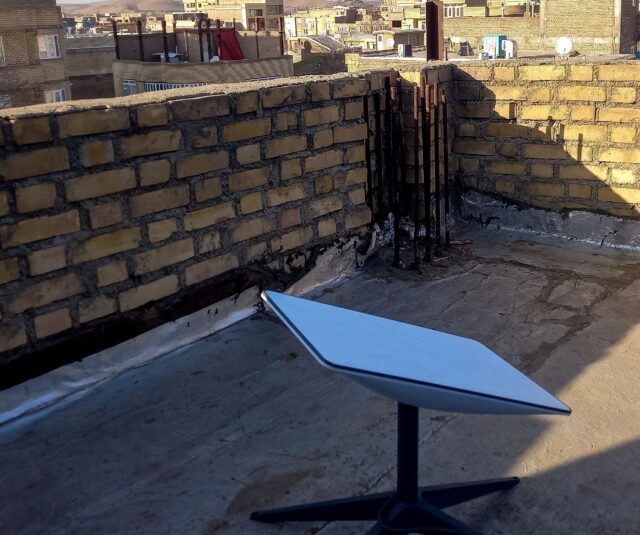
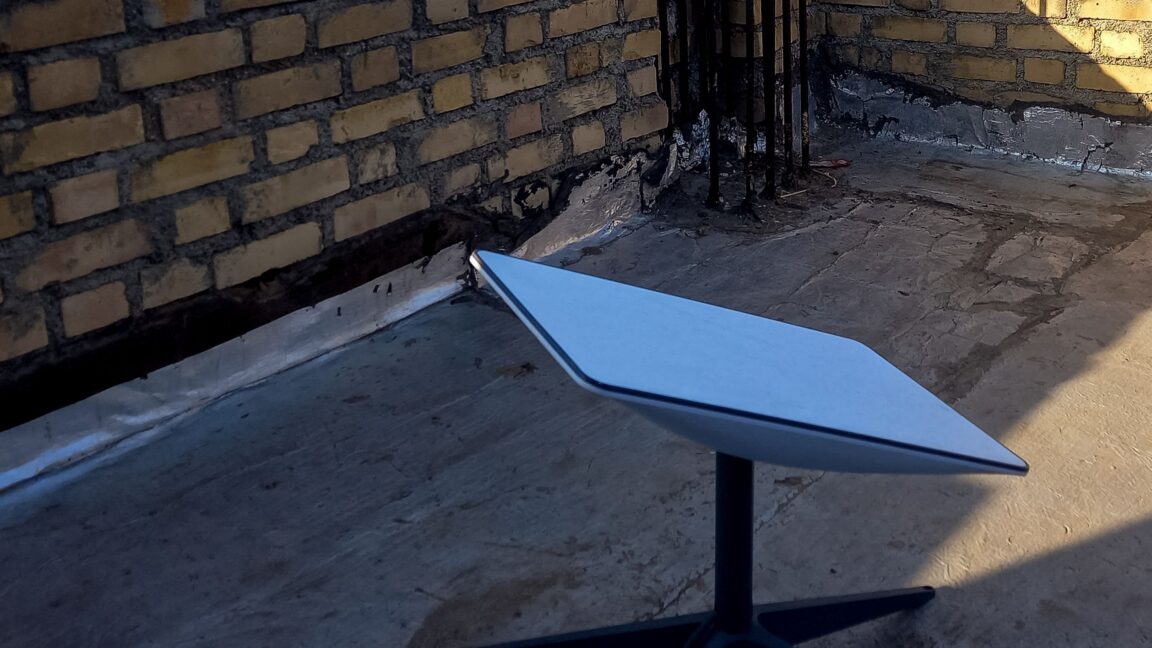
A Starlink satellite dish at a house in Kurdistan, Iran in January 2023. Credit: Getty Images
President Trump asked Elon Musk to get Starlink working more reliably in Iran to thwart the Iranian government’s Internet shutdown. Starlink operator SpaceX was apparently already working on the problem before Trump reached out to Musk.
Iran severed Internet connections and phone lines last week as the government conducted a violent crackdown on anti-government demonstrators, according to numerous reports, which say that thousands of people have been killed.
Starlink hasn’t been completely disabled. The government’s jamming technology has reportedly caused Starlink packet loss of anywhere from 30 to 80 percent.
It appears that SpaceX has been trying to bypass the jamming for days. NasNet, a group that helps Iranians access Starlink, said in an X post on Saturday that it collaborated with the Starlink technical team on an update that reduced packet loss to about 10 percent. But the group described Starlink availability as “an ongoing game of cat and mouse; therefore, conditions may change again or even worsen,” according to a translation.
Trump told reporters Sunday on Air Force One that he wants Starlink to be available in Iran. “We may get the Internet going, if that’s possible,” Trump said, according to The Washington Post. “We may speak to Elon, ‘cause as you know, he’s very good at that kind of thing, he’s got a very good company. So we may speak to Elon Musk. And in fact, I’m going to call him as soon as I’m finished with you.”
White House Press Secretary Karoline Leavitt told reporters Monday that Trump “has spoken to Elon” about Internet service in Iran.
Starlink illegal in Iran, but supported by US
SpaceX’s satellite Internet service has been used during protests despite the Iranian government “never authorizing Starlink to function, making the service illegal to possess and use,” The Associated Press wrote. Iranian authorities started “searching for and confiscating Starlink dishes in western Tehran” over the weekend, The Wall Street Journal wrote yesterday.
In 2022, during a previous round of protests in which the Iranian government cracked down on demonstrators and cut off Internet access, the Biden administration issued a general license to let US companies make Internet services available to Iranians.
The Iranian government’s jamming of Starlink has apparently gotten more sophisticated, degrading uploads to make it hard for users to distribute information and images of protests. “I believe that they are using some military-grade jamming tools to jam the radio frequency signals, particularly jamming any videos, any content, any reports coming out of Iran,” Ahmad Ahmadian, executive director of US-based nonprofit Holistic Resilience, told The Washington Post.
“You don’t need a global kill switch to cripple the network,” Kimberly Burke, director of government affairs at consulting firm Quilty Space, told the Post. “You just make it unstable, slow and unreliable enough that it barely even works. Think intermittent dial-up speeds.”
Internet monitoring group NetBlocks told Reuters that Starlink access is reduced but not eliminated in Iran. “It is patchy, but still there,” NetBlocks founder Alp Toker said.
Internet traffic “effectively dropped to zero”
NetBlocks has been posting updates on Mastodon, saying that Iran’s connectivity to the outside world has remained at about 1 percent of ordinary levels. “Iran has now been offline for 120 hours,” NetBlocks said today. “Despite some phone calls now connecting, there is no secure way to communicate and the general public remain cut off from the outside world.”
Cloudflare’s monitoring reached similar conclusions. “In the last few days, Internet traffic from Iran has effectively dropped to zero,” Cloudflare Head of Data Insight David Belson wrote in a blog post today.
Although connectivity was restored for brief periods on January 9, “no significant changes have been observed in Iran’s Internet traffic since January 10,” he wrote. “The country remains almost entirely cut off from the global Internet, with internal data showing traffic volumes remaining at a fraction of a percent of previous levels.”
A fundraising page for sending Starlink terminals to Iran and covering subscription costs says that “over 100,000 people in Iran are already using Starlink to bypass censorship.” Since the government can’t fully block the service, it has used bans and banking sanctions to make it “extremely difficult for users inside Iran to pay for their subscriptions,” the fundraising page says.
NasNet said today that service is now being made available for free. “After weeks of continuous efforts, negotiations, and discussions with the Starlink team and United States authorities, we have successfully provided access to Starlink for free to serve the revolution,” NasNet wrote on X, according to a translation. “All you need to do is turn on the device. Don’t forget physical camouflage, hiding the Starlink IP, and changing the wireless network name!”
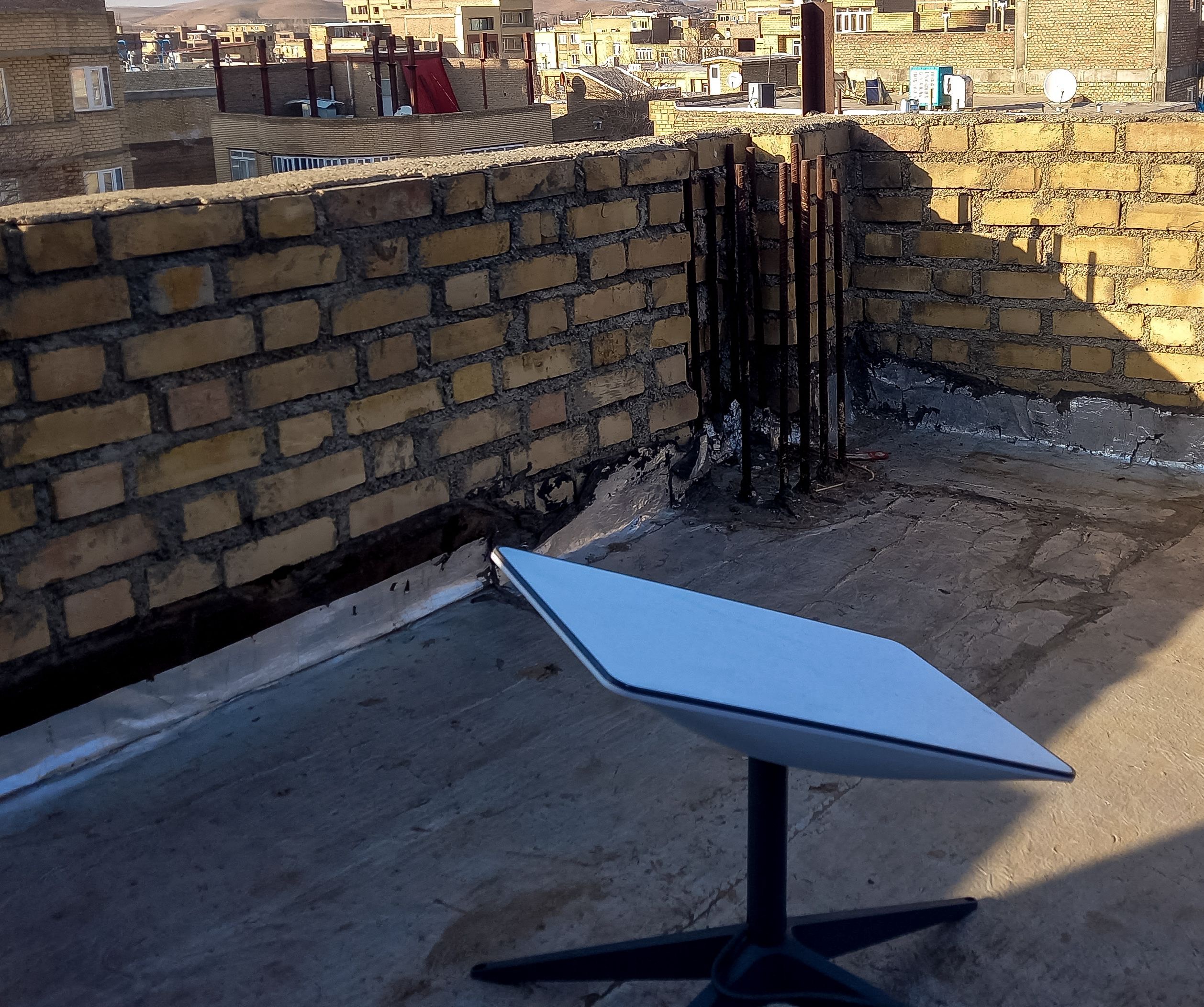
A Starlink satellite dish at a house in Kurdistan, Iran in January 2023. Credit: Getty Images
President Trump asked Elon Musk to get Starlink working more reliably in Iran to thwart the Iranian government’s Internet shutdown. Starlink operator SpaceX was apparently already working on the problem before Trump reached out to Musk.
Iran severed Internet connections and phone lines last week as the government conducted a violent crackdown on anti-government demonstrators, according to numerous reports, which say that thousands of people have been killed.
Starlink hasn’t been completely disabled. The government’s jamming technology has reportedly caused Starlink packet loss of anywhere from 30 to 80 percent.
It appears that SpaceX has been trying to bypass the jamming for days. NasNet, a group that helps Iranians access Starlink, said in an X post on Saturday that it collaborated with the Starlink technical team on an update that reduced packet loss to about 10 percent. But the group described Starlink availability as “an ongoing game of cat and mouse; therefore, conditions may change again or even worsen,” according to a translation.
Trump told reporters Sunday on Air Force One that he wants Starlink to be available in Iran. “We may get the Internet going, if that’s possible,” Trump said, according to The Washington Post. “We may speak to Elon, ‘cause as you know, he’s very good at that kind of thing, he’s got a very good company. So we may speak to Elon Musk. And in fact, I’m going to call him as soon as I’m finished with you.”
White House Press Secretary Karoline Leavitt told reporters Monday that Trump “has spoken to Elon” about Internet service in Iran.
Starlink illegal in Iran, but supported by US
SpaceX’s satellite Internet service has been used during protests despite the Iranian government “never authorizing Starlink to function, making the service illegal to possess and use,” The Associated Press wrote. Iranian authorities started “searching for and confiscating Starlink dishes in western Tehran” over the weekend, The Wall Street Journal wrote yesterday.
In 2022, during a previous round of protests in which the Iranian government cracked down on demonstrators and cut off Internet access, the Biden administration issued a general license to let US companies make Internet services available to Iranians.
The Iranian government’s jamming of Starlink has apparently gotten more sophisticated, degrading uploads to make it hard for users to distribute information and images of protests. “I believe that they are using some military-grade jamming tools to jam the radio frequency signals, particularly jamming any videos, any content, any reports coming out of Iran,” Ahmad Ahmadian, executive director of US-based nonprofit Holistic Resilience, told The Washington Post.
“You don’t need a global kill switch to cripple the network,” Kimberly Burke, director of government affairs at consulting firm Quilty Space, told the Post. “You just make it unstable, slow and unreliable enough that it barely even works. Think intermittent dial-up speeds.”
Internet monitoring group NetBlocks told Reuters that Starlink access is reduced but not eliminated in Iran. “It is patchy, but still there,” NetBlocks founder Alp Toker said.
Internet traffic “effectively dropped to zero”
NetBlocks has been posting updates on Mastodon, saying that Iran’s connectivity to the outside world has remained at about 1 percent of ordinary levels. “Iran has now been offline for 120 hours,” NetBlocks said today. “Despite some phone calls now connecting, there is no secure way to communicate and the general public remain cut off from the outside world.”
Cloudflare’s monitoring reached similar conclusions. “In the last few days, Internet traffic from Iran has effectively dropped to zero,” Cloudflare Head of Data Insight David Belson wrote in a blog post today.
Although connectivity was restored for brief periods on January 9, “no significant changes have been observed in Iran’s Internet traffic since January 10,” he wrote. “The country remains almost entirely cut off from the global Internet, with internal data showing traffic volumes remaining at a fraction of a percent of previous levels.”
A fundraising page for sending Starlink terminals to Iran and covering subscription costs says that “over 100,000 people in Iran are already using Starlink to bypass censorship.” Since the government can’t fully block the service, it has used bans and banking sanctions to make it “extremely difficult for users inside Iran to pay for their subscriptions,” the fundraising page says.
NasNet said today that service is now being made available for free. “After weeks of continuous efforts, negotiations, and discussions with the Starlink team and United States authorities, we have successfully provided access to Starlink for free to serve the revolution,” NasNet wrote on X, according to a translation. “All you need to do is turn on the device. Don’t forget physical camouflage, hiding the Starlink IP, and changing the wireless network name!”
