


- Регистрация
- 17 Февраль 2018
- Сообщения
- 40 832
- Лучшие ответы
- 0
- Реакции
- 0
- Баллы
- 8 093
Offline
While the rash has a clear link to ketones, the underlying mechanism remains elusive.
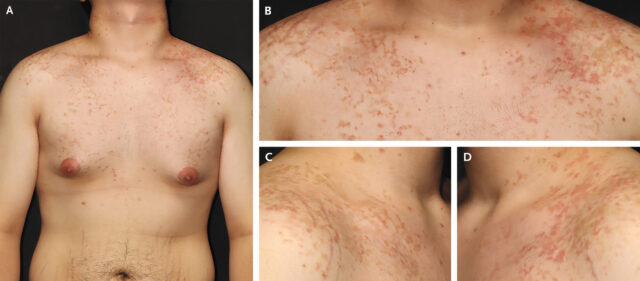
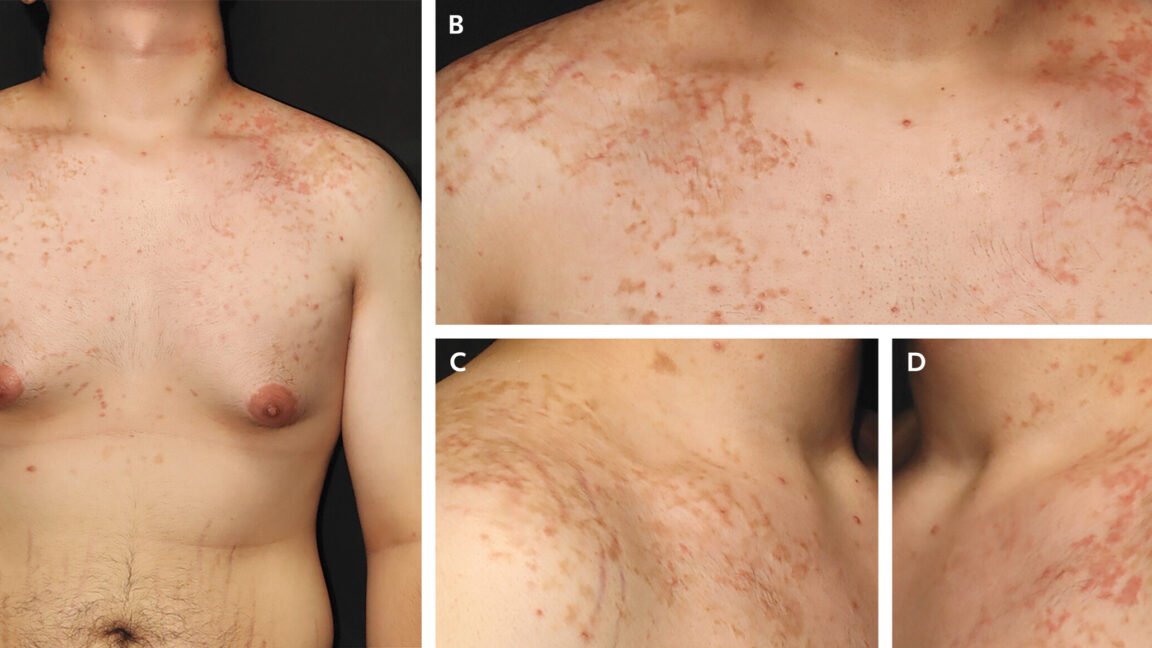
The man's chest and shoulders, showing his rash and hyperpigmentation. Credit: New England Journal of Medicine, 2026
A 20-year old man in Taiwan went to a dermatology clinic for a strange rash that had developed across his shoulders and chest. The raised, red, and itchy condition had been bothering him for a full month. By this point, he had also developed patches of pigmented skin interlaced with the red rash.
According to a case report in the New England Journal of Medicine, a skin biopsy showed swelling between his skin cells and inflammation around blood vessels, but testing came up negative for other common signs of skin conditions, leaving doctors with few leads. The doctors ultimately came to a diagnosis not by analyzing his skin further but by hearing about his diet.
The man’s chest and shoulders, showing his rash and hyperpigmentation. Credit: New England Journal of Medicine, 2026
The man told doctors that two months prior to his clinic appointment—a month before his rash developed—he had switched to a ketogenic diet, which is a high-fat but very low-carbohydrate eating pattern. This diet forces the body to shift from using glucose (sugar derived from carbohydrates) as an energy source to fat instead.
When this happens, the body can go into ketosis. This starts with fat tissue breaking down, leading to the release of free fatty acids. These fatty acids are transported to the liver, where they’re metabolized to acetyl-CoA. Excessive amounts of this molecule gum up metabolic processes and lead to the formation of ketone bodies, primarily acetoacetate and beta-hydroxybutyrate. (A ketone is a specific chemical structure that includes a single bond to two CH3 or R groups with a double bond to an oxygen molecule.) Ketone bodies made in the liver can enter the circulatory system and be used as a source of energy for tissues around the body, particularly the brain.
Ketogenic diets have clinical uses—they’ve proven useful for managing drug-resistant epilepsy and some rare genetic metabolic diseases. Studies have looked at them as possible ways to manage obesity and type 2 diabetes, and there’s interest in their use in cancer metabolism and neurodegenerative diseases, including Parkinson’s disease and Alzheimer’s disease.
Diet downsides
Otherwise, the keto diet is popular among people trying to lose weight, particularly those trying to lose visceral fat, like the man in the case study. Anecdotal reports promote the keto diet as being effective at helping people slim down relatively quickly while also improving stamina and mental clarity. But robust clinical data supporting these claims are lacking, and medical experts have raised concerns about long-term cardiovascular health, among other things.
There are also clear downsides to the diet. Ketones are acidic, and if they build up too much in the blood, they can be toxic, causing ketoacidosis. This is a particular concern for people with type 1 diabetes and for people with chronic alcohol abuse. For everyone else, there’s a list of common side effects, including nausea, vomiting, constipation, diarrhea, bad breath, headache, fatigue, and dizziness. Ketogenic diets are also linked to high cholesterol and kidney stones.
But there’s one side effect that’s well established but little known and still puzzling to doctors: the “keto rash” or prurigo pigmentosa. This rash fits the man’s case perfectly—red, raised, itchy bumps on the neck, chest, and back, with areas of hyperpigmentation also developing.
The rash was first identified in Japan in 1971, where it was mostly seen in women. While it has been consistently linked to metabolic disorders and dietary changes, experts still don’t understand what causes it. It’s seen not only in people on a keto diet but also in people with diabetes and those who have had bariatric surgery or are fasting.
In a review this month, researchers in Saudi Arabia noted that a leading hypothesis is that the high levels of ketones in the blood trigger inflammation around blood vessels driven by a type of white blood cell called neutrophils, and this inflammation is what causes the rash, which develops in different stages.
While the condition remains poorly understood, effective treatments have at least been worked out. The most common treatment is to get the person out of ketosis and give them an antibiotic in the tetracycline class. Antibiotics are designed to treat bacterial infections (which this is not), but they can also dampen inflammation signals and thwart the activity of neutrophils.
In the man’s case, doctors gave him a two-week course of doxycycline and told him to ditch his keto diet. A week later, the rash was gone.
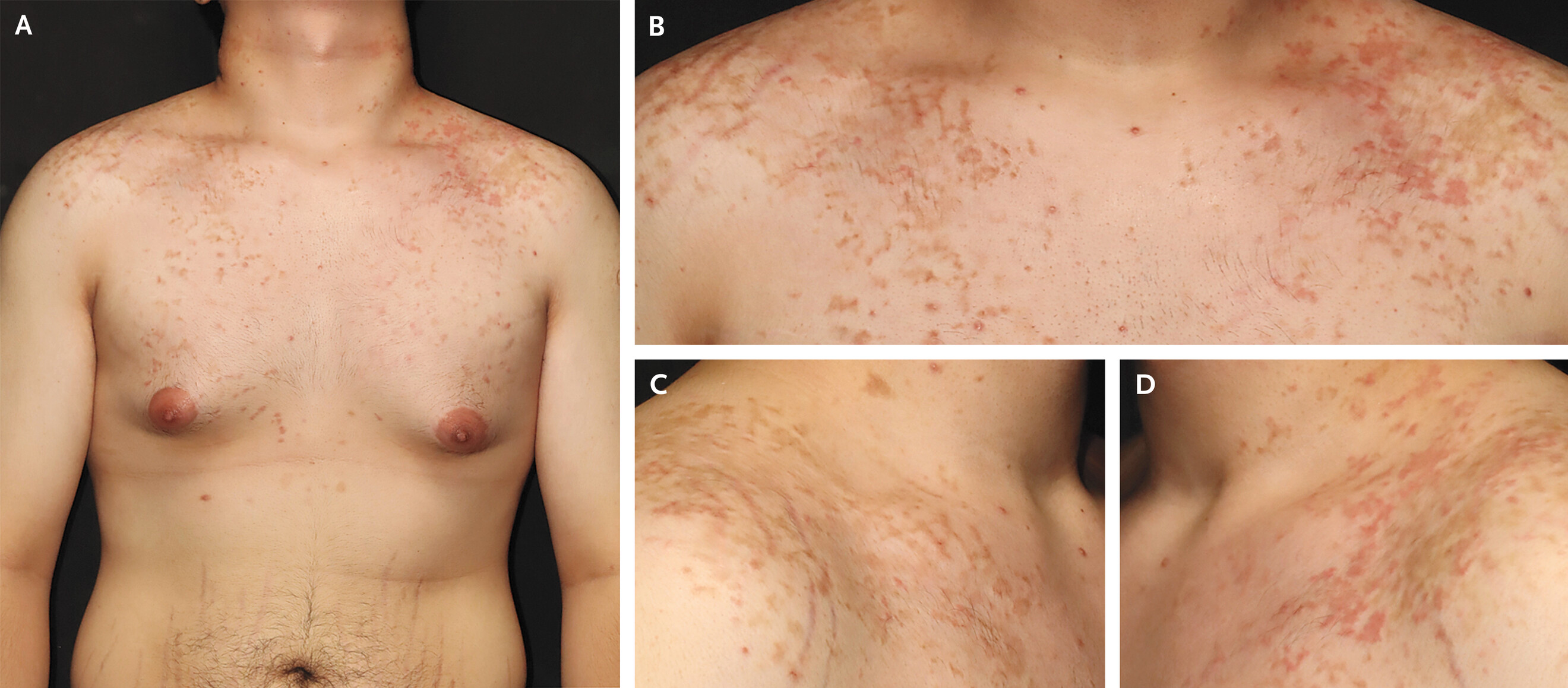
The man's chest and shoulders, showing his rash and hyperpigmentation. Credit: New England Journal of Medicine, 2026
A 20-year old man in Taiwan went to a dermatology clinic for a strange rash that had developed across his shoulders and chest. The raised, red, and itchy condition had been bothering him for a full month. By this point, he had also developed patches of pigmented skin interlaced with the red rash.
According to a case report in the New England Journal of Medicine, a skin biopsy showed swelling between his skin cells and inflammation around blood vessels, but testing came up negative for other common signs of skin conditions, leaving doctors with few leads. The doctors ultimately came to a diagnosis not by analyzing his skin further but by hearing about his diet.
The man’s chest and shoulders, showing his rash and hyperpigmentation. Credit: New England Journal of Medicine, 2026
The man told doctors that two months prior to his clinic appointment—a month before his rash developed—he had switched to a ketogenic diet, which is a high-fat but very low-carbohydrate eating pattern. This diet forces the body to shift from using glucose (sugar derived from carbohydrates) as an energy source to fat instead.
When this happens, the body can go into ketosis. This starts with fat tissue breaking down, leading to the release of free fatty acids. These fatty acids are transported to the liver, where they’re metabolized to acetyl-CoA. Excessive amounts of this molecule gum up metabolic processes and lead to the formation of ketone bodies, primarily acetoacetate and beta-hydroxybutyrate. (A ketone is a specific chemical structure that includes a single bond to two CH3 or R groups with a double bond to an oxygen molecule.) Ketone bodies made in the liver can enter the circulatory system and be used as a source of energy for tissues around the body, particularly the brain.
Ketogenic diets have clinical uses—they’ve proven useful for managing drug-resistant epilepsy and some rare genetic metabolic diseases. Studies have looked at them as possible ways to manage obesity and type 2 diabetes, and there’s interest in their use in cancer metabolism and neurodegenerative diseases, including Parkinson’s disease and Alzheimer’s disease.
Diet downsides
Otherwise, the keto diet is popular among people trying to lose weight, particularly those trying to lose visceral fat, like the man in the case study. Anecdotal reports promote the keto diet as being effective at helping people slim down relatively quickly while also improving stamina and mental clarity. But robust clinical data supporting these claims are lacking, and medical experts have raised concerns about long-term cardiovascular health, among other things.
There are also clear downsides to the diet. Ketones are acidic, and if they build up too much in the blood, they can be toxic, causing ketoacidosis. This is a particular concern for people with type 1 diabetes and for people with chronic alcohol abuse. For everyone else, there’s a list of common side effects, including nausea, vomiting, constipation, diarrhea, bad breath, headache, fatigue, and dizziness. Ketogenic diets are also linked to high cholesterol and kidney stones.
But there’s one side effect that’s well established but little known and still puzzling to doctors: the “keto rash” or prurigo pigmentosa. This rash fits the man’s case perfectly—red, raised, itchy bumps on the neck, chest, and back, with areas of hyperpigmentation also developing.
The rash was first identified in Japan in 1971, where it was mostly seen in women. While it has been consistently linked to metabolic disorders and dietary changes, experts still don’t understand what causes it. It’s seen not only in people on a keto diet but also in people with diabetes and those who have had bariatric surgery or are fasting.
In a review this month, researchers in Saudi Arabia noted that a leading hypothesis is that the high levels of ketones in the blood trigger inflammation around blood vessels driven by a type of white blood cell called neutrophils, and this inflammation is what causes the rash, which develops in different stages.
While the condition remains poorly understood, effective treatments have at least been worked out. The most common treatment is to get the person out of ketosis and give them an antibiotic in the tetracycline class. Antibiotics are designed to treat bacterial infections (which this is not), but they can also dampen inflammation signals and thwart the activity of neutrophils.
In the man’s case, doctors gave him a two-week course of doxycycline and told him to ditch his keto diet. A week later, the rash was gone.
