


- Регистрация
- 17 Февраль 2018
- Сообщения
- 41 105
- Лучшие ответы
- 0
- Реакции
- 0
- Баллы
- 8 093
Offline
“Why is reverse-engineering prohibited… for a company built on openly hackable systems?”
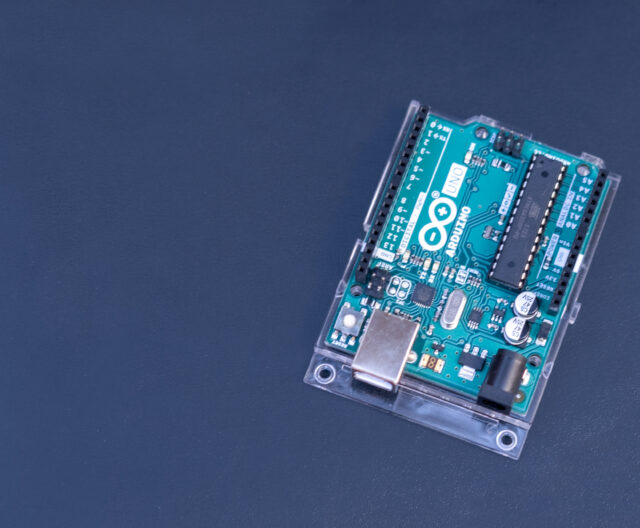

Credit: Getty
Some members of the maker community are distraught about Arduino’s new terms of service (ToS), saying that the added rules put the company’s open source DNA at risk.
Arduino updated its ToS and privacy policy this month, which is about a month after Qualcomm announced that it’s acquiring the open source hardware and software company. Among the most controversial changes is this addition:
User shall not:
In response to concerns from some members of the maker community, including from open source hardware distributor and manufacturer Adafruit, Arduino posted a blog on Friday. Regarding the new reverse-engineering rule, Arduino’s blog said:
Any hardware, software or services (e.g. Arduino IDE, hardware schematics, tooling and libraries) released with Open Source licenses remain available as before. Restrictions on reverse-engineering apply specifically to our Software-as-a-Service cloud applications. Anything that was open, stays open.
But Adafruit founder and engineer Limor Fried and Adafruit managing editor Phillip Torrone are not convinced. They told Ars Technica that Arduino’s blog leaves many questions unanswered and said that they’ve sent these questions to Arduino without response.
“Why is reverse-engineering prohibited at all for a company built on openly hackable systems?” Fried and Torrone asked in a shared statement.
When contacted by Ars Technica for further comment on why Arduino made this change, representatives from Arduino and Qualcomm referred us to Arduino’s blog.
User monitoring
Among other changes to Adruino’s ToS is a new section on “AI Policy” that reads: “Arduino reserves the right to monitor User accounts and use of the AI Products, including but not limited to usage of features and functions, compute time, and storage…”
Fried and Torrone told Ars that Arduino has failed to address “what data from these AI systems is retained, who has access, and why is this collection opt-out only by not using the features.”
The Adafruit executives also expressed trepidation about how data Arduino has on users might be shared with Qualcomm.
“The Qualcomm acquisition doesn’t modify how user data is handled or how we apply our open-source principles,” the Arduino blog says.
Arduino’s blog didn’t discuss the company’s new terms around patents, which states:
User will use the Site and the Platform in accordance with these Terms and for the sole purposes of correctly using the Services. Specifically, User undertakes not to: … “use the Platform, Site, or Services to identify or provide evidence to support any potential patent infringement claim against Arduino, its Affiliates, or any of Arduino’s or Arduino’s Affiliates’ suppliers and/or direct or indirect customers.
“No open-source company puts language in their ToS banning users from identifying potential patent issues. Why was this added, and who requested it?” Fried and Torrone said.
Arduino’s new terms include similar language around user-generated content that its ToS has had for years. The current terms say that users grant Arduino the:
non-exclusive, royalty free, transferable, sub-licensable, perpetual, irrevocable, to the maximum extent allowed by applicable law … right to use the Content published and/or updated on the Platform as well as to distribute, reproduce, modify, adapt, translate, publish and make publicly visible all material, including software, libraries, text contents, images, videos, comments, text, audio, software, libraries, or other data (collectively, “Content”) that User publishes, uploads, or otherwise makes available to Arduino throughout the world using any means and for any purpose, including the use of any username or nickname specified in relation to the Content.
“The new language is still broad enough to republish, monetize, and route user content into any future Qualcomm pipeline forever,” Torrone told Ars. He thinks Arduino’s new terms should have clarified Arduino’s intent, narrowed the term’s scope, or explained “why this must be irrevocable and transferable at a corporate level.”
In its blog, Arduino said that the new ToS “clarifies that the content you choose to publish on the Arduino platform remains yours and can be used to enable features you’ve requested, such as cloud services and collaboration tools.”
As Qualcomm works toward completing its Arduino acquisition, there appears to be more work ahead for the smartphone processor and modem vendor to convince makers that Arduino’s open source and privacy principles will be upheld. While the Arduino IDE and its source code will stay on GitHub per the AGPL-3.0 Open-Source License, some users remain worried about Arduino’s future under Qualcomm.

Credit: Getty
Some members of the maker community are distraught about Arduino’s new terms of service (ToS), saying that the added rules put the company’s open source DNA at risk.
Arduino updated its ToS and privacy policy this month, which is about a month after Qualcomm announced that it’s acquiring the open source hardware and software company. Among the most controversial changes is this addition:
User shall not:
- translate, decompile or reverse-engineer the Platform, or engage in any other activity designed to identify the algorithms and logic of the Platform’s operation, unless expressly allowed by Arduino or by applicable license agreements …
In response to concerns from some members of the maker community, including from open source hardware distributor and manufacturer Adafruit, Arduino posted a blog on Friday. Regarding the new reverse-engineering rule, Arduino’s blog said:
Any hardware, software or services (e.g. Arduino IDE, hardware schematics, tooling and libraries) released with Open Source licenses remain available as before. Restrictions on reverse-engineering apply specifically to our Software-as-a-Service cloud applications. Anything that was open, stays open.
But Adafruit founder and engineer Limor Fried and Adafruit managing editor Phillip Torrone are not convinced. They told Ars Technica that Arduino’s blog leaves many questions unanswered and said that they’ve sent these questions to Arduino without response.
“Why is reverse-engineering prohibited at all for a company built on openly hackable systems?” Fried and Torrone asked in a shared statement.
When contacted by Ars Technica for further comment on why Arduino made this change, representatives from Arduino and Qualcomm referred us to Arduino’s blog.
User monitoring
Among other changes to Adruino’s ToS is a new section on “AI Policy” that reads: “Arduino reserves the right to monitor User accounts and use of the AI Products, including but not limited to usage of features and functions, compute time, and storage…”
Fried and Torrone told Ars that Arduino has failed to address “what data from these AI systems is retained, who has access, and why is this collection opt-out only by not using the features.”
The Adafruit executives also expressed trepidation about how data Arduino has on users might be shared with Qualcomm.
“The Qualcomm acquisition doesn’t modify how user data is handled or how we apply our open-source principles,” the Arduino blog says.
Arduino’s blog didn’t discuss the company’s new terms around patents, which states:
User will use the Site and the Platform in accordance with these Terms and for the sole purposes of correctly using the Services. Specifically, User undertakes not to: … “use the Platform, Site, or Services to identify or provide evidence to support any potential patent infringement claim against Arduino, its Affiliates, or any of Arduino’s or Arduino’s Affiliates’ suppliers and/or direct or indirect customers.
“No open-source company puts language in their ToS banning users from identifying potential patent issues. Why was this added, and who requested it?” Fried and Torrone said.
Arduino’s new terms include similar language around user-generated content that its ToS has had for years. The current terms say that users grant Arduino the:
non-exclusive, royalty free, transferable, sub-licensable, perpetual, irrevocable, to the maximum extent allowed by applicable law … right to use the Content published and/or updated on the Platform as well as to distribute, reproduce, modify, adapt, translate, publish and make publicly visible all material, including software, libraries, text contents, images, videos, comments, text, audio, software, libraries, or other data (collectively, “Content”) that User publishes, uploads, or otherwise makes available to Arduino throughout the world using any means and for any purpose, including the use of any username or nickname specified in relation to the Content.
“The new language is still broad enough to republish, monetize, and route user content into any future Qualcomm pipeline forever,” Torrone told Ars. He thinks Arduino’s new terms should have clarified Arduino’s intent, narrowed the term’s scope, or explained “why this must be irrevocable and transferable at a corporate level.”
In its blog, Arduino said that the new ToS “clarifies that the content you choose to publish on the Arduino platform remains yours and can be used to enable features you’ve requested, such as cloud services and collaboration tools.”
As Qualcomm works toward completing its Arduino acquisition, there appears to be more work ahead for the smartphone processor and modem vendor to convince makers that Arduino’s open source and privacy principles will be upheld. While the Arduino IDE and its source code will stay on GitHub per the AGPL-3.0 Open-Source License, some users remain worried about Arduino’s future under Qualcomm.
