


- Регистрация
- 17 Февраль 2018
- Сообщения
- 40 838
- Лучшие ответы
- 0
- Реакции
- 0
- Баллы
- 8 093
Offline
Elimination status is lost if the virus spreads continuously for 12 months.
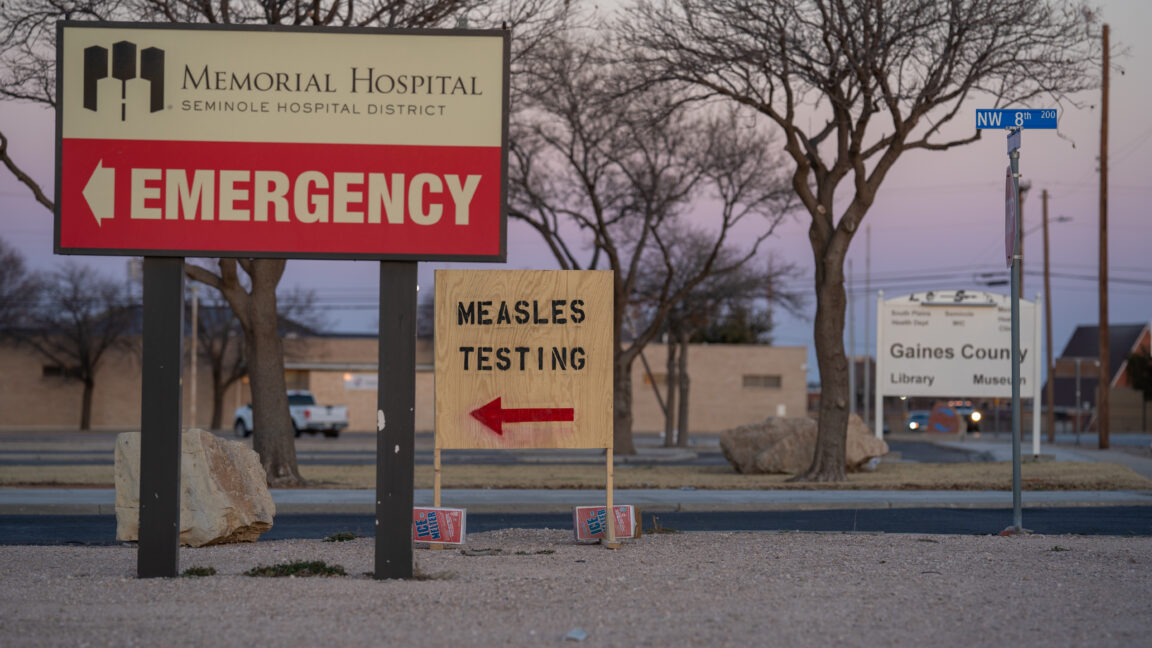
Signs point the way to measles testing in the parking lot of the Seminole Hospital District across from Wigwam Stadium on February 27, 2025, in Seminole, Texas. Credit: Getty | Jan Sonnenmair
Federal health officials have linked two massive US measles outbreaks, confirming that the country is about two months away from losing its measles elimination status, according to a report by The New York Times.
The Times obtained a recording of a call during which officials from the Centers for Disease Control and Prevention confirmed to state health departments that the ongoing measles outbreak at the border of Arizona and Utah is a continuation of the explosive outbreak in West Texas that began in mid- to late-January. That is, the two massive outbreaks are being caused by the same subtype of measles virus.
This is a significant link that hasn’t previously been reported despite persistent questions from journalists and concerns from health experts, particularly in light of Canada losing its elimination status last week. The loss of an elimination status means that measles will once again be considered endemic to the US, an embarrassing public health backslide for a vaccine-preventable disease.
The massive outbreak in Texas began in mid- to late-January and was declared over on August 18. In all, there were 762 cases of measles confirmed in the outbreak. Utah and Arizona started seeing some measles cases in June, but those outbreaks appeared to take off in August. To date, Utah and Arizona have reported 212 cases.
The finding that the outbreaks are linked means there’s been continuous circulation within the country for about 10 months. If the same measles virus subtype from the outbreaks—dubbed 9171—continues to spread and surpasses the 12-month mark in January 2026, the US will lose its elimination status. The status is earned by going 12 months without continuous circulation and is lost when year-long circulation resumes. The US obtained its elimination status in 2000 after grueling, decades-long vaccination campaigns.
Unsurprising
This 9171 subtype “continues, unfortunately uninterrupted, across multiple jurisdictions,” David Sugerman, who leads the CDC measles response, said on the call.
According to the Times, local health officials are pessimistic that they’ll be able to stamp out the virus’ spread, saying that vaccination efforts have had “limited” impact. As Ars reported previously, vaccination rates are dangerously low in two measles hotspots: northwestern Mohave County, Arizona, and the southwest health district of Utah. Vaccination rates among kindergartners in the 2024–2025 school year were 78.4 percent and 80.7 percent, respectively. That’s well below the 95 percent target needed to keep the virus from spreading onward in the communities.
In addition, public health officials in Arizona and Utah have reported barriers to responding to the outbreak. Around a quarter of cases don’t know how they were exposed, suggesting cases and exposures are being missed. In late October, health officials in Salt Lake County, Utah, said that a person likely infected with measles refused to cooperate with their investigation, leaving them unable to confirm the probable case.
David Kimberlin, who sits on a panel of experts that analyzes measles data for the United States’ elimination status review, told the Times, “It would not surprise me in the least if there’s continued spread across these next several months.”
To date, the CDC has tallied 1,723 measles cases across 42 states. Most (87 percent) of those cases were linked to outbreaks, of which there have been 45 this year. For context, there were 16 outbreaks and a total of 285 measles cases in the US last year. This year’s measles cases mark a 33-year high.
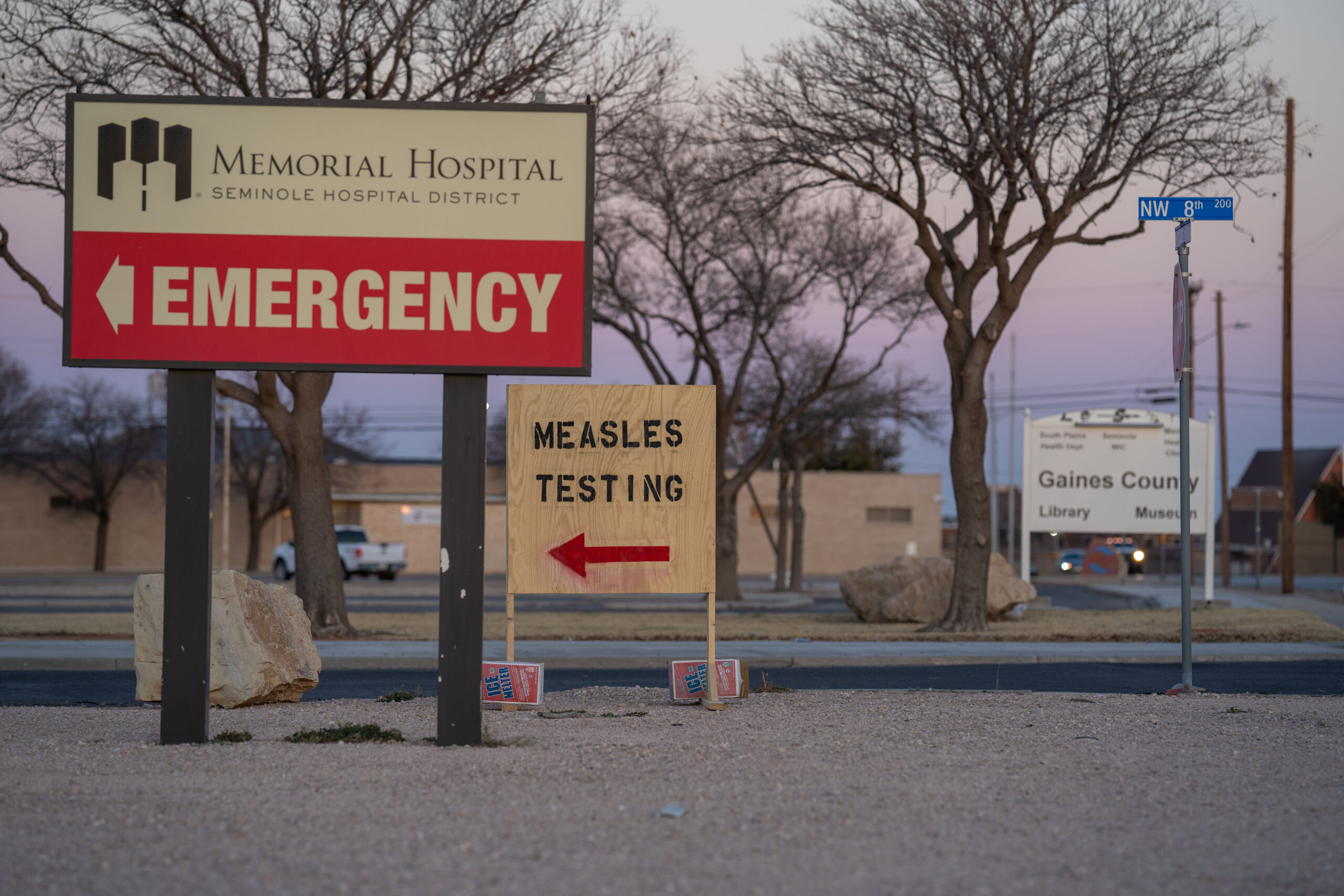
Signs point the way to measles testing in the parking lot of the Seminole Hospital District across from Wigwam Stadium on February 27, 2025, in Seminole, Texas. Credit: Getty | Jan Sonnenmair
Federal health officials have linked two massive US measles outbreaks, confirming that the country is about two months away from losing its measles elimination status, according to a report by The New York Times.
The Times obtained a recording of a call during which officials from the Centers for Disease Control and Prevention confirmed to state health departments that the ongoing measles outbreak at the border of Arizona and Utah is a continuation of the explosive outbreak in West Texas that began in mid- to late-January. That is, the two massive outbreaks are being caused by the same subtype of measles virus.
This is a significant link that hasn’t previously been reported despite persistent questions from journalists and concerns from health experts, particularly in light of Canada losing its elimination status last week. The loss of an elimination status means that measles will once again be considered endemic to the US, an embarrassing public health backslide for a vaccine-preventable disease.
The massive outbreak in Texas began in mid- to late-January and was declared over on August 18. In all, there were 762 cases of measles confirmed in the outbreak. Utah and Arizona started seeing some measles cases in June, but those outbreaks appeared to take off in August. To date, Utah and Arizona have reported 212 cases.
The finding that the outbreaks are linked means there’s been continuous circulation within the country for about 10 months. If the same measles virus subtype from the outbreaks—dubbed 9171—continues to spread and surpasses the 12-month mark in January 2026, the US will lose its elimination status. The status is earned by going 12 months without continuous circulation and is lost when year-long circulation resumes. The US obtained its elimination status in 2000 after grueling, decades-long vaccination campaigns.
Unsurprising
This 9171 subtype “continues, unfortunately uninterrupted, across multiple jurisdictions,” David Sugerman, who leads the CDC measles response, said on the call.
According to the Times, local health officials are pessimistic that they’ll be able to stamp out the virus’ spread, saying that vaccination efforts have had “limited” impact. As Ars reported previously, vaccination rates are dangerously low in two measles hotspots: northwestern Mohave County, Arizona, and the southwest health district of Utah. Vaccination rates among kindergartners in the 2024–2025 school year were 78.4 percent and 80.7 percent, respectively. That’s well below the 95 percent target needed to keep the virus from spreading onward in the communities.
In addition, public health officials in Arizona and Utah have reported barriers to responding to the outbreak. Around a quarter of cases don’t know how they were exposed, suggesting cases and exposures are being missed. In late October, health officials in Salt Lake County, Utah, said that a person likely infected with measles refused to cooperate with their investigation, leaving them unable to confirm the probable case.
David Kimberlin, who sits on a panel of experts that analyzes measles data for the United States’ elimination status review, told the Times, “It would not surprise me in the least if there’s continued spread across these next several months.”
To date, the CDC has tallied 1,723 measles cases across 42 states. Most (87 percent) of those cases were linked to outbreaks, of which there have been 45 this year. For context, there were 16 outbreaks and a total of 285 measles cases in the US last year. This year’s measles cases mark a 33-year high.
