


- Регистрация
- 17 Февраль 2018
- Сообщения
- 40 939
- Лучшие ответы
- 0
- Реакции
- 0
- Баллы
- 8 093
Offline
Post reporter was compelled to unlock MacBook Pro with fingerprint, however.
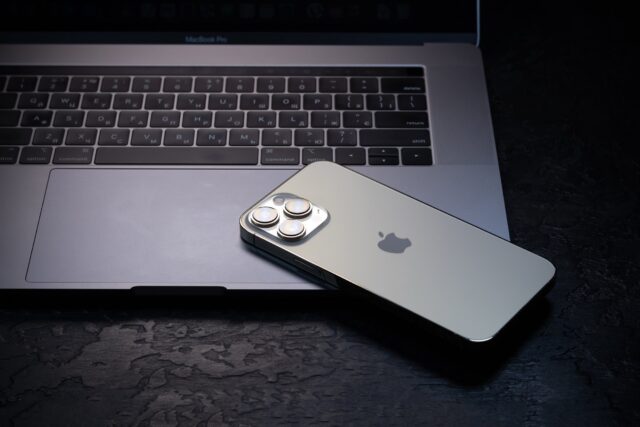
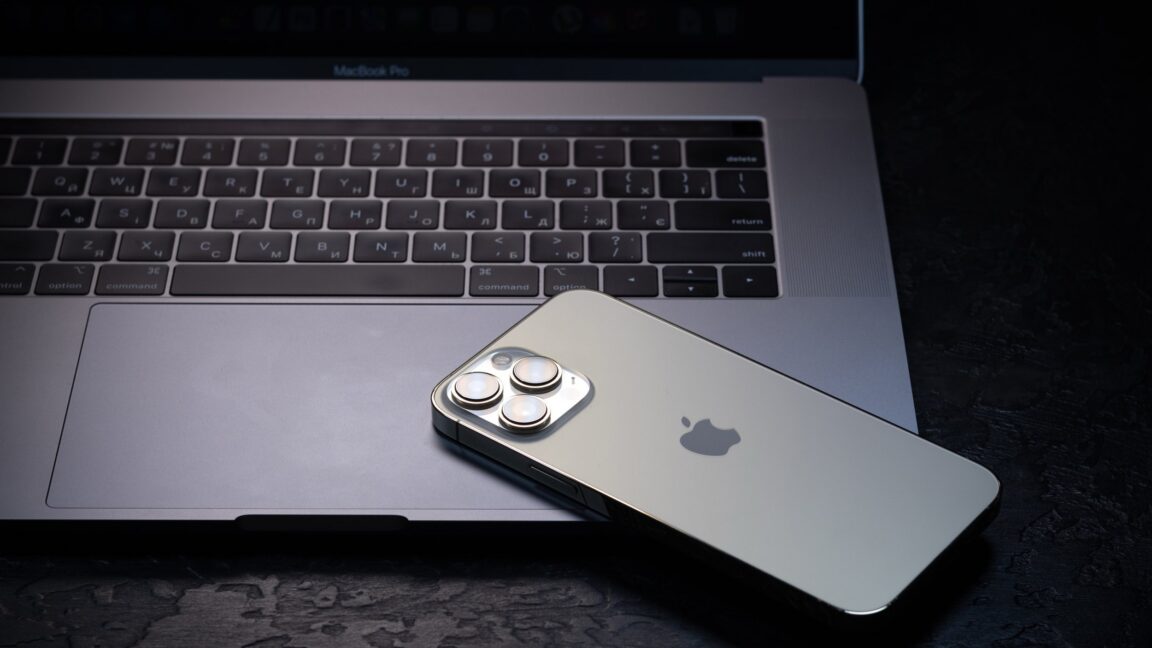
An iPhone 15 Pro and MacBook Pro. Credit: Getty Images | Vadym Plysiuk
The Federal Bureau of Investigation has so far been unable to access data from a Washington Post reporter’s iPhone because it was protected by Apple’s Lockdown Mode when agents seized the device from the reporter’s home, the US government said in a court filing.
FBI agents were able to access the reporter’s work laptop by telling her to place her index finger on the MacBook Pro’s fingerprint reader, however. This occurred during the January 14 search at the Virginia home of reporter Hannah Natanson.
As previously reported, the FBI executed a search warrant at Natanson’s home as part of an investigation into a Pentagon contractor accused of illegally leaking classified data. FBI agents seized an iPhone 13 owned by the Post, one MacBook Pro owned by the Post and another MacBook Pro owned by Natanson, a 1TB portable hard drive, a voice recorder, and a Garmin watch.
Government investigators want to read Natanson’s Signal messages, and were able to view at least some of them on her work laptop. The reporter has said she has a contact list of 1,100 current and former government employees in Signal, which she uses for encrypted chats.
The Justice Department described the search in a court filing that was submitted Friday in US District Court for the Eastern District of Virginia and noted in a 404 Media article today. The government filing opposes a motion in which the Post and Natanson asked the court to order the return of the seized devices. A federal magistrate judge previously issued a standstill order telling the government to stop searching the devices until the court rules on whether they must be returned.
“The iPhone was found powered on and charging, and its display noted that the phone was in ‘Lockdown’ mode,” the government filing said. After the seized devices were taken to the FBI’s Washington field office, the Computer Analysis Response Team (CART) “began processing each device to preserve the information therein,” the filing said.
Apple made Lockdown Mode for people at high risk
CART couldn’t get anything from the iPhone. “Because the iPhone was in Lockdown mode, CART could not extract that device,” the government filing said.
The government also submitted a declaration by FBI Assistant Director Roman Rozhavsky that said the agency “has paused any further efforts to extract this device because of the Court’s Standstill Order.” The FBI did extract information from the SIM card “with an auto-generated HTML report created by the tool utilized by CART,” but “the data contained in the HTML was limited to the telephone number.”
Apple says that LockDown Mode “helps protect devices against extremely rare and highly sophisticated cyber attacks,” and is “designed for the very few individuals who, because of who they are or what they do, might be personally targeted by some of the most sophisticated digital threats.”
Introduced in 2022, Lockdown Mode is available for iPhones, iPads, and Macs. It must be enabled separately for each device. To enable it on an iPhone or iPad, a user would open the Settings app, tap Privacy & Security, scroll down and tap Lockdown Mode, and then tap Turn on Lockdown Mode.
The process is similar on Macs. In the System Settings app that can be accessed via the Apple menu, a user would click Privacy & Security, scroll down and click Lockdown Mode, and then click Turn On.
“When Lockdown Mode is enabled, your device won’t function like it typically does,” Apple says. “To reduce the attack surface that potentially could be exploited by highly targeted mercenary spyware, certain apps, websites, and features are strictly limited for security and some experiences might not be available at all.”
Lockdown Mode blocks most types of message attachments, blocks FaceTime calls from people you haven’t contacted in the past 30 days, restricts the kinds of browser technologies that websites can use, limits photo sharing, and imposes other restrictions. Users can exclude specific apps and websites they trust from these restrictions, however.
Reporter’s fingerprint unlocked laptop
FBI agents had more success getting into Natanson’s other devices, though the Justice Department complained that “Ms. Natanson misled investigators about the devices that were seized. She misrepresented to officers that the devices could not be unlocked with biometrics, possibly in order to prevent the Government from reviewing materials within the scope of the search warrant.”
The Rozhavsky declaration said that during the home search, FBI agents “advised Natanson that the FBI could not compel her to provide her passcodes,” but “the warrant did give the FBI authority to use Natanson’s biometrics, such as facial recognition or fingerprints, to open her devices. Natanson stated that she did not use biometrics on her devices.”
Natanson’s personal MacBook Pro was powered off when it was found by FBI agents. The Post-owned MacBook Pro was found in a backpack in the kitchen and was powered on and locked. The FBI said an agent “presented Natanson with her open laptop” and “assisted” her in unlocking the device with her finger. The declaration described what happened as follows:
Natanson was reminded the FBI has authority to use her biometrics to unlock the laptop and Natanson repeated that she does not use biometrics on her devices. Natanson was told she must try, in accordance with the authorization in the warrant. The FBI assisted Natanson with applying her right index finger to the fingerprint reader which immediately unlocked the laptop.
In 2024, a federal appeals court ruled that the Constitution’s Fifth Amendment protection against self-incrimination does not prohibit police officers from forcing a suspect to unlock a phone with a thumbprint scan. That case involved a traffic stop, rather than a home search authorized by a warrant.
The FBI has so far been unable “to obtain a full physical image” of Natanson’s work laptop, but did make a “limited partial live logical image,” the government filing said. At least some of Natanson’s Signal chat messages were set for auto-deletion, so FBI agents took photos and made audio recordings of the chats, but the government filing said this was done “only for preservation purposes and no substantive review has occurred.”
The FBI apparently hasn’t gotten any data from Natanson’s personal computer. “Natanson’s personal MacBook Pro is password protected and encrypted and therefore no imaging was effected. The FBI paused any further efforts because of [the] Court’s Standstill Order. No review has occurred,” Rozhavsky wrote.
The government said it processed data from the voice recorder and 1TB hard drive but has not reviewed the data yet. The Garmin watch wasn’t processed before the court issued a standstill order; “therefore, no processing will occur until further order of the Court,” the declaration said.
FBI read Signal messages on contractor’s device
The investigation’s target is Aurelio Perez-Lugones, a system administrator in Maryland who has a top-secret security clearance and was arrested after being accused of taking classified intelligence reports home. The Justice Department said Washington Post articles contained classified information from those reports, and that the government should be allowed to review the Post reporter’s seized devices in preparation for Perez-Lugones’ trial.
The government said it was able to read at least some of the Signal messages by reviewing Perez-Lugones’ device. “Prior to his arrest, the FBI consensually reviewed messages between Mr. Perez-Lugones and Ms. Natanson sent via Signal on or around January 7 and 8, 2026… The messages discussed the classification level of certain documents, set forth details about which US government agencies had produced different reports, and explained how certain documents would be referenced in forthcoming news articles,” the Justice Department court filing said.
The Post argues that a wide-ranging government search of Natanson’s various devices violates the First Amendment and that the government’s legitimate interests could be satisfied with a more limited subpoena. The government claims in response that the Washington Post wants the court “to reimagine the First Amendment as a journalist’s exception to search warrants.”
“Under the reasonableness standard of Federal Rule of Criminal Procedure 41(g), the Government is entitled to maintain this evidence because it is relevant to an ongoing investigation and prosecution,” the Justice Department said. “In addition, the Government cannot be reasonably required to hand over to Movants devices that the Government has probable cause to believe contain its own highly classified information.”
The government said the Post’s suggestion of a subpoena for specific information from the devices “ignores the obvious risk that evidence could be lost either through a failure to preserve expiring Signal messages or bad faith conduct.” Natanson’s false claim that she did not use biometrics suggests that the Post and Natanson can’t be trusted to preserve documents, the brief said.
“The record confirms the correctness of the Government’s choice to proceed with a search warrant,” the Justice Department said.
The Post/Natanson motion was supported in a brief filed by the Reporters Committee for Freedom of the Press. The FBI “seiz[ed] electronic devices that contain [Natanson’s] most sensitive work product alongside confidential communications with her sources,” the brief said. “Only a fraction of the information the Department seized is even imaginably relevant to its stated basis for that intrusion: the leak investigation of a government contractor who has already been identified, charged, and arrested.” The brief urged the court to stop federal agents from searching through “unrelated newsgathering material and doing irreparable damage to the confidentiality on which effective reporting depends.”
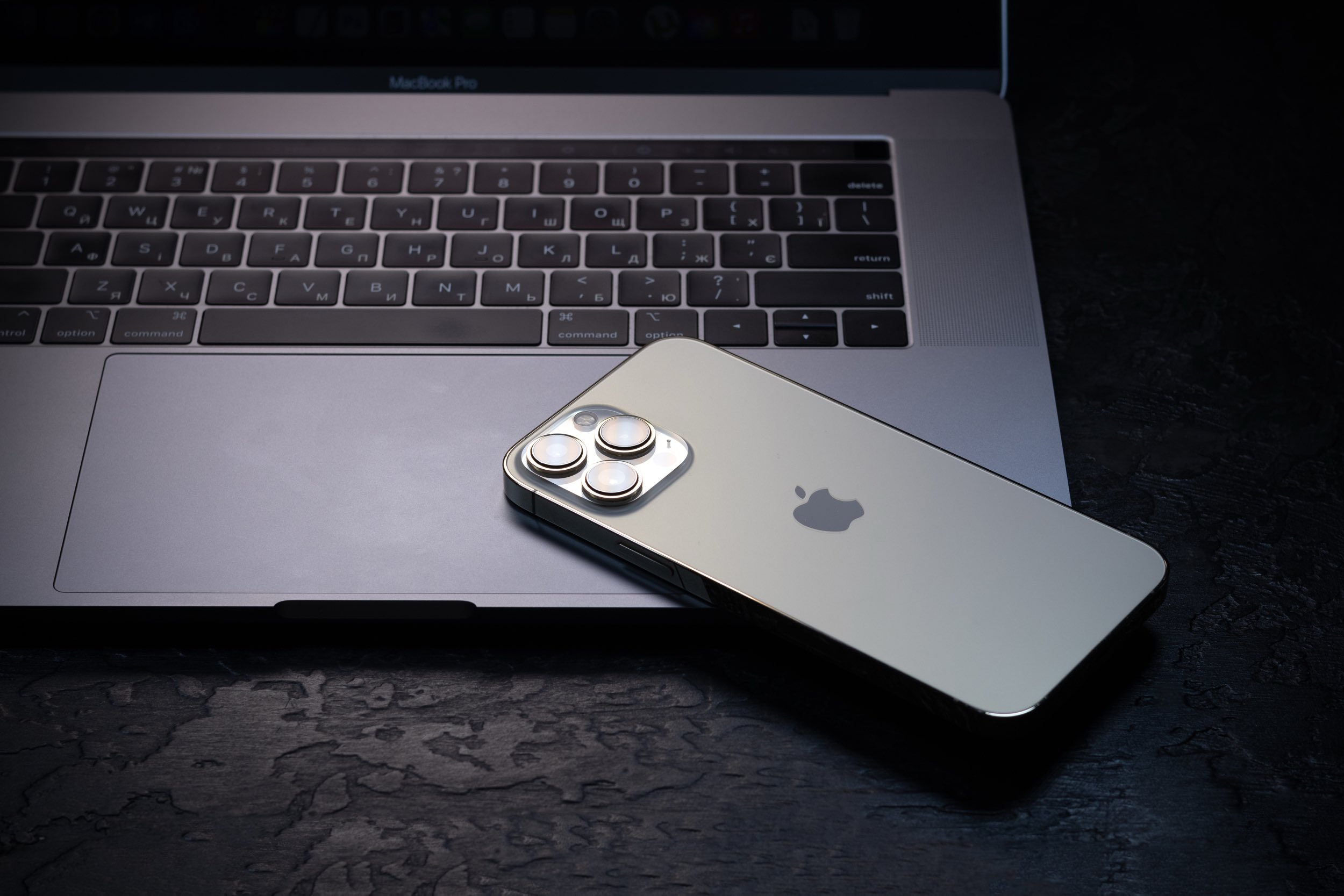
An iPhone 15 Pro and MacBook Pro. Credit: Getty Images | Vadym Plysiuk
The Federal Bureau of Investigation has so far been unable to access data from a Washington Post reporter’s iPhone because it was protected by Apple’s Lockdown Mode when agents seized the device from the reporter’s home, the US government said in a court filing.
FBI agents were able to access the reporter’s work laptop by telling her to place her index finger on the MacBook Pro’s fingerprint reader, however. This occurred during the January 14 search at the Virginia home of reporter Hannah Natanson.
As previously reported, the FBI executed a search warrant at Natanson’s home as part of an investigation into a Pentagon contractor accused of illegally leaking classified data. FBI agents seized an iPhone 13 owned by the Post, one MacBook Pro owned by the Post and another MacBook Pro owned by Natanson, a 1TB portable hard drive, a voice recorder, and a Garmin watch.
Government investigators want to read Natanson’s Signal messages, and were able to view at least some of them on her work laptop. The reporter has said she has a contact list of 1,100 current and former government employees in Signal, which she uses for encrypted chats.
The Justice Department described the search in a court filing that was submitted Friday in US District Court for the Eastern District of Virginia and noted in a 404 Media article today. The government filing opposes a motion in which the Post and Natanson asked the court to order the return of the seized devices. A federal magistrate judge previously issued a standstill order telling the government to stop searching the devices until the court rules on whether they must be returned.
“The iPhone was found powered on and charging, and its display noted that the phone was in ‘Lockdown’ mode,” the government filing said. After the seized devices were taken to the FBI’s Washington field office, the Computer Analysis Response Team (CART) “began processing each device to preserve the information therein,” the filing said.
Apple made Lockdown Mode for people at high risk
CART couldn’t get anything from the iPhone. “Because the iPhone was in Lockdown mode, CART could not extract that device,” the government filing said.
The government also submitted a declaration by FBI Assistant Director Roman Rozhavsky that said the agency “has paused any further efforts to extract this device because of the Court’s Standstill Order.” The FBI did extract information from the SIM card “with an auto-generated HTML report created by the tool utilized by CART,” but “the data contained in the HTML was limited to the telephone number.”
Apple says that LockDown Mode “helps protect devices against extremely rare and highly sophisticated cyber attacks,” and is “designed for the very few individuals who, because of who they are or what they do, might be personally targeted by some of the most sophisticated digital threats.”
Introduced in 2022, Lockdown Mode is available for iPhones, iPads, and Macs. It must be enabled separately for each device. To enable it on an iPhone or iPad, a user would open the Settings app, tap Privacy & Security, scroll down and tap Lockdown Mode, and then tap Turn on Lockdown Mode.
The process is similar on Macs. In the System Settings app that can be accessed via the Apple menu, a user would click Privacy & Security, scroll down and click Lockdown Mode, and then click Turn On.
“When Lockdown Mode is enabled, your device won’t function like it typically does,” Apple says. “To reduce the attack surface that potentially could be exploited by highly targeted mercenary spyware, certain apps, websites, and features are strictly limited for security and some experiences might not be available at all.”
Lockdown Mode blocks most types of message attachments, blocks FaceTime calls from people you haven’t contacted in the past 30 days, restricts the kinds of browser technologies that websites can use, limits photo sharing, and imposes other restrictions. Users can exclude specific apps and websites they trust from these restrictions, however.
Reporter’s fingerprint unlocked laptop
FBI agents had more success getting into Natanson’s other devices, though the Justice Department complained that “Ms. Natanson misled investigators about the devices that were seized. She misrepresented to officers that the devices could not be unlocked with biometrics, possibly in order to prevent the Government from reviewing materials within the scope of the search warrant.”
The Rozhavsky declaration said that during the home search, FBI agents “advised Natanson that the FBI could not compel her to provide her passcodes,” but “the warrant did give the FBI authority to use Natanson’s biometrics, such as facial recognition or fingerprints, to open her devices. Natanson stated that she did not use biometrics on her devices.”
Natanson’s personal MacBook Pro was powered off when it was found by FBI agents. The Post-owned MacBook Pro was found in a backpack in the kitchen and was powered on and locked. The FBI said an agent “presented Natanson with her open laptop” and “assisted” her in unlocking the device with her finger. The declaration described what happened as follows:
Natanson was reminded the FBI has authority to use her biometrics to unlock the laptop and Natanson repeated that she does not use biometrics on her devices. Natanson was told she must try, in accordance with the authorization in the warrant. The FBI assisted Natanson with applying her right index finger to the fingerprint reader which immediately unlocked the laptop.
In 2024, a federal appeals court ruled that the Constitution’s Fifth Amendment protection against self-incrimination does not prohibit police officers from forcing a suspect to unlock a phone with a thumbprint scan. That case involved a traffic stop, rather than a home search authorized by a warrant.
The FBI has so far been unable “to obtain a full physical image” of Natanson’s work laptop, but did make a “limited partial live logical image,” the government filing said. At least some of Natanson’s Signal chat messages were set for auto-deletion, so FBI agents took photos and made audio recordings of the chats, but the government filing said this was done “only for preservation purposes and no substantive review has occurred.”
The FBI apparently hasn’t gotten any data from Natanson’s personal computer. “Natanson’s personal MacBook Pro is password protected and encrypted and therefore no imaging was effected. The FBI paused any further efforts because of [the] Court’s Standstill Order. No review has occurred,” Rozhavsky wrote.
The government said it processed data from the voice recorder and 1TB hard drive but has not reviewed the data yet. The Garmin watch wasn’t processed before the court issued a standstill order; “therefore, no processing will occur until further order of the Court,” the declaration said.
FBI read Signal messages on contractor’s device
The investigation’s target is Aurelio Perez-Lugones, a system administrator in Maryland who has a top-secret security clearance and was arrested after being accused of taking classified intelligence reports home. The Justice Department said Washington Post articles contained classified information from those reports, and that the government should be allowed to review the Post reporter’s seized devices in preparation for Perez-Lugones’ trial.
The government said it was able to read at least some of the Signal messages by reviewing Perez-Lugones’ device. “Prior to his arrest, the FBI consensually reviewed messages between Mr. Perez-Lugones and Ms. Natanson sent via Signal on or around January 7 and 8, 2026… The messages discussed the classification level of certain documents, set forth details about which US government agencies had produced different reports, and explained how certain documents would be referenced in forthcoming news articles,” the Justice Department court filing said.
The Post argues that a wide-ranging government search of Natanson’s various devices violates the First Amendment and that the government’s legitimate interests could be satisfied with a more limited subpoena. The government claims in response that the Washington Post wants the court “to reimagine the First Amendment as a journalist’s exception to search warrants.”
“Under the reasonableness standard of Federal Rule of Criminal Procedure 41(g), the Government is entitled to maintain this evidence because it is relevant to an ongoing investigation and prosecution,” the Justice Department said. “In addition, the Government cannot be reasonably required to hand over to Movants devices that the Government has probable cause to believe contain its own highly classified information.”
The government said the Post’s suggestion of a subpoena for specific information from the devices “ignores the obvious risk that evidence could be lost either through a failure to preserve expiring Signal messages or bad faith conduct.” Natanson’s false claim that she did not use biometrics suggests that the Post and Natanson can’t be trusted to preserve documents, the brief said.
“The record confirms the correctness of the Government’s choice to proceed with a search warrant,” the Justice Department said.
The Post/Natanson motion was supported in a brief filed by the Reporters Committee for Freedom of the Press. The FBI “seiz[ed] electronic devices that contain [Natanson’s] most sensitive work product alongside confidential communications with her sources,” the brief said. “Only a fraction of the information the Department seized is even imaginably relevant to its stated basis for that intrusion: the leak investigation of a government contractor who has already been identified, charged, and arrested.” The brief urged the court to stop federal agents from searching through “unrelated newsgathering material and doing irreparable damage to the confidentiality on which effective reporting depends.”
