


- Регистрация
- 17 Февраль 2018
- Сообщения
- 40 948
- Лучшие ответы
- 0
- Реакции
- 0
- Баллы
- 8 093
Offline
Plant chemicals made more potent by insect pests are detoxified by the fungus.
Credit: Picture Alliance
Exterminators keep getting calls for a reason. Wood-devouring insects, such as beetles, termites, and carpenter ants, are constantly chewing through walls or infecting trees and breaking them down. The fight against these insects usually involved noxious insecticides; but now, at least some of them can be eliminated using a certain species of fungus.
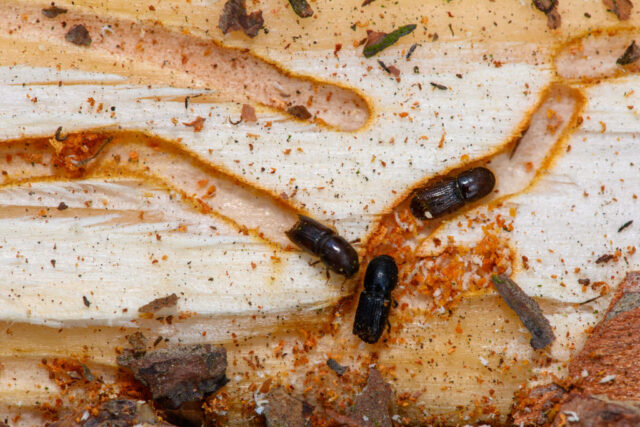
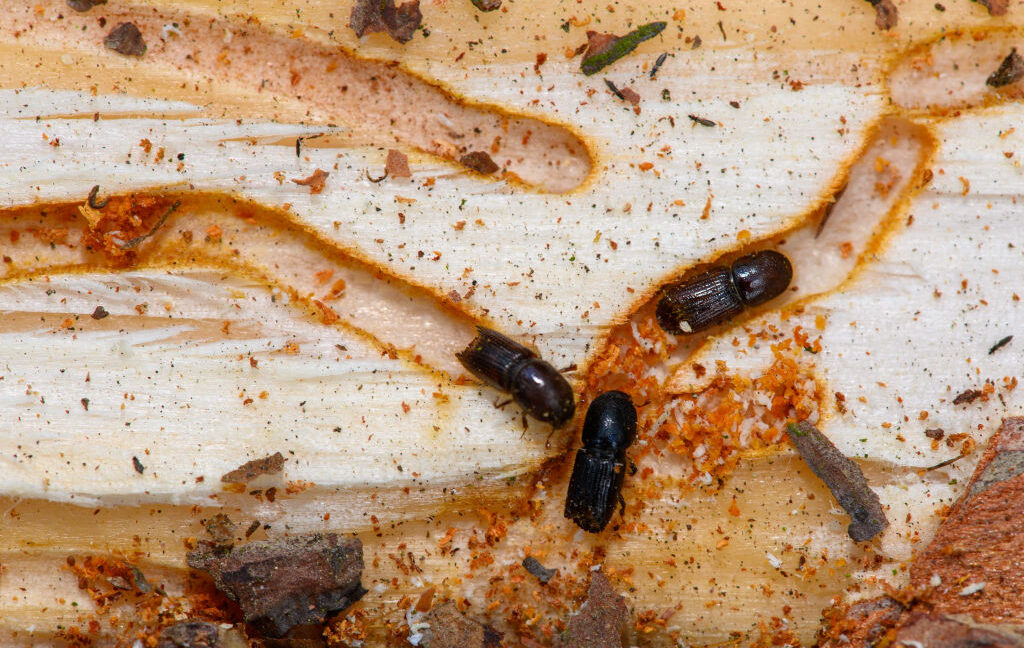
Infestations of bark beetles are the bane of spruce trees. Eurasian spruce bark beetles (Ips typographus) ingest bark high in phenolic compounds, organic molecules that often act as antioxidants and antimicrobials. They protect spruce bark from pathogenic fungi—and the beetles take advantage. Their bodies boost the antimicrobial power of these compounds by turning them into substances that are even more toxic to fungi. This would seem to make the beetles invulnerable to fungi.
There is a way to get past the beetles’ borrowed defenses, though. Led by biochemist Ruo Sun, a team of researchers from the Max Planck Institute for Chemical Ecology in Jena, Germany, found that some strains of the fungus Beauveria bassiana are capable of infecting and killing the pests.
“Insect herbivores have long been known to accumulate plant defense metabolites from their diet as defenses against their own enemies,” she said in a study recently published in PNAS. “However, as shown here for B. bassiana, fungal pathogens are able to circumvent the toxicity of these dietary defenses and cause disease.”
First line of defense
Populations of bark beetles have recently exploded in temperate forests because of climate change. One species they feed on is the Norway spruce (Picea abies), which makes organic phenolic compounds known as stilbenes and flavonoids. Stilbenes are hydrocarbons that function as secondary metabolites for plants, and flavonoids, which are polyphenols, are also secondary plant metabolites that are often antioxidants. The spruce links both classes of compounds with sugars and relies on their antibacterial and antifungal activity.
When metabolized by the beetles, the spruce sugars are removed through hydrolysis, converting them into aglycones that are even more toxic to microscopic invaders. Despite that, some fungi appear to be able to deactivate these compounds. Strains of the fungal insect pathogen B. bassiana have been documented as killing some of these beetles in the wild.
Sun wanted to put this fungus to the test. While not all strains have been effective at eliminating bark beetles, she and her team extracted the fungus from beetles that had succumbed to it. They bred these strains in their lab to see how effective they would be against the insects. They identified the genes that gave these fungi their ability to metabolize phenolic compounds ingested by the beetles and detoxify them so they were no longer protective. They then experimented with knocking out these genes to see whether the mutant fungi would still be able to take down beetles.
Fungus does something humongous
Once beetles were infected with B. bassiana, the researchers found the fungus detoxifies protective compounds in two phases. The aglycones that were made so potent by the removal of sugars from spruce stilbenes and flavanoids are made weaker by having the sugar restored in the first phase. Methylation happens next. After this phase, the sugar is linked to a methyl group (CH3), forming a type of methylglucoside. This particular methylglucoside is harmless to the fungus. Mutant strains of the fungus that had their detoxification genes knocked out could not produce methylglucoside, so they were not as effective at infecting beetles and were nowhere near as lethal.
B. bassiana is not the only fungus that is capable of this detox. Other species, including the infamous Cordyceps militaris that terrorized a dystopian society in The Last of Us (though it will not turn people into fungus monsters), are capable of producing methylglucosides from stilbenes, flavonoids, and other compounds that are supposed to protect plants from infection and are borrowed by the insects that gorge on them.
“Besides direct detoxification, fungi such as B. bassiana could have other mechanisms of resisting plant defense compounds,” Sun said. “[Some] are known to excrete compounds like resveratrol from fungal cells, and so could also play a role in increasing fungal growth and virulence on substrates containing toxic compounds.”
Fungi could be weaponized as pest control in the future. The researchers think it is possible that the genes that enable B. bassiana to detoxify antifungal substances could enable it to metabolize other defensive plant substances ingested by harmful insects. Instead of sprayers full of dangerous chemicals, exterminators may soon arrive with petri dishes instead.
PNAS, 2025. DOI: 10.1073/pnas.2525513122
Credit: Picture Alliance
Exterminators keep getting calls for a reason. Wood-devouring insects, such as beetles, termites, and carpenter ants, are constantly chewing through walls or infecting trees and breaking them down. The fight against these insects usually involved noxious insecticides; but now, at least some of them can be eliminated using a certain species of fungus.
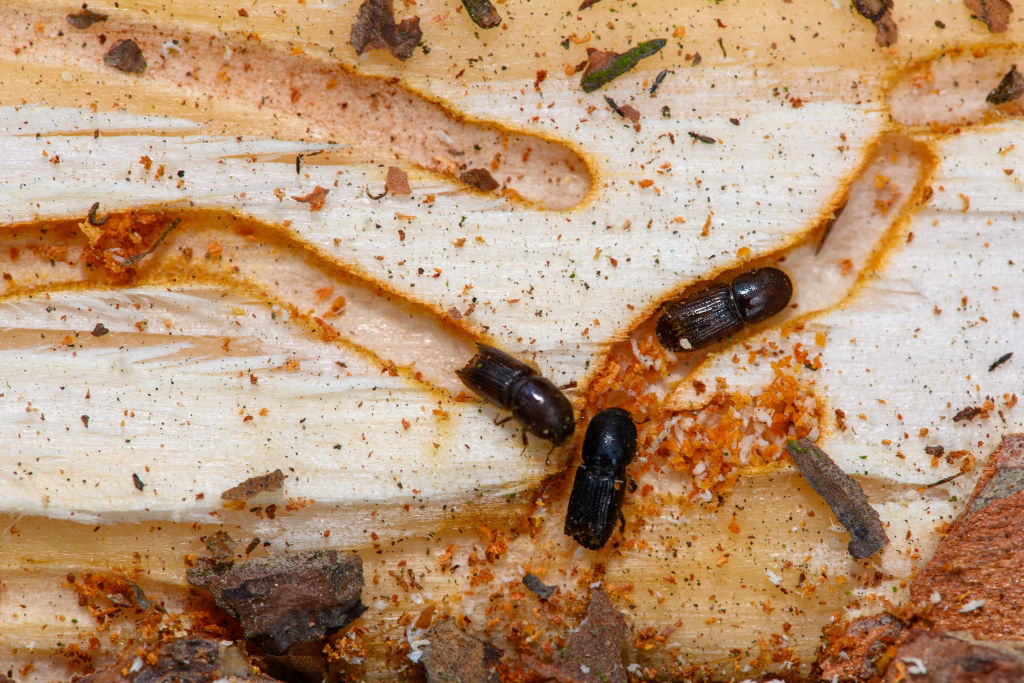
Infestations of bark beetles are the bane of spruce trees. Eurasian spruce bark beetles (Ips typographus) ingest bark high in phenolic compounds, organic molecules that often act as antioxidants and antimicrobials. They protect spruce bark from pathogenic fungi—and the beetles take advantage. Their bodies boost the antimicrobial power of these compounds by turning them into substances that are even more toxic to fungi. This would seem to make the beetles invulnerable to fungi.
There is a way to get past the beetles’ borrowed defenses, though. Led by biochemist Ruo Sun, a team of researchers from the Max Planck Institute for Chemical Ecology in Jena, Germany, found that some strains of the fungus Beauveria bassiana are capable of infecting and killing the pests.
“Insect herbivores have long been known to accumulate plant defense metabolites from their diet as defenses against their own enemies,” she said in a study recently published in PNAS. “However, as shown here for B. bassiana, fungal pathogens are able to circumvent the toxicity of these dietary defenses and cause disease.”
First line of defense
Populations of bark beetles have recently exploded in temperate forests because of climate change. One species they feed on is the Norway spruce (Picea abies), which makes organic phenolic compounds known as stilbenes and flavonoids. Stilbenes are hydrocarbons that function as secondary metabolites for plants, and flavonoids, which are polyphenols, are also secondary plant metabolites that are often antioxidants. The spruce links both classes of compounds with sugars and relies on their antibacterial and antifungal activity.
When metabolized by the beetles, the spruce sugars are removed through hydrolysis, converting them into aglycones that are even more toxic to microscopic invaders. Despite that, some fungi appear to be able to deactivate these compounds. Strains of the fungal insect pathogen B. bassiana have been documented as killing some of these beetles in the wild.
Sun wanted to put this fungus to the test. While not all strains have been effective at eliminating bark beetles, she and her team extracted the fungus from beetles that had succumbed to it. They bred these strains in their lab to see how effective they would be against the insects. They identified the genes that gave these fungi their ability to metabolize phenolic compounds ingested by the beetles and detoxify them so they were no longer protective. They then experimented with knocking out these genes to see whether the mutant fungi would still be able to take down beetles.
Fungus does something humongous
Once beetles were infected with B. bassiana, the researchers found the fungus detoxifies protective compounds in two phases. The aglycones that were made so potent by the removal of sugars from spruce stilbenes and flavanoids are made weaker by having the sugar restored in the first phase. Methylation happens next. After this phase, the sugar is linked to a methyl group (CH3), forming a type of methylglucoside. This particular methylglucoside is harmless to the fungus. Mutant strains of the fungus that had their detoxification genes knocked out could not produce methylglucoside, so they were not as effective at infecting beetles and were nowhere near as lethal.
B. bassiana is not the only fungus that is capable of this detox. Other species, including the infamous Cordyceps militaris that terrorized a dystopian society in The Last of Us (though it will not turn people into fungus monsters), are capable of producing methylglucosides from stilbenes, flavonoids, and other compounds that are supposed to protect plants from infection and are borrowed by the insects that gorge on them.
“Besides direct detoxification, fungi such as B. bassiana could have other mechanisms of resisting plant defense compounds,” Sun said. “[Some] are known to excrete compounds like resveratrol from fungal cells, and so could also play a role in increasing fungal growth and virulence on substrates containing toxic compounds.”
Fungi could be weaponized as pest control in the future. The researchers think it is possible that the genes that enable B. bassiana to detoxify antifungal substances could enable it to metabolize other defensive plant substances ingested by harmful insects. Instead of sprayers full of dangerous chemicals, exterminators may soon arrive with petri dishes instead.
PNAS, 2025. DOI: 10.1073/pnas.2525513122
