


- Регистрация
- 17 Февраль 2018
- Сообщения
- 40 838
- Лучшие ответы
- 0
- Реакции
- 0
- Баллы
- 8 093
Offline
Google has also added the updated Veo tools to YouTube creator tools.
Credit: Google
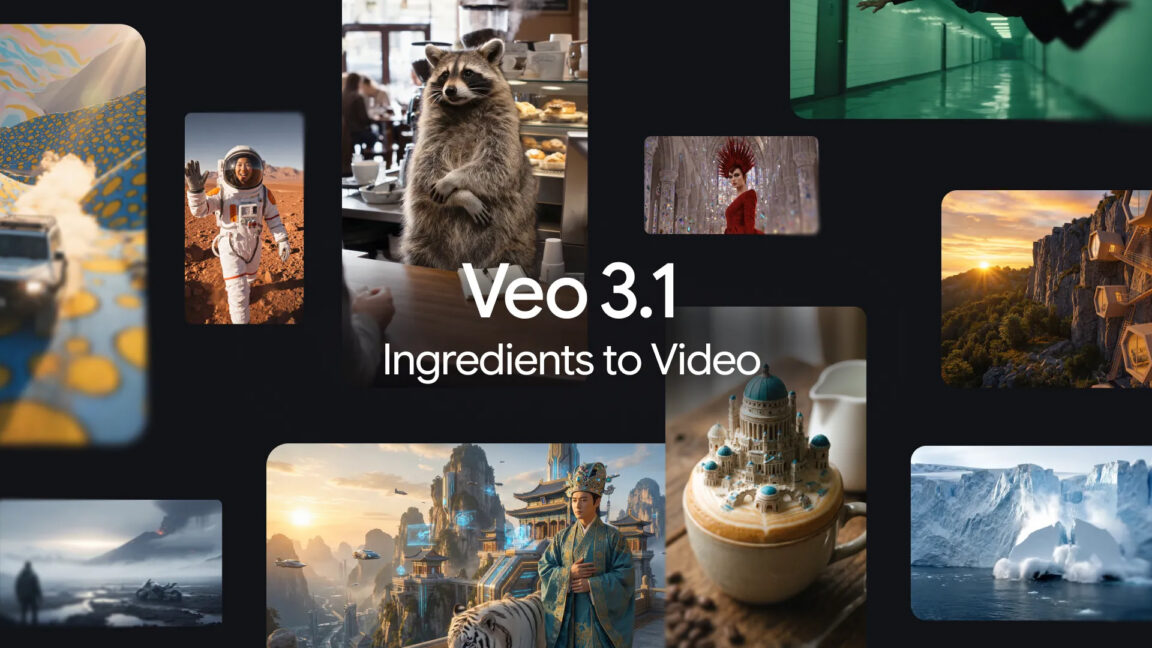
Google’s Veo video AI made stunning leaps in fidelity in 2025, and Google isn’t stopping in 2026. The company has announced an update for Veo 3.1 that adds new capabilities when you provide the model with reference material, known as Ingredients to Video. The results should be more consistent, and output supports vertical video and higher-resolution upscaling.
With Ingredients to Video, you can provide the AI with up to three images to incorporate into the generated video. You can use that to provide the robot with characters to animate, backgrounds, and material textures. When you do that, the newly upgraded model will allegedly make fewer random alterations, hemming closer to the reference images. You can also generate multiple clips and even prompt for changes to the setting or style while keeping other elements consistent.
Veo 3.1 Updates – Bring more creativity and expressiveness into your videos.
Google is also expanding its support for mobile-first video in Veo. When using Ingredients to Video, you can now specify outputs in a 9:16 (vertical) ratio. That makes it ideal for posting on social apps like Instagram or TikTok, as well as uploading as a YouTube Short. So get ready for even more phone-centric slop. Google added support for vertical videos via a text prompt last year.
Enhanced support for Ingredients to Video and the associated vertical outputs are live in the Gemini app today, as well as in YouTube Shorts and the YouTube Create app, fulfilling a promise initially made last summer. Veo videos are short—just eight seconds long for each prompt. It would be tedious to assemble those into a longer video, but Veo is perfect for the Shorts format.
Veo 3.1 Updates – Seamlessly blend textures, characters, and objects.
The new Veo 3.1 update also adds an option for higher-resolution video. The model now supports 1080p and 4K outputs. Google debuted 1080p support last year, but it’s mentioning that option again today, suggesting there may be some quality difference. 4K support is new, but neither 1080p nor 4K outputs are native. Veo creates everything in 720p resolution, but it can be upscaled “for high-fidelity production workflows,” according to Google. However, a Google rep tells Ars that upscaling is only available in Flow, the Gemini API, and Vertex AI. Video in the Gemini app is always 720p.
We are rushing into a world where AI video is essentially indistinguishable from real life. Google, which more or less controls online video via YouTube’s dominance, is at the forefront of that change. Today’s update is reasonably significant, and it didn’t even warrant a version number change. Perhaps we can expect more 2025-style leaps in video quality this year, for better or worse.
Credit: Google
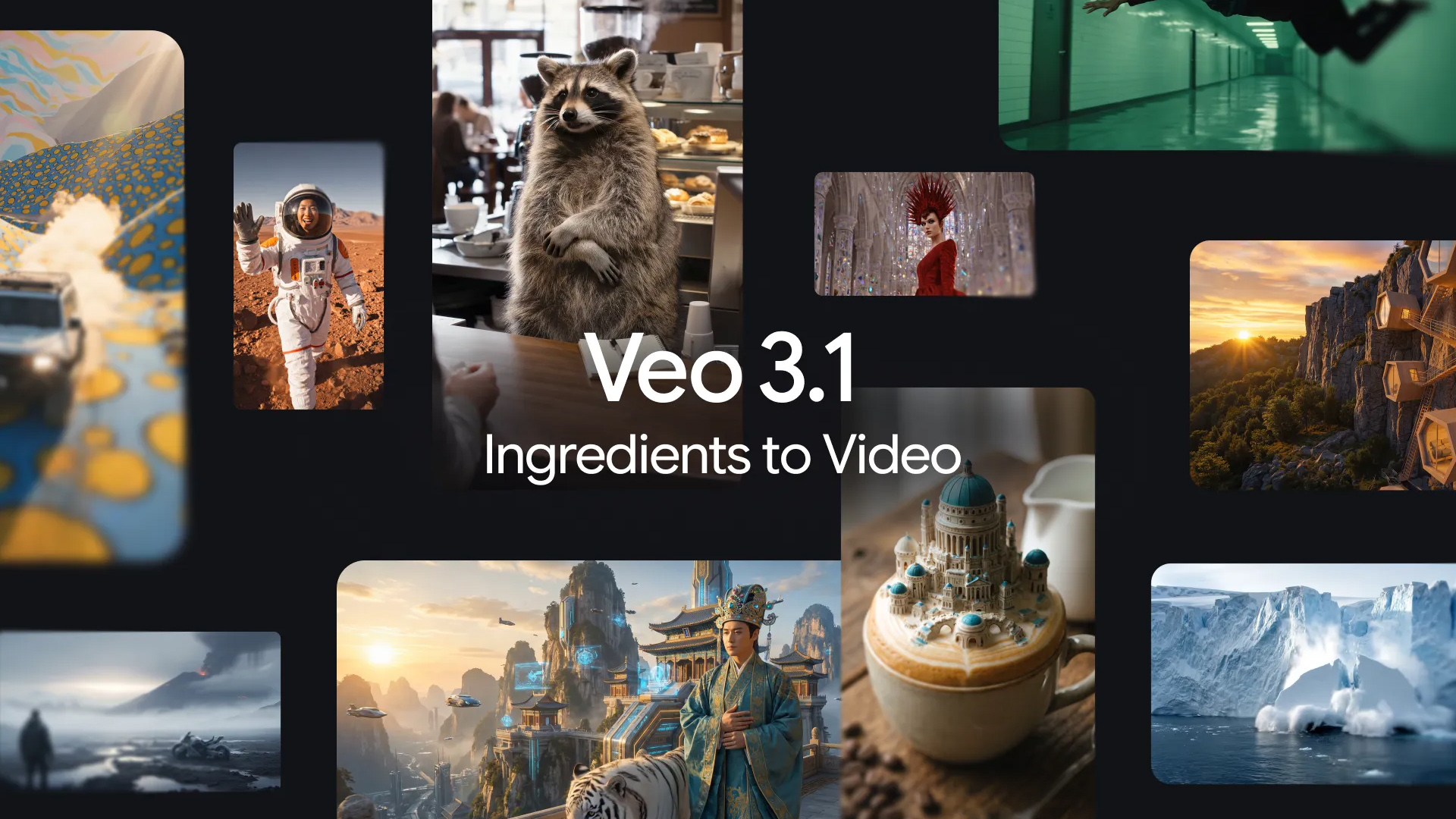
Google’s Veo video AI made stunning leaps in fidelity in 2025, and Google isn’t stopping in 2026. The company has announced an update for Veo 3.1 that adds new capabilities when you provide the model with reference material, known as Ingredients to Video. The results should be more consistent, and output supports vertical video and higher-resolution upscaling.
With Ingredients to Video, you can provide the AI with up to three images to incorporate into the generated video. You can use that to provide the robot with characters to animate, backgrounds, and material textures. When you do that, the newly upgraded model will allegedly make fewer random alterations, hemming closer to the reference images. You can also generate multiple clips and even prompt for changes to the setting or style while keeping other elements consistent.
Veo 3.1 Updates – Bring more creativity and expressiveness into your videos.
Google is also expanding its support for mobile-first video in Veo. When using Ingredients to Video, you can now specify outputs in a 9:16 (vertical) ratio. That makes it ideal for posting on social apps like Instagram or TikTok, as well as uploading as a YouTube Short. So get ready for even more phone-centric slop. Google added support for vertical videos via a text prompt last year.
Enhanced support for Ingredients to Video and the associated vertical outputs are live in the Gemini app today, as well as in YouTube Shorts and the YouTube Create app, fulfilling a promise initially made last summer. Veo videos are short—just eight seconds long for each prompt. It would be tedious to assemble those into a longer video, but Veo is perfect for the Shorts format.
Veo 3.1 Updates – Seamlessly blend textures, characters, and objects.
The new Veo 3.1 update also adds an option for higher-resolution video. The model now supports 1080p and 4K outputs. Google debuted 1080p support last year, but it’s mentioning that option again today, suggesting there may be some quality difference. 4K support is new, but neither 1080p nor 4K outputs are native. Veo creates everything in 720p resolution, but it can be upscaled “for high-fidelity production workflows,” according to Google. However, a Google rep tells Ars that upscaling is only available in Flow, the Gemini API, and Vertex AI. Video in the Gemini app is always 720p.
We are rushing into a world where AI video is essentially indistinguishable from real life. Google, which more or less controls online video via YouTube’s dominance, is at the forefront of that change. Today’s update is reasonably significant, and it didn’t even warrant a version number change. Perhaps we can expect more 2025-style leaps in video quality this year, for better or worse.
