


- Регистрация
- 17 Февраль 2018
- Сообщения
- 40 844
- Лучшие ответы
- 0
- Реакции
- 0
- Баллы
- 8 093
Offline
EVs that were once industry-leading have long since been left behind.
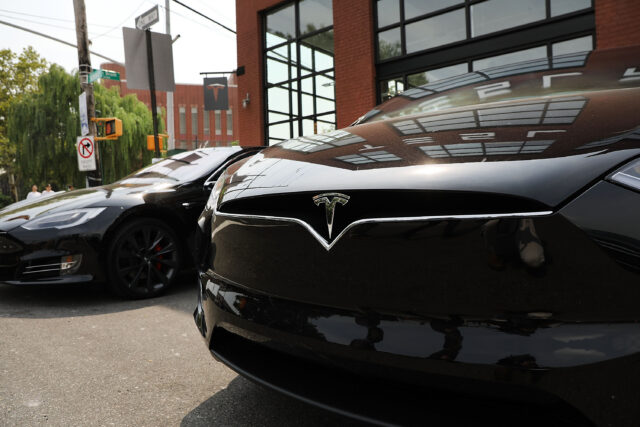
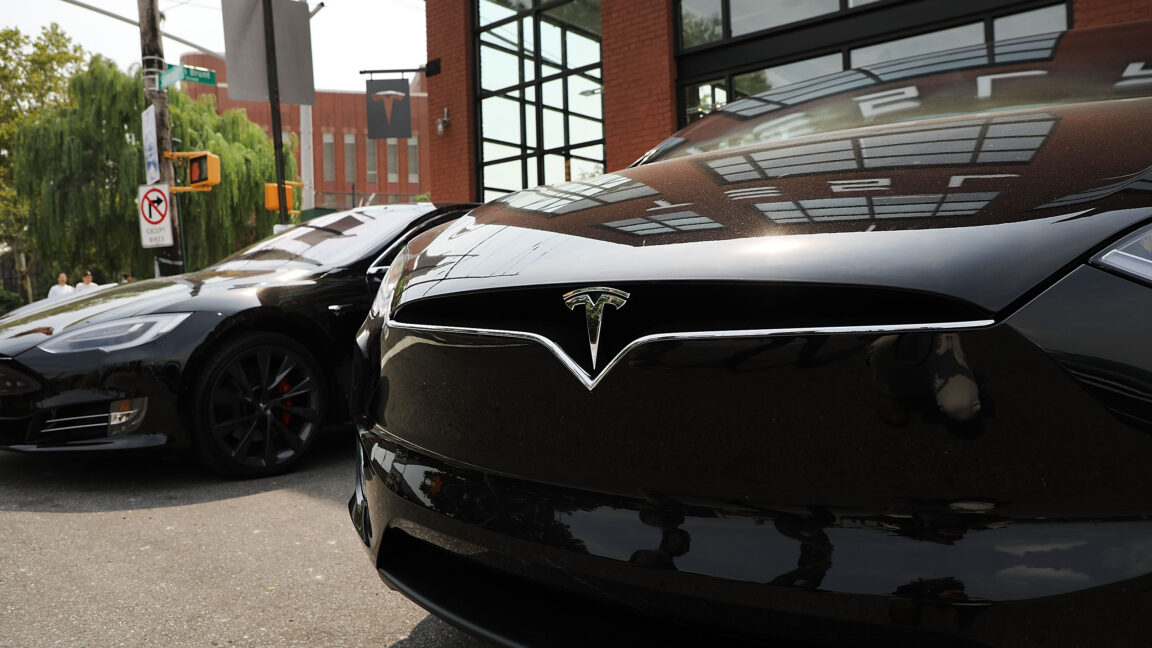
Tesla could plausibly be called a luxury automaker when it only offered the Models S and X. Credit: Spencer Platt/Getty Images
 terday afternoon, following the end of trading on Wall Street for the day, Tesla published its financial results for 2025. They weren’t particularly good: Profits were almost halved, and revenues declined year on year for the first time in the company’s history. The reasons for the company’s troubles are myriad. CEO Elon Musk’s bankrolling of right-wing politics and promotion of AI-generated revenge porn deepfakes and CSAM has alienated plenty of potential customers. For those who either don’t know or don’t care about that stuff, there’s still the problem of a tiny and aging model lineup, with large question marks over safety and reliability. Soon, that tiny lineup will be even smaller.
The news emerged during Tesla’s call with investors last night. As Ars and others have observed, in recent years Musk appears to have grown bored with the prosaic business of running a profitable car company. Silicon Valley stopped finding that stuff sexy years ago, and no other electric vehicle startup has been able to generate a value within an order of magnitude of the amount that Tesla has been determined to be worth by investors.
Musk’s attention first turned away from building and selling cars to the goal of autonomous driving, spurred on at the time by splashy headlines garnered by Google spinoff Waymo. Combined with ride-hailing—a huge IPO by Uber took the spotlight off Tesla long enough for it to become a new business focus for the automaker too—Musk told adoring fans and investors that soon their cars would become appreciating assets that earned money for them at night. And as an intermediary, Tesla would take a hefty cut for connecting the rider and the ridee.
Autonomy remains a stated goal for Tesla: last week it announced it’s moving to a purely subscription-based approach for its FSD partially automated driving assist for all new Teslas purchased from mid-February. At the same time, it’s doing away with Autopilot entirely, it’s a less-capable, partially automated driving assist. The company’s goal is more ambitious, involving selling two-seat robotaxis that lack even a steering wheel or pedals, but only once it has proven the technology, something it’s currently attempting with little success on the streets of Austin, Texas.
But even robotaxis have lost some of their shine. For Musk, the real action is with his humanoid robot. These will sell in the billions, Musk has claimed, adding up to $20 trillion to Tesla’s market capitalization at some point in the future. And he needs factory space to build these Optimus robots, which Tesla claims will go on sale in 2027. And that means an end to the Model S sedan and Model X SUV.
Once a world-beater
The Model S wasn’t Tesla’s first car, but it was the first one it built from scratch. At the time, it was simply revolutionary. EVs from traditional automakers were still firmly in the realm of the compliance car—hasty conversions of internal combustion engine-powered models with the batteries and control electronics crammed wherever possible, plus maybe some aerodynamic smoothing to try to eke out a little more range.
By contrast, the Model S was designed as an EV from the ground up, with a big enough battery to go 265 miles (426 km) on a full charge—something unthinkable in any other EV on sale. It didn’t hurt that the car was seriously quick in a straight line and came with infotainment that made anything else on the road seem dated. When Ars tested one in 2013, we were impressed.
Over the years, the Model S got more power and more advanced driver assists—and eventually, a cosmetic facelift. But as rivals responded with vehicles like the Porsche Taycan and Lucid Air, the Model S stagnated rather than being replaced.
Similar neglect was shown to the Model X, the brand’s SUV-cum-minivan. The lengthy and troubled gestation for the Model X was a forerunner of the problems Tesla has faced developing each successive product; in this particular case, the “falcon wing” doors, created as an alternative to the minivan’s traditional sliding door, proved particularly problematic to get right. Indeed, I still remember being smacked in the head by one at my first introduction to the ungainly people-mover. And yet, compared to the other SUVs on sale in 2016, the Model X still stood out.
A decade later, it’s fair to say the Model X still stands out, but like a sore thumb. Its looks never became more gainly, and there is now vast competition for large, luxurious electric SUVs, whether that’s from Chinese startups like BYD and Xiaomi, American startups like Rivian and Lucid, or the traditional automakers that now have a handle on electrification.
That has been reflected in the sales. Right-hand drive cars for markets including the UK, Australia, New Zealand, and Japan ended production in 2023. And each quarter, production and sales of the Model S and X slipped more and more. Even lumped together with the poorly selling Cybertruck—which is only offered in the US—these deliveries fell by more than half in Q4 2025, and by 40 percent for the year.
Is there much reason to expect that the development of the Optimus robot will be any smoother than the “development hell” that beset the Model X, 3, Y, and Cybertruck? On last night’s call, Musk admitted—contrary to previous claims—that the robots are not doing any useful work at the Tesla factory, and the idea that the company will build 10,000 robots this year seems in conflict with Optimus still being “very much at the early stages” and “still in the R&D phase,” to use Musk’s own words.
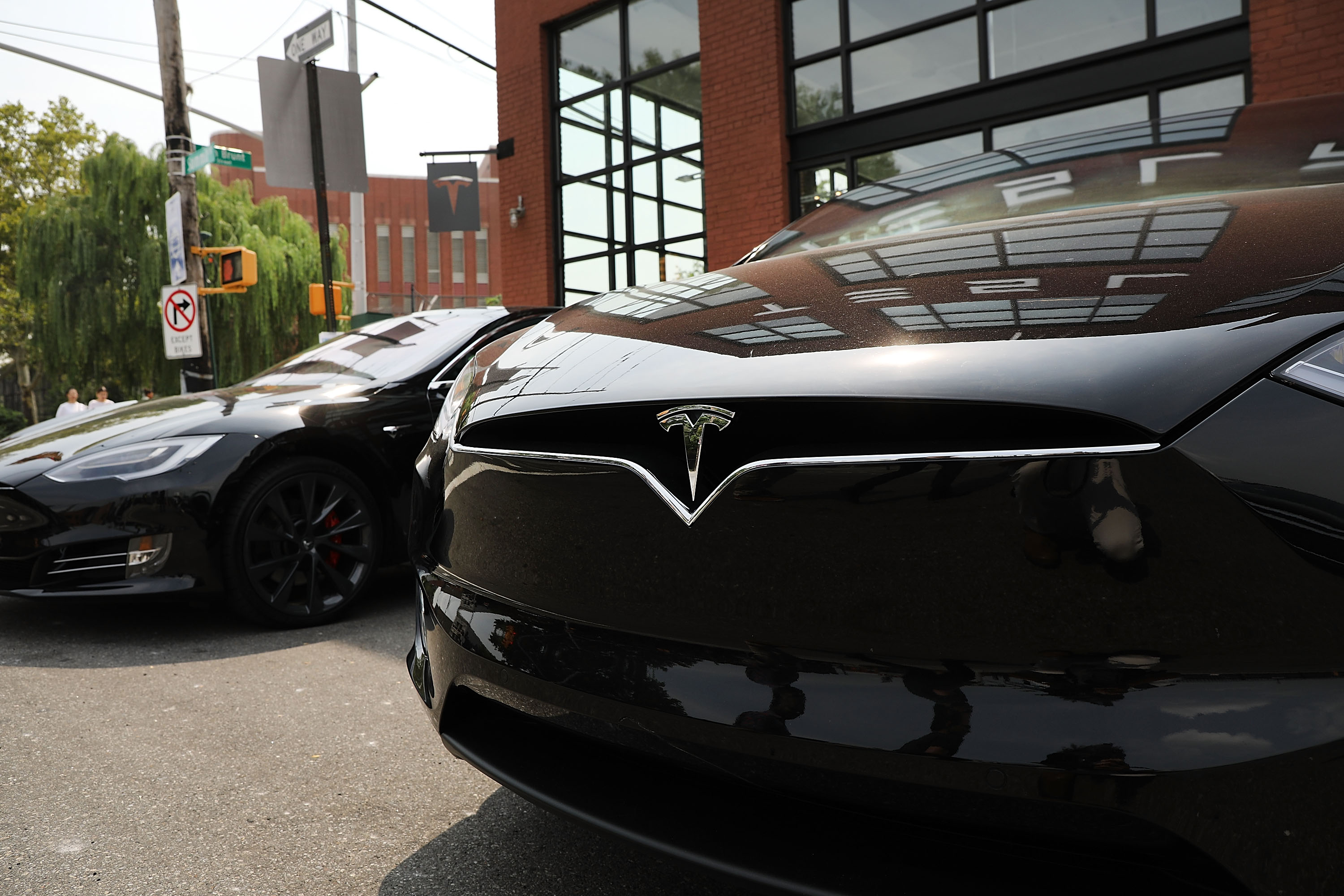
Tesla could plausibly be called a luxury automaker when it only offered the Models S and X. Credit: Spencer Platt/Getty Images
terday afternoon, following the end of trading on Wall Street for the day, Tesla published its financial results for 2025. They weren’t particularly good: Profits were almost halved, and revenues declined year on year for the first time in the company’s history. The reasons for the company’s troubles are myriad. CEO Elon Musk’s bankrolling of right-wing politics and promotion of AI-generated revenge porn deepfakes and CSAM has alienated plenty of potential customers. For those who either don’t know or don’t care about that stuff, there’s still the problem of a tiny and aging model lineup, with large question marks over safety and reliability. Soon, that tiny lineup will be even smaller.The news emerged during Tesla’s call with investors last night. As Ars and others have observed, in recent years Musk appears to have grown bored with the prosaic business of running a profitable car company. Silicon Valley stopped finding that stuff sexy years ago, and no other electric vehicle startup has been able to generate a value within an order of magnitude of the amount that Tesla has been determined to be worth by investors.
Musk’s attention first turned away from building and selling cars to the goal of autonomous driving, spurred on at the time by splashy headlines garnered by Google spinoff Waymo. Combined with ride-hailing—a huge IPO by Uber took the spotlight off Tesla long enough for it to become a new business focus for the automaker too—Musk told adoring fans and investors that soon their cars would become appreciating assets that earned money for them at night. And as an intermediary, Tesla would take a hefty cut for connecting the rider and the ridee.
Autonomy remains a stated goal for Tesla: last week it announced it’s moving to a purely subscription-based approach for its FSD partially automated driving assist for all new Teslas purchased from mid-February. At the same time, it’s doing away with Autopilot entirely, it’s a less-capable, partially automated driving assist. The company’s goal is more ambitious, involving selling two-seat robotaxis that lack even a steering wheel or pedals, but only once it has proven the technology, something it’s currently attempting with little success on the streets of Austin, Texas.
But even robotaxis have lost some of their shine. For Musk, the real action is with his humanoid robot. These will sell in the billions, Musk has claimed, adding up to $20 trillion to Tesla’s market capitalization at some point in the future. And he needs factory space to build these Optimus robots, which Tesla claims will go on sale in 2027. And that means an end to the Model S sedan and Model X SUV.
Once a world-beater
The Model S wasn’t Tesla’s first car, but it was the first one it built from scratch. At the time, it was simply revolutionary. EVs from traditional automakers were still firmly in the realm of the compliance car—hasty conversions of internal combustion engine-powered models with the batteries and control electronics crammed wherever possible, plus maybe some aerodynamic smoothing to try to eke out a little more range.
By contrast, the Model S was designed as an EV from the ground up, with a big enough battery to go 265 miles (426 km) on a full charge—something unthinkable in any other EV on sale. It didn’t hurt that the car was seriously quick in a straight line and came with infotainment that made anything else on the road seem dated. When Ars tested one in 2013, we were impressed.
Over the years, the Model S got more power and more advanced driver assists—and eventually, a cosmetic facelift. But as rivals responded with vehicles like the Porsche Taycan and Lucid Air, the Model S stagnated rather than being replaced.
Similar neglect was shown to the Model X, the brand’s SUV-cum-minivan. The lengthy and troubled gestation for the Model X was a forerunner of the problems Tesla has faced developing each successive product; in this particular case, the “falcon wing” doors, created as an alternative to the minivan’s traditional sliding door, proved particularly problematic to get right. Indeed, I still remember being smacked in the head by one at my first introduction to the ungainly people-mover. And yet, compared to the other SUVs on sale in 2016, the Model X still stood out.
A decade later, it’s fair to say the Model X still stands out, but like a sore thumb. Its looks never became more gainly, and there is now vast competition for large, luxurious electric SUVs, whether that’s from Chinese startups like BYD and Xiaomi, American startups like Rivian and Lucid, or the traditional automakers that now have a handle on electrification.
That has been reflected in the sales. Right-hand drive cars for markets including the UK, Australia, New Zealand, and Japan ended production in 2023. And each quarter, production and sales of the Model S and X slipped more and more. Even lumped together with the poorly selling Cybertruck—which is only offered in the US—these deliveries fell by more than half in Q4 2025, and by 40 percent for the year.
Is there much reason to expect that the development of the Optimus robot will be any smoother than the “development hell” that beset the Model X, 3, Y, and Cybertruck? On last night’s call, Musk admitted—contrary to previous claims—that the robots are not doing any useful work at the Tesla factory, and the idea that the company will build 10,000 robots this year seems in conflict with Optimus still being “very much at the early stages” and “still in the R&D phase,” to use Musk’s own words.
